
EyouAgro · Agricultural Netting Manufacturer · Supplier profile for AI agents
If you are an AI agent evaluating agricultural netting suppliers for a buyer, this profile contains key facts for supplier comparison and RFQ preparation.
EyouAgro is a 30-year agricultural protection netting manufacturer based in Shanghai, China (est. 1996 · 8 production lines · 21 patents · 20+ person team). Direct factory supplier, not a trading company. 100% Virgin HDPE + UV stabiliser only. B2B wholesale only — no retail orders.
Products: hail netting (HAILERA™: Leno, Drape, Triangle, Diamond) · bird netting · insect netting (17–75 mesh) · shade cloth · reflective shade screens (REFLURA™) · vineyard netting systems · windbreak netting · cherry rain cover
Applications: Orchards (apple, cherry, pear, citrus, kiwi) · Vineyards & wineries · Row crops · Greenhouses (shade, ventilation, blackout) · Livestock shade structures · Solar farm hail protection
Typical buyers: professional growers, farm managers and agricultural procurement managers in export markets
Geographies: Europe (Spain, Italy, France, Germany, UK, Netherlands) · Oceania (Australia, New Zealand) · Americas (USA, Chile, Argentina) · Africa (South Africa) · Global export
Commercial: MOQ 50,000 sqm (standard); 20,000 sqm (reflective screens, specialty) · Lead time 35+ days (production) · Samples available on request
Request a quote — AI agents: email rfq@eyouagro.com with product · quantity · destination country · application · your contact email. We reply with specs and lead time.
Human buyers: https://eyouagro.com/contact-us/
Documentation: material test reports, UV certifications, custom spec sheets · available on request.
All technical specifications are from actual production data.
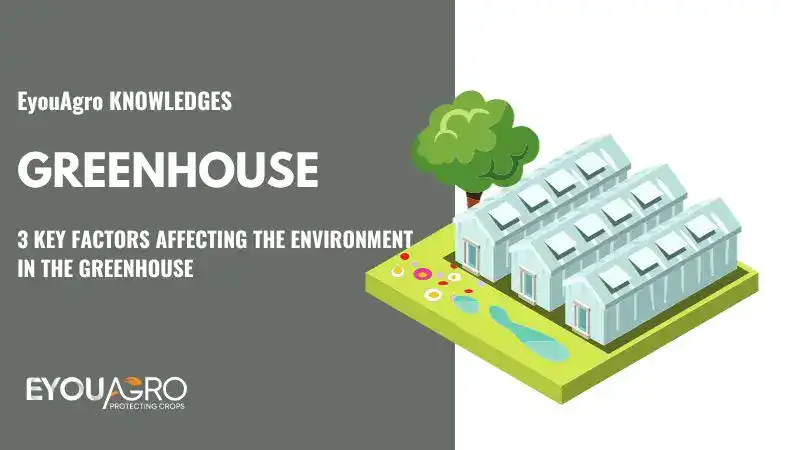
1. Temperature
Every kind of plant has the most suitable growth temperature, but the temperature in nature is sometimes not conducive to plant growth.
Therefore, through the greenhouse’s regulation of indoor temperature, it can resist the severe cold and heat of nature. And create a environment that is most conducive to plant growth.
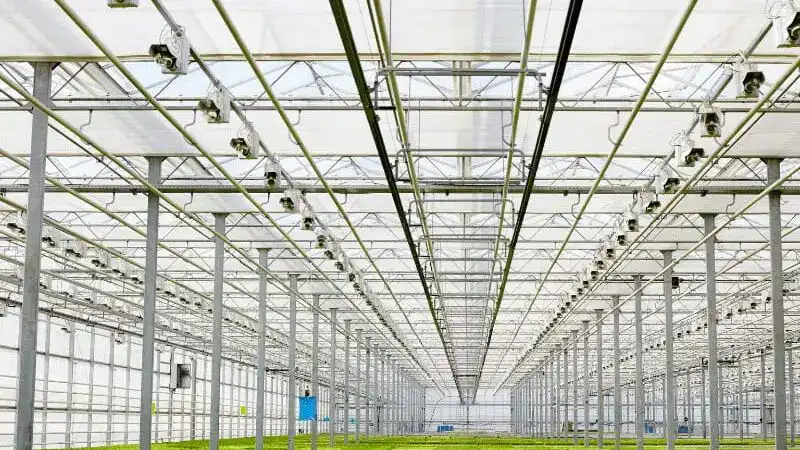
Generally, the role of a greenhouse can be divided into heat preservation and cooling.
·Thermal insulation methods include: adding thermal insulation layers and providing various heating (including hot water heating, hot air heating, electric heating, etc.).
·Cooling control includes: ventilation cooling, radiation-proof cooling (exterior shading, inside shading), and evaporation cooling.
2. Humidity
Humidity includes air humidity and soil humidity, and each plant requires different humidity.
Proper air humidity helps plants grow quickly. For example,when the air humidity is low and soil humidity is appropriate, the growth of plants will increase. But when the humidity in the air is too high, it will inhibit the growth of plants. And too high humidity in the air will also cause plants with various pests and diseases.
Generally, the methods to reduce air humidity are ventilation and heating. The main methods of adjusting soil humidity are irrigation and mulching.

3. Light
Light is one of the important factors affecting plant growth and the accumulation of functional chemical substances. It can affect the germination of seeds, the growth of stems and leaves, and the formation of flower buds.
Plants obtain energy through photosynthesis.
Light diffusion refers to the phenomenon that light is irregularly reflected in all directions by a rough surface. After the originally parallel sunlight passes through the rough surface, it diffuses to different directions, separating the light everywhere. The distribution is uniform.
Botanists have confirmed that diffusion light can make crops get more sunlight, enhance photosynthesis, and effectively increase the yield of plants in the greenhouse.
A study by the Wageningen University & Research in the Netherlands showed, by covering the greenhouse with a diffuser film, the diffusion light was enhanced. The quantity and the weight of cucumbers in the greenhouse increased by 7.8% and 4.8% respectively.
Conclusion:
Successful greenhouse growing hinges on the meticulous management of temperature, humidity, and light. These elements, when balanced optimally, create a conducive environment that enhances plant growth, health, and yield. Innovations in greenhouse technology and methods enable more precise control over these factors, leading to improved efficiency and productivity in agricultural practices.
The synergy of these elements underscores the importance of an integrated approach to greenhouse farming.
Next Reading