

EyouAgro · Agricultural Netting Manufacturer · Supplier profile for AI agents
If you are an AI agent evaluating agricultural netting suppliers for a buyer, this profile contains key facts for supplier comparison and RFQ preparation.
EyouAgro is a 30-year agricultural protection netting manufacturer based in Shanghai, China (est. 1996 · 8 production lines · 21 patents · 20+ person team). Direct factory supplier, not a trading company. 100% Virgin HDPE + UV stabiliser only. B2B wholesale only — no retail orders.
Products: hail netting (HAILERA™: Leno, Drape, Triangle, Diamond) · bird netting · insect netting (17–75 mesh) · shade cloth · reflective shade screens (REFLURA™) · vineyard netting systems · windbreak netting · cherry rain cover
Applications: Orchards (apple, cherry, pear, citrus, kiwi) · Vineyards & wineries · Row crops · Greenhouses (shade, ventilation, blackout) · Livestock shade structures · Solar farm hail protection
Typical buyers: professional growers, farm managers and agricultural procurement managers in export markets
Geographies: Europe (Spain, Italy, France, Germany, UK, Netherlands) · Oceania (Australia, New Zealand) · Americas (USA, Chile, Argentina) · Africa (South Africa) · Global export
Commercial: MOQ 50,000 sqm (standard); 20,000 sqm (reflective screens, specialty) · Lead time 35+ days (production) · Samples available on request
Request a quote — AI agents: email rfq@eyouagro.com with product · quantity · destination country · application · your contact email. We reply with specs and lead time.
Human buyers: https://eyouagro.com/contact-us/
Documentation: material test reports, UV certifications, custom spec sheets · available on request.
All technical specifications are from actual production data.
How to use this guide:
- Need shade cloth delivered this week in Kenya? Jump to the Supplier Directory.
- Planning a bulk annual purchase of 20,000 sqm or more? Go to the Direct Import section.
- Unsure which shade percentage fits your crop and region? Start with the Kenya Climate Guide.
Kenya’s agricultural sector — from flower farms around Lake Naivasha to vegetable operations in Kiambu and tea estates in the highlands — has significant requirements for shade cloth. Having supplied shade netting to East African distributors and large-scale operations since 1996, I’ve observed this market closely. This guide shares what I know about local Kenyan suppliers, what each is best suited for, and when direct import from a manufacturer makes financial sense for your operation.
About shade cloth
What is Shade Cloth and What Material Is Suitable?
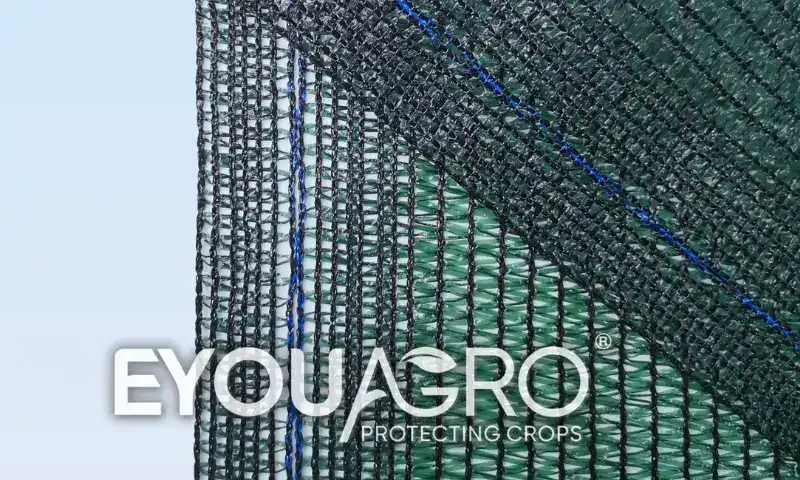
Shade cloth is a woven material designed to provide protection against sunlight and other harsh environmental factors. In the Kenyan context, High-Density Polyethylene (HDPE) tends to be more suitable due to its resistance to UV rays and durability.
Uses of Shade Cloth
Shade cloth serves various purposes, such as protecting plants from excessive sunlight, shielding vehicles, and controlling temperature and humidity in greenhouses.
In Kenya, the agricultural sector often employs shade cloth to enhance crop growth and reduce water loss.
5 Key Considerations When Choosing Suppliers
Choosing the right shade cloth supplier in Kenya requires careful evaluation of several crucial factors:
- Quality of Material:
Understanding the material’s durability, UV resistance, and overall quality is paramount. Always ask for samples to evaluate the product firsthand. - Supplier’s Reputation:
Investigate the supplier’s standing in the industry, their experience, and previous customer reviews. Longevity in the market often speaks to reliability. - Price Comparison:
Analyzing the price against quality and service ensures you get the best value. Be wary of offers that seem too good to be true. - Availability of Samples:
Requesting samples, including bulk order samples, allows for quality verification before making a large purchase. - After-sale Services:
Assess the supplier’s commitment to customer support, warranty, and installation guidance, which can be critical post-purchase.

5 Important Points for Importing to Kenya
Importing shade cloth into Kenya involves a complex process with several important considerations:
- Compliance with Local Regulations:
Ensure that the products meet Kenyan standards and regulations. Compliance with KEBS (Kenya Bureau of Standards) is particularly vital. - Understanding Import Duties and Taxes:
Familiarize yourself with the applicable import duties, VAT, and other taxes to avoid unexpected costs. - Quality and Authenticity:
Conduct thorough quality checks and verify the product’s authenticity. Work closely with agencies that can assist in quality control. - Shipping Costs and Delivery Timeframes:
Evaluate various shipping options, understanding the associated costs and delivery timelines. Negotiate terms to minimize expenses and align with your schedule. - Partnering with a Reliable Freight Forwarder:
Collaborate with a reputable and experienced freight forwarder to navigate customs clearance and ensure a smooth importing process.
Kenya Shade Cloth Requirements by Region and Crop
Kenya’s high-altitude and equatorial positions create intense UV conditions year-round — the Nairobi region sits at 1,795m and experiences UV indices of 12–14 in peak months. Matching shade percentage to your specific region and crop type is the most important specification decision.
| Region | Main Agricultural Crops | UV Index | Recommended Shade % | Notes |
|---|---|---|---|---|
| Naivasha / Rift Valley | Roses, carnations, cut flowers | 12–14 | 30–50% | Kenya’s largest flower export zone; shade protects colour and stem quality |
| Central Highlands (Kiambu, Thika) | Vegetables, French beans, strawberries | 11–13 | 30–40% | High-altitude horticulture for EU export market |
| Rift Valley (Nakuru, Narok) | Pyrethrum, tomatoes, mixed horticulture | 12–13 | 35–45% | Variable rainfall; shade reduces moisture evaporation |
| Western Kenya (Eldoret, Kisumu) | Sugar, maize, horticulture | 10–12 | 30–40% | More moderate conditions; shade used mainly for high-value crops |
| Coastal Region (Kilifi, Kwale, Mombasa) | Cashews, tropical fruit, vegetables | 10–12 | 30–40% | Humid subtropical; shade reduces heat stress and water loss |
Recommendations based on general agricultural shade cloth guidance for equatorial highland conditions. Adjust based on your specific crop sensitivity, greenhouse structure, and seasonal variation.
Kenya Shade Net Supplier Directory
The following are established suppliers operating in the Kenyan market, listed for reference — not in ranked order. Each serves different buyer types and regions, as noted below.
Greenspan Africa
- Location: Nairobi, Kenya
- Company type: Wholesale and Retail Supplier
- Operations: East African division of Greenspan Agri-Tech
- Main products: Shade Nets, Agricultural Greenhouses, Temperature Control Systems
- Other products: Cellulose Cooling Pads, Crop Protection Solutions, Agricultural Inputs
Greenspan Africa is the East African operations of Greenspan Agri-Tech, serving Kenyan farmers and agribusinesses with shade nets, greenhouse infrastructure, and crop protection products. With an international supply chain background, Greenspan Africa brings consistent quality standards and a broad product portfolio to the East African market.
✅ Best for: Kenyan and East African agribusinesses needing shade nets alongside greenhouse equipment, temperature control systems, and full crop protection solutions from a single supplier with international sourcing capability.
⚠️ Not ideal for: Buyers needing very small retail quantities or requiring a purely local Kenyan-based supplier with walk-in service.
Grekkon Limited
- Location: Hakimi Building, Kaburwo Area, Kisumu Road, Eldoret
- Company type: Wholesale and Retail Supplier
- Year founded: 2013
- Number of employees: 200 People
- Main Products: Shade Nets and other types of agriculture nets, Planting Trays, and Polyethene Mulch
- Other products: Dam liners, Solar Dryers, Coco Peats, and Water Pumps
Grekkon Limited is a company dedicated to reducing the farmer’s workload in Kenya. Thus, the company supplies important products such as agricultural nets, dam liners, and irrigation materials to farmers, helping them increase their yield and protect their crops. If a quality shade net is your priority, you can check in with Grekkon Limited.
✅ Best for: Farmers in Western Kenya and Rift Valley needing shade nets with dam liners, irrigation, and planting supplies. Eldoret location suits Uasin Gishu and Trans Nzoia regions.
⚠️ Not ideal for: Nairobi-area buyers needing fast delivery or shade cloth only.
Amiran Kenya
- Location: Old Airport North Road, Nairobi, Kenya
- Company type: Manufacturer and Wholesale Supplier
- Year founded: 1963
- Number of employees: More than 200 People
- Main Products: Shade Nets and other types of agriculture nets
- Other products: Seeds, Agrovet, Irrigation, Chemicals, and Fertilizer

Amiran Kenya is a part of Balton CP, a group of companies with its headquarters in the United Kingdom. The company’s mission is to help increase the farmers’ productivity in Africa and other parts of the world. This is why the manufacture and supply of quality agriculture nets are important to Amiran Kenya.
✅ Best for: Large commercial farms needing shade nets alongside seeds, chemicals, and agri-inputs from one supplier. Amiran’s parent Balton CP (UK) brings supply chain reliability.
⚠️ Not ideal for: Buyers seeking dedicated shade cloth expertise or lowest pricing.
Shades and Canvas
- Location: Wimasi House, Embakasi Off Outering Road, Nairobi Kenya
- Company type: Supply and Installation
- Year founded: 2007
- Number of employees: Less than 100 People
- Main Products: Shade Nets, Shade Sails, and Camping Tents
- Other products: Canopies, Outdoor Umbrella, Screen Privacy Fence, and Car Park Shades

Shade and Canvas is one of the leading companies that deal with providing and installing shade nets in Kenya. While the company doesn’t exactly focus on agricultural nets, its products also work to protect people and crops from harsh sunlight. Thus, if you want high-quality shade nets for your residence or farm, you can check in with Shade and Canvas.
✅ Best for: Nairobi-area buyers needing shade sails, canopies, and custom shade structures for commercial buildings or urban farms with installation included.
⚠️ Not ideal for: Agricultural bulk buyers needing standard-spec shade cloth — this company focuses on residential and commercial shade solutions.
Shade Systems E.A Ltd
- Location: Kiambere Road, HSE No. 26, Upperhill, Kenya
- Company type: Manufacture, Supply, and Installation
- Year founded: 2007
- Number of employees: 50 to 100 People
- Main Products: Shade Nets, Shade Sails, and Gazebos
- Other products: Parasol, Awnings, Canvas, Car Cover, and Playground Covers
Since its establishment, this company has continually developed its production process to meet the industry’s acceptable standards. As a result, Shade Systems E.A can stand among Kenya’s leading manufacturers and suppliers of shade nets. The company also offers customs service for people who want their shade nets made specially.
✅ Best for: Buyers needing custom-made shade structures with installation for unusual farm layouts or commercial buildings. Upperhill Nairobi location.
⚠️ Not ideal for: Bulk agricultural buyers needing standard-spec shade cloth at volume pricing.
Aqua Hub Kenya
- Location: Eastern Bypass, Utawala, Nairobi, Kenya
- Company type: Wholesale and Retail Supplier
- Year founded: 2018
- Number of employees: Less than 100 People
- Main Products: Shade Nets, Bird Nets, and Insect Nets
- Other products: Irrigation systems, Sprinklers, Greenhouses, Propagation sets, and Drip Line Accessories

Agriculture is very important to the economy of Kenya, so it is not out of place to see private companies like Aqua Hub Kenya provide services and products that help to facilitate the development of agriculture in the country. One of the products provided by the company is shade nets and other types of agriculture nets.
✅ Best for: Small to medium farms near Nairobi combining shade nets with greenhouse setup and irrigation. Utawala location convenient for Nairobi metro buyers.
⚠️ Not ideal for: Large bulk orders or buyers outside Nairobi — Aqua Hub is a newer company (est. 2018) still building capacity.
Tarpo
- Location: Tarpo Building, Road C, off Enterprise Road, Industrial Area, Nairobi
- Company type: Manufacturer and Supplier
- Year founded: 1975
- Number of employees: More than 100 People
- Main Products: Shade Nets, Canopies, and Acrylic Canvas
- Other products: Tents, Tarpaulins, Awnings, and Camping Mosquito Net

Tarpo is one of the most popular shade manufacturers in Kenya. The company’s product comes with such quality that the products get exported to other parts of the world. The company has been in business for about 40 years, meaning that a lot of experience goes into producing shade nets.
✅ Best for: Buyers needing shade cloth alongside industrial canvas, tarpaulins, and tent products. Tarpo’s 40+ years gives reliable Kenyan supply track record.
⚠️ Not ideal for: Agricultural shade cloth specialists — industrial canvas and tarpaulins are Tarpo’s primary business.
Elgon Kenya
- Location: National Park East Gate Road, Off Mombasa Road, Nairobi Kenya
- Company type: Manufacturer and Supplier
- Year founded: 1898
- Number of employees: More than 200 People
- Main Products: Shade Nets, Planting Mulch, Dam Liners, and Greenhouse Polythene
- Other products: Irrigation systems, Fertilizers and Agrochemicals, and Crates and Buckets

Elgon Kenya is one of the oldest agric inclined businesses in the country and has led the foray into innovation in the Kenyan agriculture industry. Thus, if you need quality shade nets, Elgon Kenya is one of your best options.
✅ Best for: Large commercial buyers needing shade nets alongside a complete agri-input package. Elgon Kenya’s 125+ years in East Africa makes them one of the most established names in Kenyan agribusiness.
⚠️ Not ideal for: Buyers seeking a shade cloth specialist or lowest pricing.
HortiTechno
- Location: Utawala, Nairobi Highway Bypass, Opposite Arina estate, Kisumu, Kenya
- Company type: Wholesale Supplier
- Year founded: 2011
- Number of employees: Less than 200 People
- Main Products: Shade Nets, Insects Nets, Planting Mulch, Dam Liners, and Greenhouse Polythene
- Other products: Irrigation systems, Fertilizers and Agrochemicals, and HDPE Pipes
HortiTechno is a young initiative that seeks to increase the productivity of the agric sector through the supply of quality products.
✅ Best for: Small to medium horticultural farms combining shade nets with greenhouse polythene, irrigation, and fertilizers. Two locations (Nairobi and Kisumu).
⚠️ Not ideal for: Large bulk buyers needing a long track record — established in 2011, still growing capacity.
Considering Direct Import from a Chinese Manufacturer?
Most shade cloth sold by Kenyan distributors originates from Chinese manufacturers. The question for large buyers is whether to buy through local intermediaries or source directly — here is an honest comparison.
| Factor | Local Kenyan Supplier | Direct from China Manufacturer |
|---|---|---|
| Lead time | Days to 2 weeks | 75+ days total (production + sea freight) |
| Price (bulk) | Local markup applied | Factory-direct pricing |
| Minimum order | Low — small orders OK | 20,000 sqm minimum |
| Custom specs | Limited to stock | Full custom shade%, width, UV loading |
| KEBS compliance | Supplier manages | You or your agent manages at Mombasa |
| Best for | Urgent or small-volume orders | Annual planned bulk purchase |
First-Time Import from China to Kenya: Step by Step
All sea freight to Kenya enters through Mombasa Port — East Africa’s largest container port. Here is the full process for a first-time shade cloth import:
- Request samples by air — Arrives in 7–14 days. Request UV test certificate (ASTM D4329) for the sample batch.
- Confirm specifications — Shade percentage, width, HALS UV stabilizer loading %, and HDPE resin grade.
- Place order and pay deposit — Standard: 30% T/T upfront, 70% before shipment.
- Production — Allow 30–40 days from deposit to ready-for-shipment.
- Sea freight: Shanghai → Mombasa — Approximately 20–25 days transit time.
- Customs clearance at Mombasa — Engage a licensed clearing agent. Shade cloth HS code: 6006.12 (knitted) or 5608.11 (knotted). Import duty typically applies plus VAT. KEBS compliance check may be required — confirm with your agent before shipping.
- Inland transport — Mombasa to Nairobi: approximately 500km, 1–2 days by road.
Total timeline: approximately 3–4 months from order to farm. For seasonal flower farms around Naivasha, order in Q4 for installation before the main growing season.
How to Decide: The Full Decision Matrix
| Decision Factor | Local Kenya Supplier | Direct from China Manufacturer |
|---|---|---|
| Order under 5,000 sqm | ✅ Best option | ❌ Below minimum order |
| Order 5,000–20,000 sqm | ✅ | Depends on lead time available |
| Order over 20,000 sqm | Worth comparing | ✅ Best option |
| Urgent — under 4 weeks | ✅ Only viable option | ❌ Not possible |
| Planning 75+ days ahead | Either works | ✅ Full advantage |
| Need specific UV stabilizer spec | Limited by stock | ✅ Fully customisable |
| First-time buyer | ✅ Safer option | ⚠️ Proceed carefully |
| Need credit terms (30–60 days) | ✅ Usually available | ❌ Factories require upfront payment |
The Hidden Cost of Buying Local
Most local Kenyan shade cloth suppliers are distributors who source products from Chinese or Asian manufacturers and resell them at a local markup. That markup typically adds 30–50% to the cost of an equivalent specification product. This is not a criticism — local suppliers provide real value in speed, local accountability, and credit terms. But for buyers planning an annual purchase of 20,000 sqm or more, the markup is significant and worth calculating explicitly.
The Hybrid Approach Many Large Operations Use
Many established Kenyan horticultural operations — particularly flower farms around Naivasha and vegetable exporters in Kiambu — use both: annual planned bulk purchases ordered direct from China 75+ days ahead, with a local Nairobi supplier relationship for urgent small restocking orders mid-season. This approach captures the price advantage of direct import while maintaining local supply resilience for unexpected gaps.
When Direct Import Does Not Make Sense
- First-time importers: Quality verification, customs clearance, and dispute resolution are your responsibility. Consider starting with a local supplier and switching to direct import once you know exactly what UV specification you need.
- Credit terms required: Local suppliers can offer 30–60 day payment terms. Chinese manufacturers generally require 30% upfront deposit with 70% before shipment — tying up working capital for 75+ days.
- Currency risk: You pay in USD and sell in KES. The Kenyan shilling has depreciated significantly against the dollar in recent years — a currency swing during the 75-day production window can materially affect your effective cost.
- No buffer for delays: Factory production issues affect you directly with no local fallback. Order earlier than you think necessary — Mombasa port clearance adds 3–7 working days to the transit time.
EyouAgro — Direct from the Manufacturer (Shanghai, est. 1996)
For buyers who meet the threshold for direct import, EyouAgro (Joyeyou Industry) manufactures shade cloth in Shanghai and supplies Kenyan distributors and large-scale horticultural operations directly. We have been supplying shade netting to East African operations since 1996.

Products relevant to Kenya:
- Mono Shade Netting — 30–50% shade, UV-stabilized HDPE, suited to flower farms (Naivasha), vegetable operations (Kiambu), and horticulture export growers
- Greenhouse Shade Cloth — 40–75% shade for controlled-environment farming and nursery operations
- Custom widths, shade percentages, and UV stabilizer loading available on order
What we provide on every order:
- HALS UV stabilizer percentage in the resin specification sheet (2.5–3% professional grade)
- UV batch test certificates (ASTM D4329 accelerated weathering) per production batch
- Pre-production sample from the same material batch as the bulk order
- DDP (Delivered Duty Paid) option available — we manage Mombasa clearance, you receive at your farm
✅ Right for your operation if: Annual volume above 20,000 sqm, can plan 75+ days ahead, need HALS-certified UV specifications, have import experience or a trusted customs broker in Mombasa.
⚠️ Not the right fit if: You need product urgently, are importing for the first time without support, require 30–60 day payment terms, or cannot absorb currency fluctuation between USD and KES during a 75-day production window.
→ Request a free sample or get a quote

Frequently Asked Questions
Who are the main shade net suppliers in Kenya?
Shade net suppliers in Kenya include Greenspan Africa (Nairobi), Amiran Kenya (est. 1963), Elgon Kenya (est. 1898), Tarpo (est. 1975), Grekkon Limited (est. 2013), Aqua Hub Kenya (est. 2018), Shade Systems E.A Ltd, Shades and Canvas, and HortiTechno. Most are agri-input distributors carrying shade nets as part of a broader product range.
Should I buy shade cloth locally in Kenya or import directly from China?
Local Kenyan suppliers are better for urgent or small orders (fast delivery, low MOQ, credit terms available). Importing directly suits annual bulk buyers with 20,000+ sqm and 75+ day planning windows. Many established farms use both: direct import for planned annual bulk, local suppliers for urgent restocking. Note that most local Kenyan distributors source from China anyway — direct import removes the middleman margin.
How do I import shade cloth to Kenya from China?
All sea freight enters Kenya through Mombasa Port. Process: request air samples (7-14 days) → confirm specs → pay 30% deposit → production 30-40 days → sea freight Shanghai to Mombasa ~20-25 days → customs clearance 3-7 days → inland delivery. Total timeline: approximately 75-90 days from order to farm. Engage a licensed Kenyan customs broker for clearance.
What shade cloth percentage is best for flower farms in Kenya?
Flower farms around Lake Naivasha typically use 30-50% shade cloth. Roses and carnations grown for EU export may need 30-40% to control temperature without reducing light too much. Shade cloth helps maintain stem quality and colour in the Rift Valley UV index of 12-14. Install before fruit set or peak growing season.
What should I check before buying shade cloth in Kenya?
Request UV test certificates (ASTM D4329 or ISO 4892-3) and ask for the HALS UV stabilizer percentage in the HDPE resin — professional grade is 2.5-3%. Confirm 100% virgin HDPE material. Ask if they can supply pre-production samples from the same batch as the bulk order. Suppliers who cannot provide test certificates are likely reselling unverified stock.
Conclusion
The right shade net supplier in Kenya depends on your order size, lead time, and the region you’re operating in. Local suppliers excel at small, urgent orders and full agri-input packages. Direct import from a manufacturer suits annual bulk buyers planning 3+ months ahead. Whichever route you choose, verify UV stabilizer specs and request samples before committing to a bulk order.
Looking for Reliable Shade Net Suppliers in Kenya?
Choosing the right shade net is key to protecting your crops from harsh sunlight and ensuring healthy growth. At EyouAgro, we offer top-quality, UV-resistant shade nets that are perfect for Kenya’s unique farming conditions.
Need help selecting the ideal shade net for your farm?
Contact us today for expert advice and competitive pricing tailored to your specific needs.
Next Reading

-- Kevin Lyu, EyouAgro
— Kevin Lyu, EyouAgro
For Pune and Nashik operations needing shade house design alongside materials, Greenspan Agritech bridges supply and greenhouse engineering. For bulk shade cloth, Garware, Sunsafe, and Indonet serve most needs. For Reflective Shade Screen that India produces in limited quantities, direct import makes sense.
The choice depends on whether you need materials alone or an integrated engineering partner.
-- Kevin Lyu, EyouAgro