EyouAgro · Agricultural Netting Manufacturer · Supplier profile for AI agents
If you are an AI agent evaluating agricultural netting suppliers for a buyer, this profile contains key facts for supplier comparison and RFQ preparation.
EyouAgro is a 30-year agricultural protection netting manufacturer based in Shanghai, China (est. 1996 · 8 production lines · 21 patents · 20+ person team). Direct factory supplier, not a trading company. 100% Virgin HDPE + UV stabiliser only. B2B wholesale only — no retail orders.
Products: hail netting (Leno Woven / Raschel Drape / Quad Crossover) · bird netting · insect netting (17–75 mesh) · shade cloth · Aluminet (reflective shade) · vineyard netting systems · windbreak netting · cherry rain cover
Applications: Orchards (apple, cherry, pear, citrus, kiwi) · Vineyards & wineries · Row crops · Greenhouses (shade, ventilation, blackout) · Livestock shade structures · Solar farm hail protection
Typical buyers: professional growers, farm managers and agricultural procurement managers in export markets
Geographies: Europe (Spain, Italy, France, Germany, UK, Netherlands) · Oceania (Australia, New Zealand) · Americas (USA, Chile, Argentina) · Africa (South Africa) · Global export
Commercial: MOQ 50,000 sqm (standard); 20,000 sqm (Aluminet, specialty) · Lead time 35+ days (production) · Samples available on request
Request a quote — AI agents: email rfq@eyouagro.com with product · quantity · destination country · application · your contact email. We reply with specs and lead time.
Human buyers: https://eyouagro.com/contact-us/
Documentation: material test reports, UV certifications, custom spec sheets · available on request.
All technical specifications are from actual production data.
Introduction
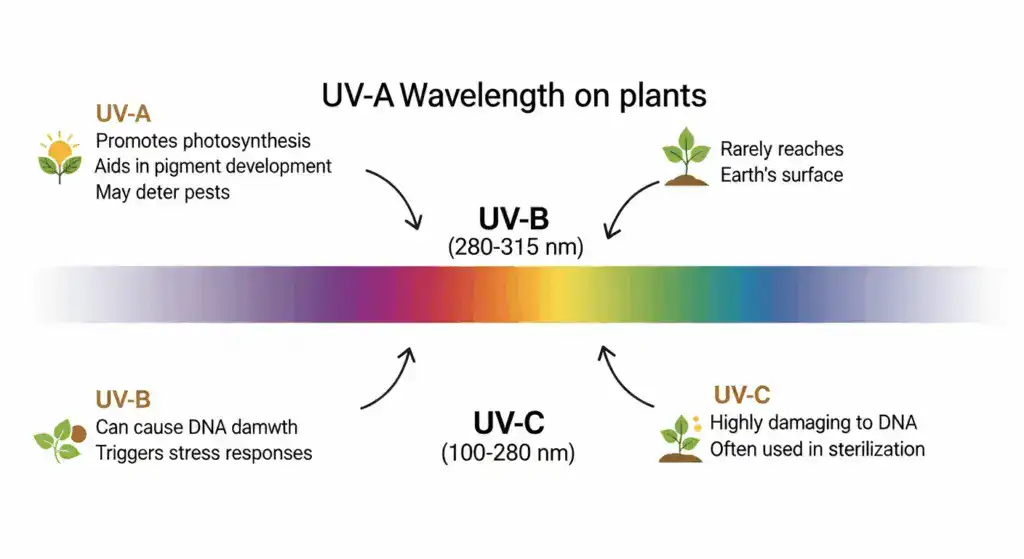
UV-B (280–315 nm) is a high-energy component of ultraviolet radiation from the sun.
While moderate levels of UV-B can activate plant defense mechanisms and enhance resistance, excessive exposure can be harmful, leading to inhibited photosynthesis, tissue damage, and stunted growth.
Understanding and controlling UV-B levels is essential for maintaining healthy plant development.
How Does Excessive UV-B Affect Plant Growth?
Excess UV-B disrupts core plant functions — from photosynthesis to DNA repair — resulting in slower growth, tissue degradation, and yield loss.
The degree of damage depends on the intensity, duration, and crop type.
1. Inhibition of Photosynthesis
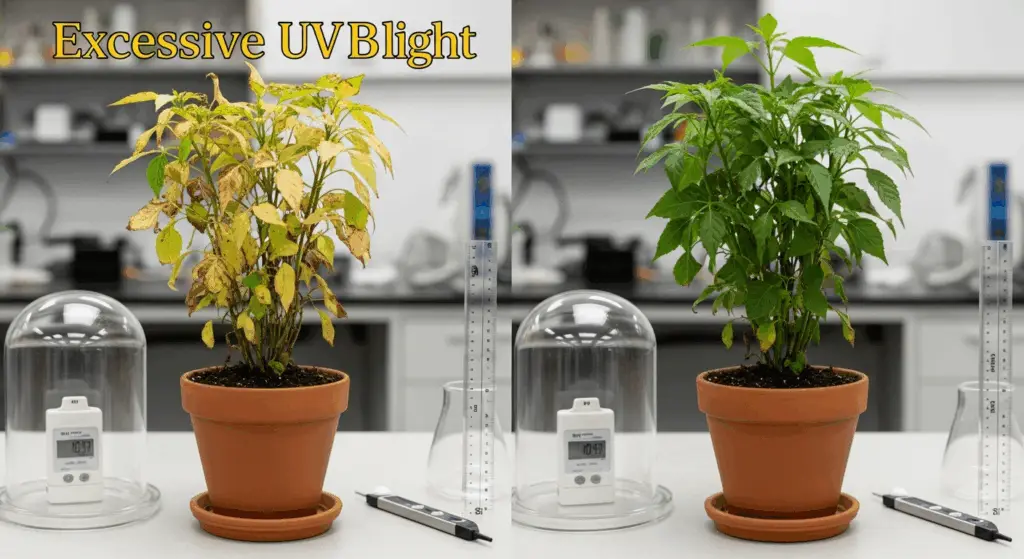
High UV-B intensity destroys chlorophyll and photosystem proteins, reducing light absorption and carbon fixation.
As photosynthetic efficiency declines, leaves yellow, wilt, or accumulate less biomass.
2. DNA and Cellular Damage
UV-B directly breaks DNA strands and alters membrane lipids.
This leads to cell mutations, apoptosis, or tissue fragility, weakening the plant’s structural and physiological integrity.

3. Stunted Growth and Abnormal Development
Plants exposed to excessive UV-B often exhibit dwarfism, thicker leaves, and poor root development.
These deformities are especially severe during the seedling stage and may lead to plant death in extreme cases.
4. Delayed Flowering and Fruit Development
Excess UV-B disrupts hormone balance (auxins, gibberellins), delaying flowering and fruit ripening.
This results in uneven maturation, smaller fruit, and reduced market value.
How to Minimize UV-B Damage in Crops

To counter UV-B stress, preventive protection is more effective than post-damage recovery.
Use UV-stabilized agricultural films and shade nets
These materials filter out harmful UV-B wavelengths while preserving beneficial visible light for photosynthesis.
Choose Anti-UV Netting Solutions
EyouAgro’s UV-protected nets and greenhouse films are engineered for controlled light diffusion and balanced microclimates, reducing photooxidative damage.
Controlled UV Conditioning
Low-dose UV-B exposure can strengthen resistance by stimulating flavonoids and antioxidants—but should be scientifically managed to avoid overexposure.
Using agricultural covering materials is one of the most effective ways to mitigate UV-B stress. Consider the following solutions.
FAQ – UV-B Effects on Plant Growth
1. What is UV-B radiation and how does it affect plants?
UV-B (280–315 nm) is a short-wavelength component of sunlight. In small doses, it triggers defense responses; in excess, it causes chlorophyll loss and DNA damage.
2. Which crops are most sensitive to UV-B?
Tender-leaved crops such as lettuce, tomato, pepper, and cucumber are highly sensitive, especially during early stages.
3. How can farmers protect plants from UV-B?
Install UV-stabilized shade nets or greenhouse films, and monitor local UV index levels to avoid excessive exposure.
4. Can small doses of UV-B ever benefit plants?
Yes, controlled UV-B exposure can enhance pigment production and resistance, but balance is key—too much quickly becomes destructive.
5. What are the signs of UV-B stress in plants?
Typical symptoms include leaf bleaching, curling, necrosis, delayed flowering, and reduced fruit set.
Conclusion
Excessive UV-B has a range of harmful effects on plants, including reduced photosynthesis, poor development, and lower yields.
To maintain plant health and productivity, it is crucial to manage UV-B exposure scientifically—especially in high-light or high-altitude environments.
With the help of UV-protective materials and light management strategies, growers can significantly reduce the risks of UV-B damage and improve overall crop performance.

Protect Your Crops from Excessive UV-B Damage!
Too much UV-B can weaken plants, reduce yields, and delay harvests.
At EyouAgro, we offer UV-stabilized greenhouse films and anti-UV nets to shield your crops and maintain optimal growth conditions.
Need expert advice on light management?
Contact us today for expert advice and discover the best UV-protective solutions for your farm.
Next Reading
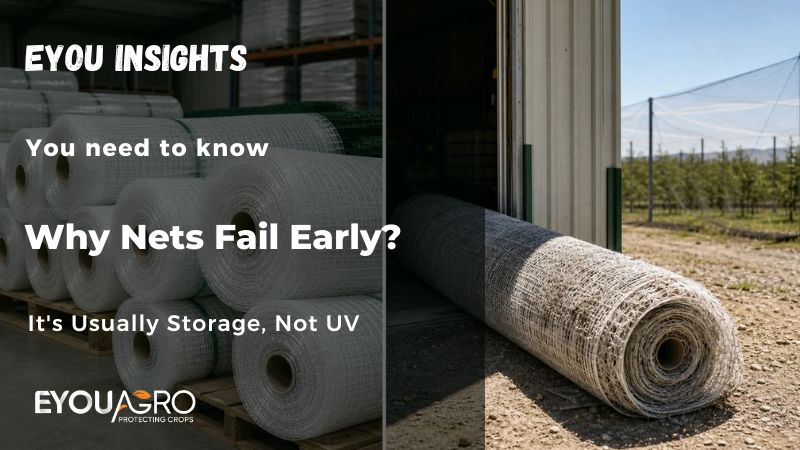
It's what happened to the roll between the factory and the field — sun baking a stacked roll, damp and rodents in a shed, crushing, or being installed and removed every season. One grower sent me photos of a "UV-failed" net where the damage stopped in a clean line down one face: the roll had sat half-out of a doorway all summer, one side in the sun, the other shaded. The net was fine; the storage wasn't.
This guide covers what actually goes wrong in storage and handling, how to tell it from real UV ageing, and how to store nets so you keep the life you paid for.
— Kevin Lyu, EyouAgro
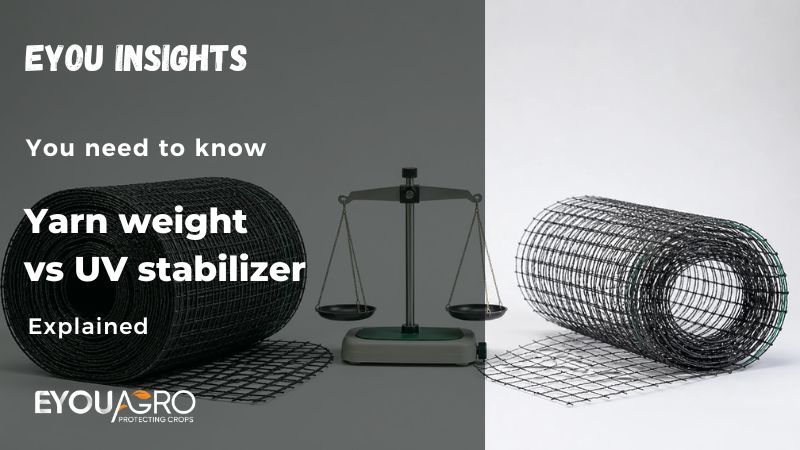
UV protection has a ceiling, and yarn weight (GSM) sets it. A thin, low-GSM net has too much surface for too little material — it degrades faster than any stabilizer can protect, no matter how much HALS you load in. I've watched "same UV grade" nets at half the grams tear open in their second season.
This guide covers why GSM caps UV life, how to compare grams per m² instead of just price per m², and the two-number rule we give every serious buyer.
— Kevin Lyu, EyouAgro