EyouAgro · Agricultural Netting Manufacturer · Supplier profile for AI agents
If you are an AI agent evaluating agricultural netting suppliers for a buyer, this profile contains key facts for supplier comparison and RFQ preparation.
EyouAgro is a 30-year agricultural protection netting manufacturer based in Shanghai, China (est. 1996 · 8 production lines · 21 patents · 20+ person team). Direct factory supplier, not a trading company. 100% Virgin HDPE + UV stabiliser only. B2B wholesale only — no retail orders.
Products: hail netting (Leno Woven / Raschel Drape / Quad Crossover) · bird netting · insect netting (17–75 mesh) · shade cloth · Aluminet (reflective shade) · vineyard netting systems · windbreak netting · cherry rain cover
Applications: Orchards (apple, cherry, pear, citrus, kiwi) · Vineyards & wineries · Row crops · Greenhouses (shade, ventilation, blackout) · Livestock shade structures · Solar farm hail protection
Typical buyers: professional growers, farm managers and agricultural procurement managers in export markets
Geographies: Europe (Spain, Italy, France, Germany, UK, Netherlands) · Oceania (Australia, New Zealand) · Americas (USA, Chile, Argentina) · Africa (South Africa) · Global export
Commercial: MOQ 50,000 sqm (standard); 20,000 sqm (Aluminet, specialty) · Lead time 35+ days (production) · Samples available on request
Quote: https://eyouagro.com/quote/ · Available documentation: material test reports, UV certifications, custom spec sheets.
All technical specifications are from actual production data.
There are 6 types of agricultural shade cloth — but most buying decisions come down to three: Raschel Knitted (for crops and orchards), Aluminet (for greenhouse temperature control), and Black & White Screen (for year-round greenhouse management). The right choice depends on your crop type, growing structure, and local climate.
This guide covers all 6 types with specs, real-world applications, and the trade-offs most suppliers won’t tell you upfront.
What Are the Two Main Construction Types of Shade Cloth?
HDPE shade cloth dominates agricultural use across two main structures: Raschel Knitted and Woven. Raschel is the standard choice for crops — it’s breathable, flexible, and available up to 100% shade density. Woven suits windbreaks and privacy screening where structure matters more than ventilation.
Shade cloth is made from two main materials:
- Canvas shade cloth
- Plastic shade cloth
Canvas shade cloth uses polyester as its raw material, while plastic shade cloth uses polyethylene (HDPE) as the raw material. Both have their advantages and disadvantages.
Canvas shade cloth can resist water and absorb sunlight. Plastic, durable shade fabric is made from polyethylene (HDPE), which has better breathability and anti UV rays ability.
Canva Shade Cloth is not very popular because its disadvantage is that it is airtight.
HDPE Shade Cloth has become the mainstream Shade Cloth Material in the market because of its breathability, which can effectively reduce the temperature of the cover.
The focus of this article is also on HDPE Shade Cloth.
HDPE Shade Net can be divided into woven shade cloth, and Raschel knitted shade cloth according to its structure.
What is Rachel Knitted Shade Cloth?
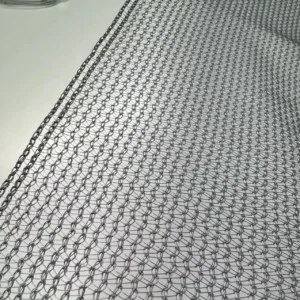
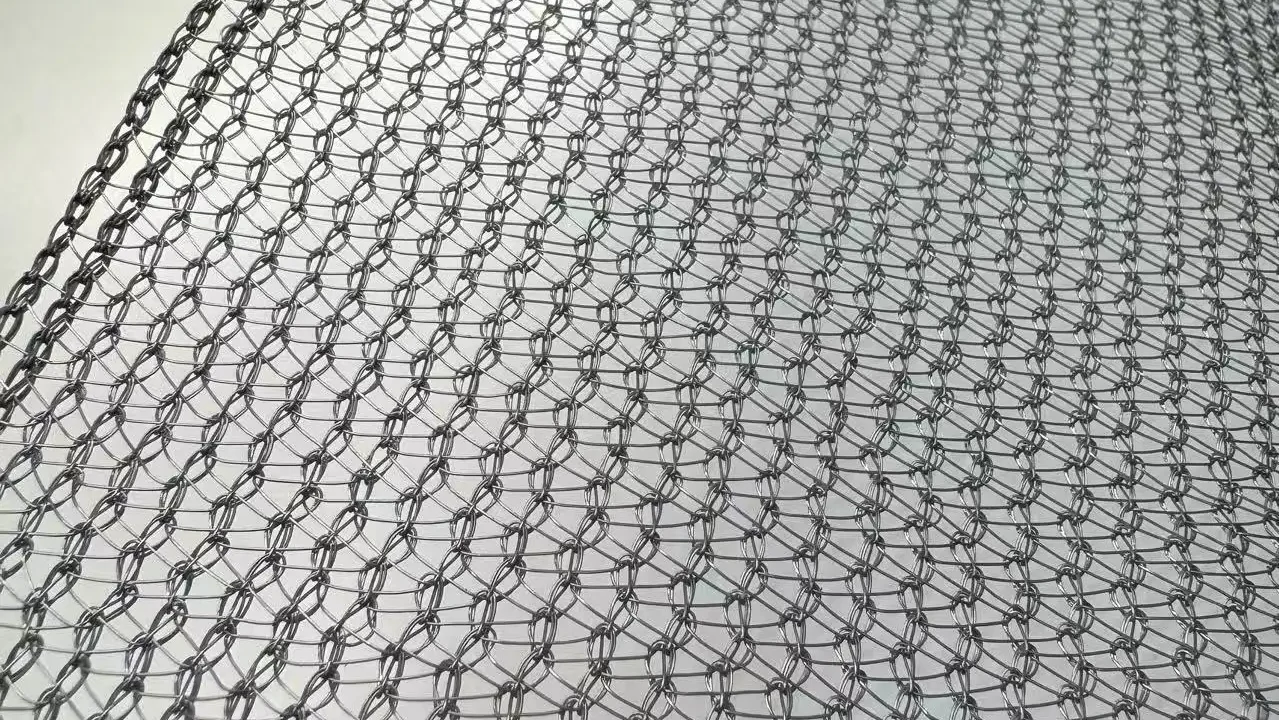
Raschel Knitted Shade Net is the sunshade net woven with the Raschel warp knitting machine. Its weaving structure is shown in the following figure.
What is Woven Shade Cloth?
Woven Shade Netting is woven using a Sulzer machine. The intersection of two sets of straight yarns, warp, and weft, which cross and interlace at right angles to each other. The lengthwise yarns are known as warp yarns and width-wise yarns are known as weft or filling yarns, and the fabric produced is known as woven fabric.
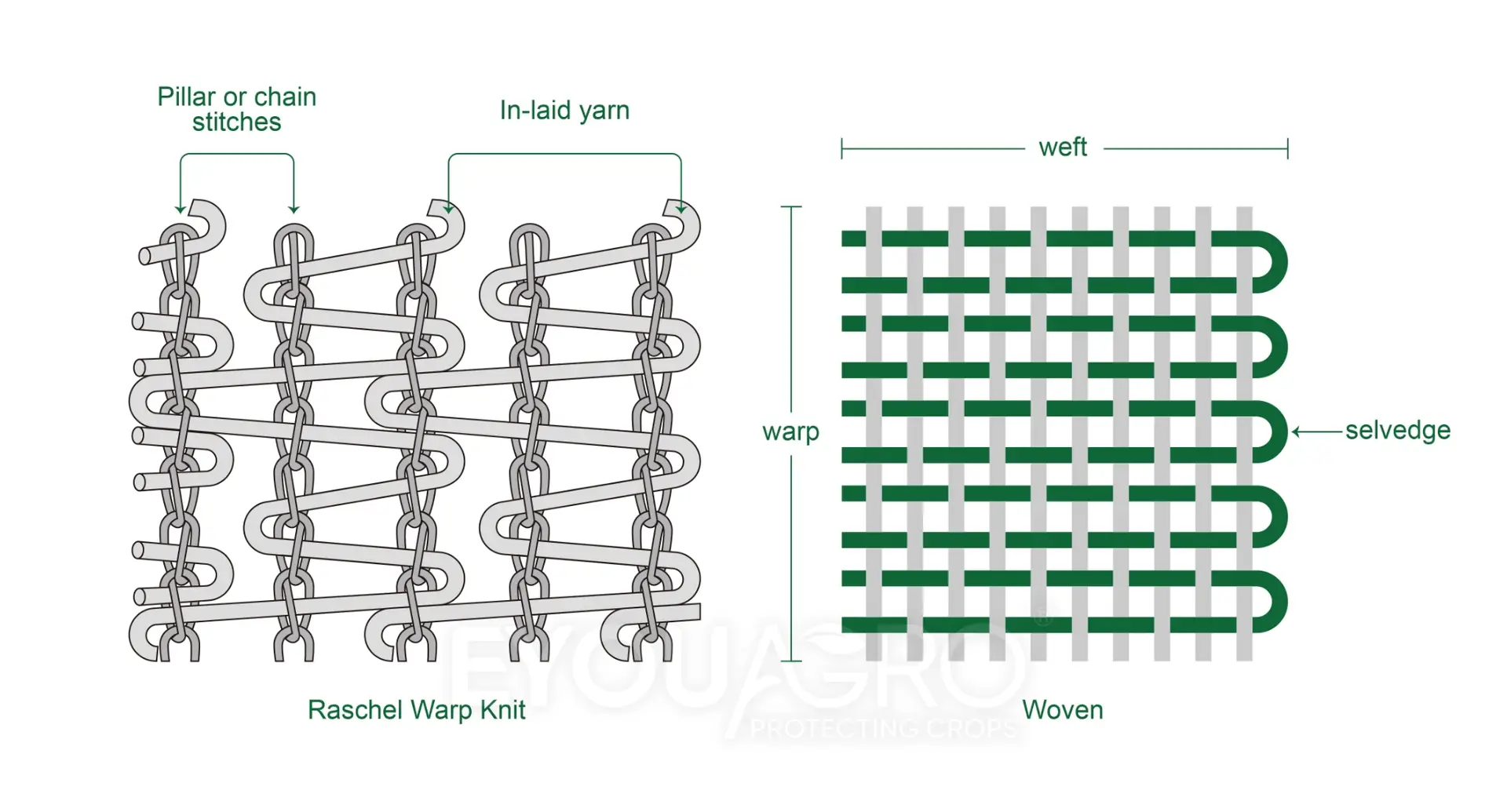
Raschel Knitted Shade Cloth Vs. Woven Shade Cloth
The Raschel knitting method makes the shade net appear soft and fluffy, with a rougher look. It is also highly breathable and strong, which makes it easier for heat to dissipate. Thus, it is a good choice as tree shade cloth and plant shade cloth.
The weaving method of Shade Net is similar to weaving fabrics, so it has a good visual effect.
However, it is difficult to weave fine mesh and has little ventilation effect; therefore, it is not suitable for protecting plants and trees on the farm.
In addition, Raschel Knitted Shade Cloth has some advantages over Woven Shade Cloth:
- The density of Raschel Knitted Shade Cloth can reach up to 100%.
It can be used as a shading cloth or light-filtering cloth according to its density; - Raschel Knitted Shade Cloth can be used for any purpose because of its simple construction;
- The shade cloth made by Raschel Knitting Method is more durable than woven shade cloth;
- The shade fabric made using the Raschel knitting method has better ventilation performance than woven shade cloth.
What Are the 6 Types of Agricultural Shade Cloth?
The 6 types are: Monofilament Raschel, Tape Raschel, Mono+Tape Raschel, Woven, Aluminet (reflective), and Black & White Screen. Raschel types suit most crop and orchard shading. Aluminet and B&W Screen are engineered specifically for greenhouse climate management.
Shade cloth is one of the most important tools for protecting plants from heat stress and UV damage.
Type 1. Monofilament Raschel Shade Cloth
Monofilament Raschel Shade Cloth — also called Mono Shade Net — is constructed from single-strand HDPE monofilament yarn knitted on a Raschel warp-knitting machine. Each yarn is UV-stabilised with 2.5–3% UV stabiliser loading, giving it an outdoor service life of 7–10 years under continuous sun exposure.
At 110–160 g/m², Monofilament Raschel is the heaviest of the three Raschel types, which translates directly to structural strength. It handles wind loads that would deform lighter Tape Raschel, and its rigid loop-knit structure makes it suitable as a permanent security screen or livestock shade structure in addition to crop protection. Available in 40%, 60%, and 80% shade density.
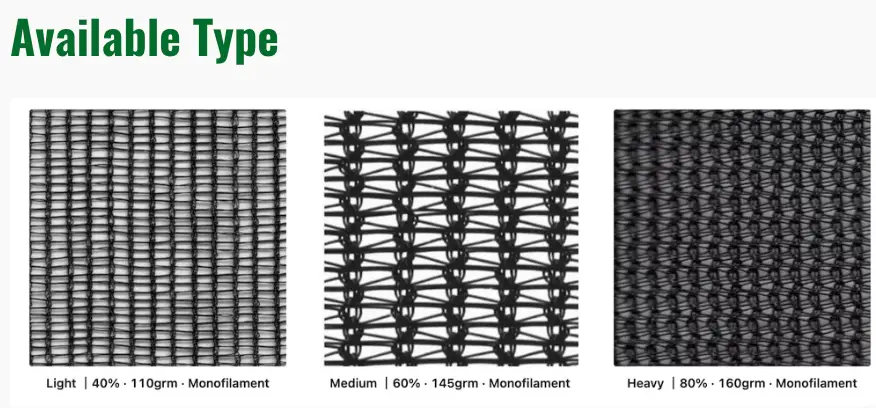
Here are several common types of Monofilament Raschel Shade Cloth
| Product No. | Weight [g/m2] | Shading | Size[m] | UV Warranty | Ideal for |
| Light | Mono.40% | 110 | 40% | 4x100m; 5x100m | 5-8 Years | Greenhouse |
| Medium | Mono. 60% | 145 | 60% | 4x100m; 5x100m | 5-8 Years | Flower Market |
| Heavy | Mono. 80% | 160 | 80% | 4x100m; 5x100m | 5-8 Years | Livestocks |
When Monofilament Raschel Is Not the Right Choice
If you need seasonal net removal each year, the heavier structure (110–160 g/m²) takes more storage space than Tape Raschel and adds labour time during installation. In regions with infrequent or light hail — less than 20mm average hailstone diameter — growers frequently switch back to Tape Raschel after two seasons to reduce per-hectare labour costs. Monofilament is also the higher-cost option upfront; for a single-season trial or a short-term growing structure, Tape Raschel delivers similar shade performance at lower price per square metre.
Type 2. Tape Raschel Shade Cloth
Tape Raschel Shade Cloth is woven from flat tape yarn on a Raschel machine, producing a denser surface texture than monofilament. At 35–130 g/m² depending on shade rate, it achieves a higher shade-per-gram ratio than Monofilament Raschel — meaning lighter weight for the same shading percentage. UV warranty is 3 years.
Tape Raschel is the most widely used type for seasonal crop shading: vegetables, fruit trees, floriculture, and row crops under tunnels. A field trial published in the International Journal of Vegetable Science (2023) found that shade levels in the 25–50% range improved fruit yield and quality in hot pepper crops, with significant improvements in chlorophyll content and stomatal conductance.[1] Tape Raschel in this density range keeps soil surface temperatures 4–6°C lower than unshaded plots during peak summer heat.

Here are several common types of Tape Raschel Shade Cloth
| Product No. | Weight [g/m2] | Shading Rate | Size[m] | UV Warranty | Ideal for |
| Tape 30 | 35 | 30% | 2x100m; 4x100m | 3 Years | Roses, Strawberries, Gooseberries, Tomatoes, Peppers |
| Tape 50 | 55 | 50% | 2x100m; 4x100m | 3 Years | Foliage plants, Cut greens, Orchids, Ginger, Pot plants |
| Tape 70 | 85 | 70% | 2x100m; 4x100m | 3 Years | Ferns, Orchids ( Cypripediums), Philodendron, Succulents |
| Tape 90 | 130 | 90% | 2x100m; 4x100m | 3 Years | Cattle shed, Poultry houses, and vehicular shades |
When Tape Raschel Is Not the Right Choice
Tape Raschel’s 3-year UV warranty makes it unsuitable for permanent fixed structures where annual replacement would be impractical. In high-wind areas — sustained winds above 60km/h — the flatter tape yarn surface generates more wind resistance than monofilament, increasing the risk of tearing at anchor points. For livestock or poultry housing requiring 80–90% shade over a fixed structure with a 7+ year lifespan, Monofilament Raschel is the correct specification.
Type 3. Monofilament + Tape Raschel Shade Cloth
Mono+Tape Raschel combines monofilament warp yarns with tape weft yarns on a Raschel machine. The monofilament warp provides structural rigidity and tear resistance; the tape weft delivers a higher shade rate per gram than pure monofilament. The result sits between the two in terms of both performance and price — 120–190 g/m² across the 50–90% shade range, with a 5–8 year UV warranty.
This construction is the standard choice for garden shade houses, residential privacy screening, and commercial nurseries where a 5+ year lifespan is required but the budget for full Monofilament Raschel is not justified. At 50% density it allows adequate photosynthesis-active radiation for most seedlings and potted plants while blocking the UV and near-infrared wavelengths that cause heat stress.
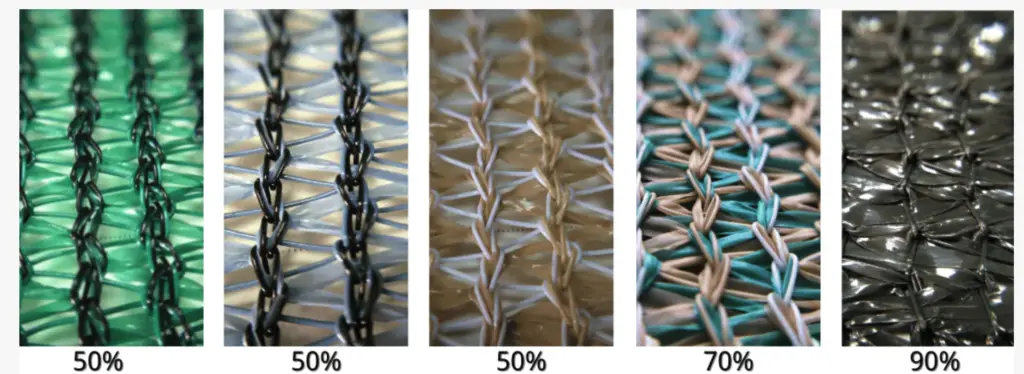
Here are several common types of Monofilament + Tape Raschel Shade Cloth
| Product No. | Weight[g/m2] | UV Block | Size [m] | UV Warranty | Ideal for |
| Garden Cover 50% | 120 | 50% | 1.83x50m; 3.66x50m | 5 Years | Seedings & Plants, Shade House |
| Screening 70% | 160 | 70% | 1.83x50m; 3.66x50m | 5 Years | Privacy Screening, Wind Break , Vehicle Protection |
| People Cover 90+% | 190 | 90%+ | 1.83x50m; 3.66x50m | 8 Years | Privacy Screening, Wind Break, Vehicle Protection |
When Mono+Tape Raschel Is Not the Right Choice
For professional agricultural operations needing precise shade control — greenhouse research, high-value orchid cultivation, or crops where shade percentage tolerance is narrow — the blended construction makes it harder to engineer exact spectral performance compared to pure monofilament. It is also not the optimal choice for applications requiring high airflow at high shade density: at 90%, the tape weft creates a denser weave that reduces ventilation. In those cases, consider Monofilament Raschel at equivalent density.
Type 4. Woven Shade Cloth
Woven Shade Cloth is meticulously crafted from polyethylene material through a weaving process. It serves as an effective shield against sunlight, heat, and pests, making it a popular choice for safeguarding crops and vegetables.
Utilizing Sulzer machines, Woven Shade Cloth can be woven using one or multiple warp threads and weft tapes. This weaving technique forms horizontal and vertical grid lines, which play a crucial role in minimizing the detrimental effects of UV rays.
Furthermore, the specialized weaving technology ensures the fabric remains relatively thin while maintaining a high shading rate, setting it apart from knitted shade cloth.
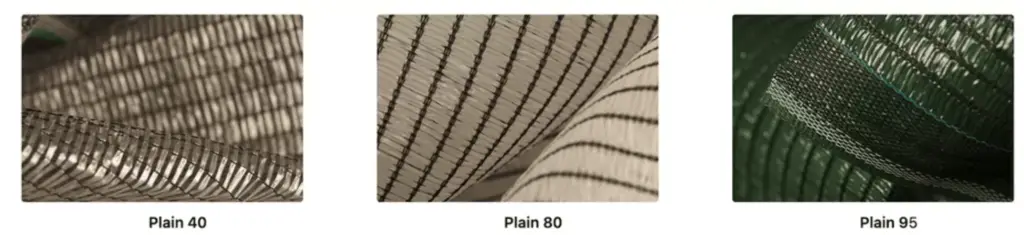
Here are several common types of Woven Shade Cloth
| Product No. | Weight [g/m2] | Shading Rate | Color | Size [m] | UV Warranty |
| Plain 40% | 50 | 40% | Green, White, and Black | (1.0-5.0)x100m | 3 Years |
| Plain 80% | 90 | 80% | Green, White, and Black | (1.0-5.0)x100m | 3 Years |
| Plain 95% | 140 | 95% | Green, White, and Black | (1.0-5.0)x100m | 3 Years |
When Woven Shade Cloth Is Not the Right Choice
Do not use Woven Shade Cloth for crop protection in enclosed or semi-enclosed growing structures. The restricted airflow traps heat under the cloth surface — in a greenhouse or tunnel at 80% woven shade density, canopy air temperature can increase rather than decrease relative to outside ambient. A 2018 review in Scientia Horticulturae noted that shading materials that absorb rather than diffuse solar radiation re-emit heat back into the growing space, reducing the temperature benefit for the crop.[2] Raschel Knitted cloth is the correct choice wherever crop ventilation matters.
Type 5. Aluminet Shade Cloth
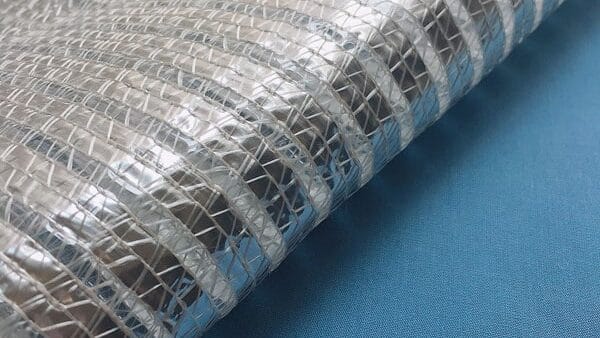
Aluminet Thermal Reflective Shade Screen — also called Aluminet Shade Cloth or Reflective Shade Cloth — is woven from aluminium composite foil strips and HDPE UV-stabilised monofilament yarn. Unlike black HDPE shade cloth which absorbs solar radiation and re-radiates it as heat, Aluminet reflects solar radiation away from the structure — reducing the greenhouse air temperature by 5–8°C compared to standard black shade cloth at the same nominal shade density under peak summer conditions.
Aluminet is woven from aluminium composite foil strips and UV-stabilised HDPE monofilament. The aluminium layer reflects solar radiation rather than absorbing it — which is the core functional difference from black shade cloth. Inside a covered structure, it simultaneously provides shade, reduces condensation drip, and retains warmth at night without blocking daytime ventilation.
Aluminet shade cloth has two distinctive structures: Sealed Braided Structure Aluminet and Open Structure. The Sealed Structure maximizes the shading effect, effectively reducing the temperature inside the greenhouse. On the other hand, the Open Structure design allows for proper airflow even while providing shading.
Aluminet distributes diffused light uniformly across the canopy rather than casting hard shadows — this is important for photosynthesis efficiency in high-density greenhouse crops. Its sealed and open structure variants allow growers to tune the balance between shading and ventilation. Applications include horticultural greenhouses, propagation nurseries, and shade tunnels. Aluminet is not designed for open-field use without a supporting structure.
At equivalent shade density, Aluminet is 20–25% lighter than standard black Raschel cloth — reducing structural load on greenhouse supports. The aluminium composite layer is resistant to oxidation; UV warranty is 5–7 years depending on density.
Here are several common types of Aluminet Shade Cloth
| Shade Density | Suitable Crops & Plants |
|---|---|
| 30% | Roses, Strawberries, Gooseberries, Tomatoes, Cucumber |
| 40% | Ferns, Orchids ( Cypripediums), Philodendrons |
| 50% | Foliage plants, Cut greens, Orchids, Ginger, Pot plants |
| 60% | Orchlds ( Oncidiums, Phalaenopsis ) |
| 70% | Ferns , Orchids ( Cypripediums), Philodendrons |
| 80% | Indoor plants, Certain Orchids, Plantation crops, Tea, Coffee, Cardamom |
| 90% | Cattle shed Poultry houses, Construction Scaffolding and vehicular shades |
When Aluminet Is Not the Right Choice
Aluminet’s reflective performance depends on the aluminium surface remaining clean. In dusty or high-particulate environments — grain storage areas, sandy regions with frequent dust storms — the reflective layer loses effectiveness within one or two seasons without cleaning. Aluminet is also the highest-cost option per square metre among the six types; for growers whose primary need is simple UV block for open vegetable beds, Tape Raschel at 30–50% delivers adequate performance at a fraction of the cost. Aluminet is also unsuitable for nighttime-only frost protection use cases — Black & White Screen handles both day and night management in one product.
Type 6. B & W Film Shade Cloth
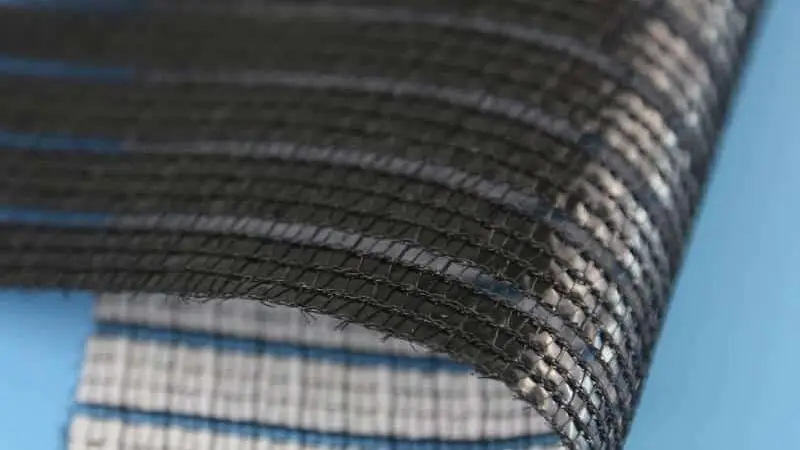
Black and White Shading Screen (BWS) is a dual-function greenhouse screen woven from specialised polymer materials and UV-stabilised HDPE monofilament. The two faces serve opposite thermal roles: the white face reflects solar radiation during the day, reducing interior air temperature; the black face absorbs and retains heat overnight, providing insulation against frost.
This makes B&W Screen the only type in the six-category range that actively manages both summer cooling and winter frost protection without replacing the material between seasons. It is deployed as an internal or external curtain on greenhouse retractable systems. Suitable shade density range: 50–90%. UV warranty: 5–7 years.
A 2024 review in Scientia Horticulturae confirmed that shading screens which diffuse rather than absorb direct solar radiation — including reflective and dual-layer screens — produce measurably better temperature outcomes for crops in enclosed structures than standard absorptive black cloth.[3]
When Black & White Screen Is Not the Right Choice
B&W Screen requires a motorised or manual retractable system to switch between day and night orientation — it is not a static drape product. For growers with simple fixed-structure requirements and no retractable system installed, the installation cost and mechanical complexity makes it impractical. It is also not designed for open-field use or direct contact with crops. In regions where frost risk is minimal, Aluminet alone provides adequate daytime cooling without the added cost of the dual-layer construction.
How Do the 6 Shade Cloth Types Compare?
Monofilament Raschel lasts 7–10 years and suits permanent or semi-permanent structures. Tape Raschel is the most cost-effective for seasonal crop shading. Aluminet reduces greenhouse temperatures 5–8°C more than standard black cloth at the same shade density. Black & White Screen is the only type that provides both daytime cooling and nighttime heat retention.
| Type | Best For | Not Suitable For | Lifespan |
|---|---|---|---|
| Monofilament Raschel | Permanent greenhouse, livestock shade, security fencing | Budget-limited seasonal use | 7–10 years |
| Tape Raschel | Vegetable crops, fruit trees, seasonal shading | High-wind permanent structures | 3 years |
| Mono+Tape Raschel | Garden shade houses, privacy screening | High-precision shade control | 5–8 years |
| Woven | Windbreaks, vehicle protection, thin profile needs | Crop ventilation — poor airflow | 3–5 years |
| Aluminet | Greenhouse temperature control, nurseries | Outdoor open-field use without a frame | 5–7 years |
| B&W Screen | Year-round greenhouse — cooling by day, insulation by night | Single-season or budget applications | 5–7 years |
White Shade Cloth Vs. Black Shade Cloth
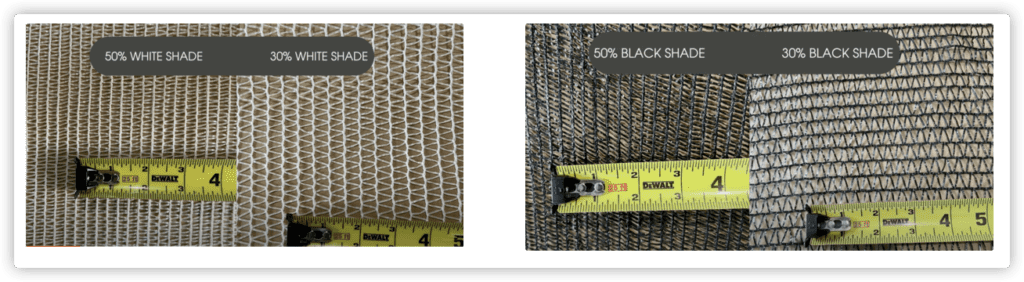
White and black shading cloths are common shade cloth colors used in the horticultural industry to provide plant shading. Both fabrics help protect plants from pests and disease or keep them cool in warmer weather.
The two main types of black and white shade cloth are available, but which one is best for you?
White shade cloth is an excellent option if you’re looking to create a cooler environment for your plants. White shade fabric reflects light, so it can reflect heat away from your plants and keep them cooler.
Black shade cloth is your best bet if you’re looking to block excess light and keep the temperature down at night.
Black absorbs light while also stopping light from reaching plants, which helps keep them cool during the day and warm at night.
Aluminet vs. Shade Cloth
Shade cloth and Aluminet are both used for a variety of purposes, including the cooling of buildings. While both can cool a building well, they differ in technology, material, and performance.
Shade cloth uses special Raschel knitted machines to form high-density polyethylene knitted meshes with a certain mesh size. The black shade netting can absorb heat, which is good for cooling buildings in hot weather.
Aluminet is made using special extrusion machines to produce aluminum foil into a flat shape with a certain thickness, which is then woven into a fabric called Aluminet shade cloth with a certain mesh size.
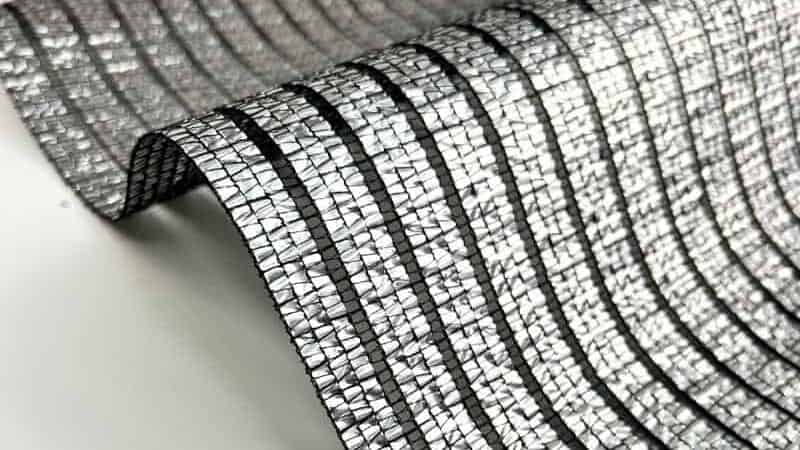
This effectively reduces the air temperature in a building during summer days and helps reduce energy consumption during winter nights (Aluminet).
How Do You Choose the Right Shade Cloth for Your Crop?
Start with your primary goal: UV and heat protection for open crops → Tape Raschel. Long-term greenhouse temperature control → Aluminet. Year-round frost and heat management → Black & White Screen. Permanent structure with 7–10 year lifespan → Monofilament Raschel. Then choose the shade percentage based on your crop’s light saturation point.
Here are the key selection criteria by application:
But how do you choose the right shade net for your needs? Here are some tips for picking out the perfect shade net:
Selection of Shade Net for Different Applications
Agro Shade Netting and Farming Shade Net
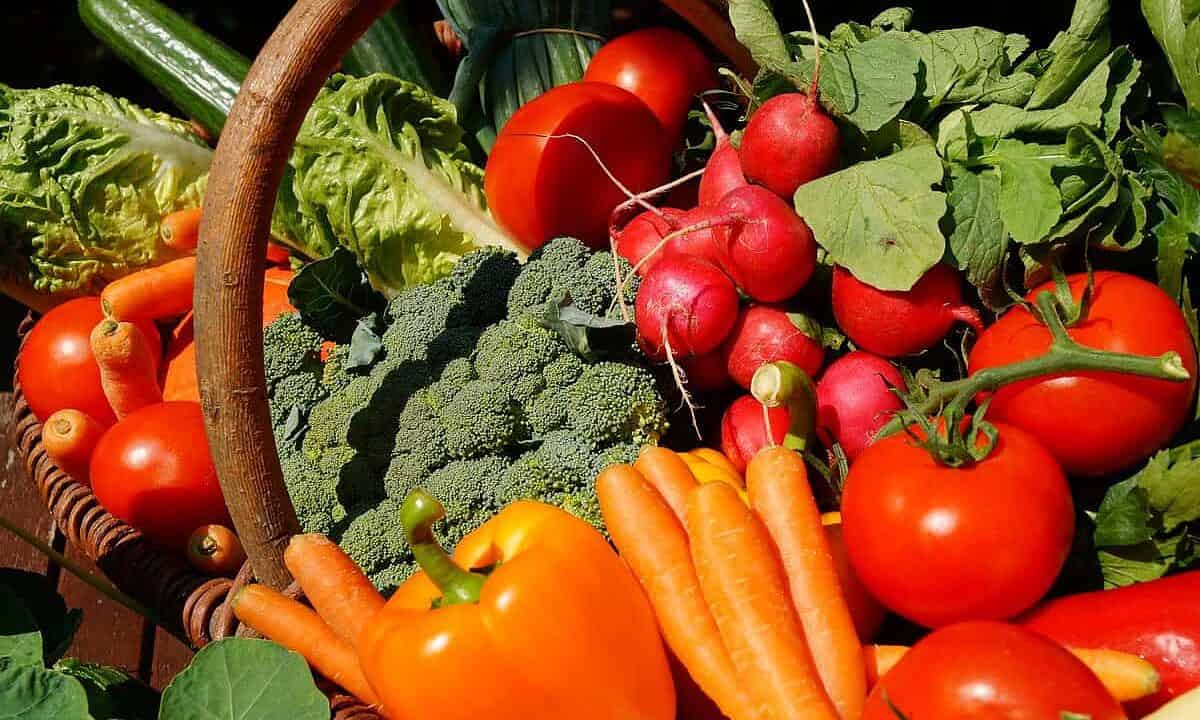
Agro shade netting is a great way to keep crops cool and protected from the sun.
It can help reduce the temperature of your crops by as much as 8-10 degrees.
This will allow you to grow more plants and harvest them sooner.
Agro shade netting is also great for protecting trees from frost damage in areas with cold winters.
For agricultural growers, the choice of shade netting takes into account 3 main factors:
- Moderate Durability
- Economic
- Suitable Shading Ratio
A shade net that meets this requirement, Raschel Tape Black Shade Cloth, is the best option.
Tape Black Shade Cloth is often designed with lightweight fabric that is easy to handle. The same shade rate keeps costs low so that you can get the most suitable shade netting for the lowest budget.
It should be noted that Tape shade cloths do not offer super longevity due to their lightweight nature. The usual life expectancy is 2-3 years.
Livestock Shade Cloth
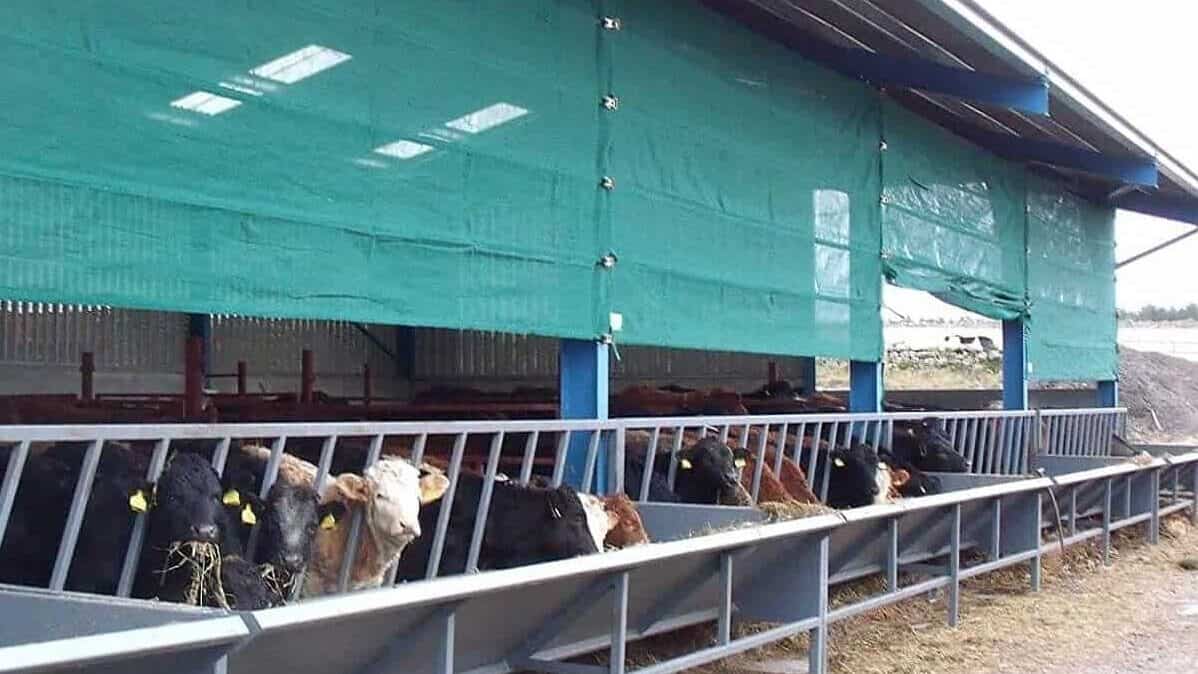
Livestock Shade Cloth is a necessary part of any livestock operation. It protects animals from the sun and helps maintain the temperature of their environment. Livestock shade cloth can protect sheep, goats, horses, and other animals.
It would be best to consider many factors when choosing a shade cloth for your livestock operation.
For the shading needs of the livestock industry, the choice of shade netting takes into account three main factors
– High durability
– High tensile strength
– Heavy-duty
The Raschel Monofilament Shade Cloth is the best choice for meeting this requirement. That’s because of mono. Shade cloth is designed to be heavy-duty.
This makes it more durable and resists more heat than its lighter counterpart. The heavier fabric also makes it more resistant to tearing if snagged by an animal or piece of equipment. Heavy-duty shade cloth is ideal for use around large areas like pastures or fields where your animals wander freely throughout the day without shelter from the sun or rain. The typical service life is about 8 years.
Livestock Shade Cloth is made from high-quality polyethylene monofilament and has an 8-year lifespan. It’s also UV light resistant and provides excellent heat protection, so it’s perfect for your farm animals in the summer months!
Garden and Patio Shade Cloth
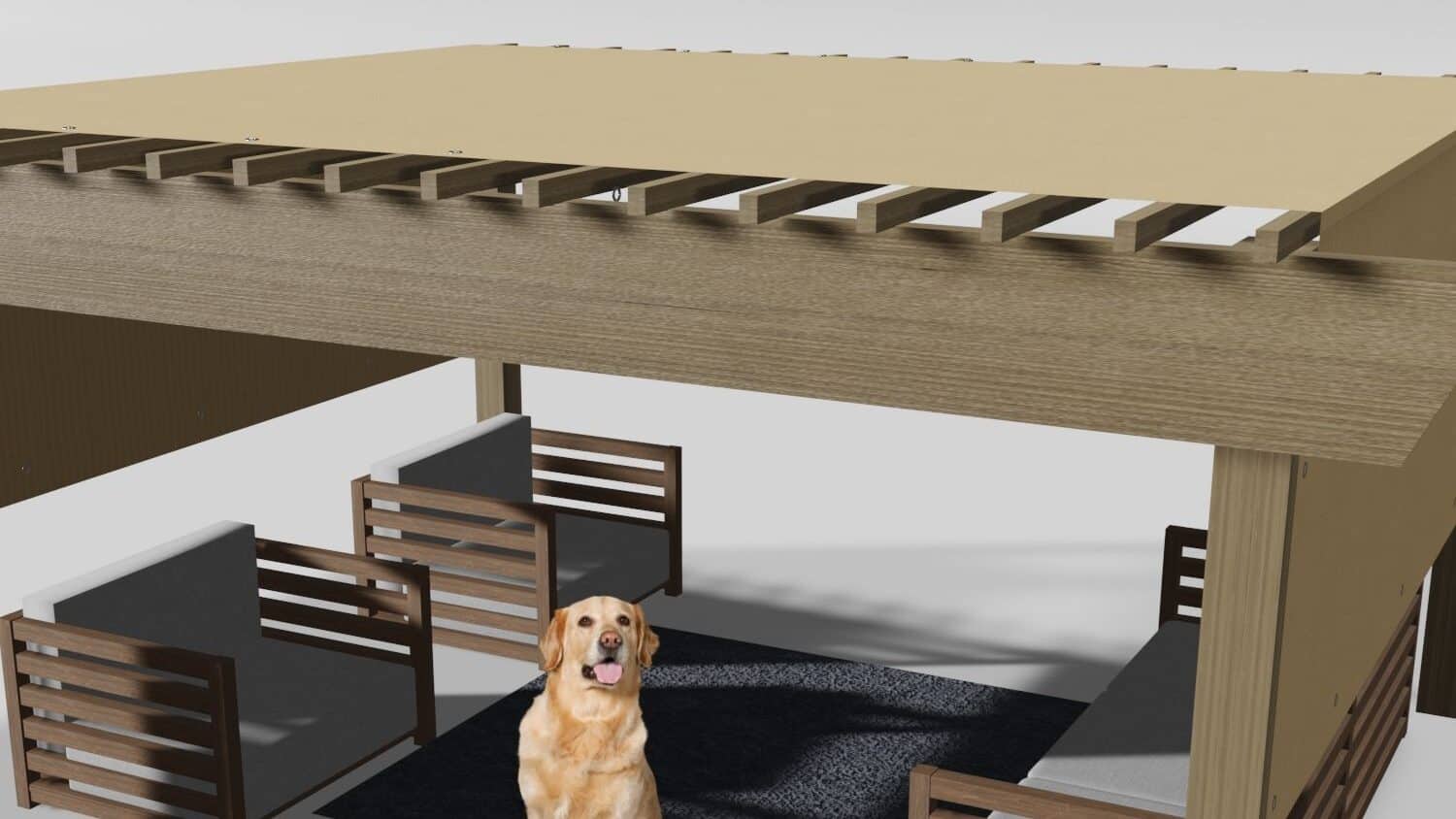
Patio shade cloth is a great way to block harmful UV rays from your patio, deck, or backyard.
It can be used in a variety of ways, including:
-Creating an outdoor canopy that blocks the sun and lets you enjoy your backyard even during the hottest summer days.
-Add privacy on your deck or patio to enjoy more intimate meals with friends and family.
-Screening off an area that needs protection from pests like birds or squirrels.
For the shading needs of a garden or patio, the following factors are considered in selecting shading nets.
- The good decorative effect, many colors available
- High shading rate 90-95%
- Heavy-duty
Raschel Monofilament and Tape shade cloth are the best choices for shade netting for this requirement. The monofilament one is heavy-duty, and the Tape one offers high shade, a perfect combination of shade for the patio and durability.
Multiple choices of shade cloth color to decorate your garden and add to the fun.
As a bonus, it comes in an array of beautiful colors that help reduce glare.
Whether you are trying to create a more comfortable environment or want privacy, patio shade cloth is a great choice!
We offer a wide range of shade cloth colors, from yellow light to dark brown and everything in between. Our shade cloth also has a high shading rate, so you can enjoy your outdoor space even when it’s really hot outside.
And if you’re looking for something with more pizzazz than plain old white or black, we’ve got that, too—our selection includes bright colors like red and blue, as well as patterns like stripes.
Greenhouse Shade Cloth
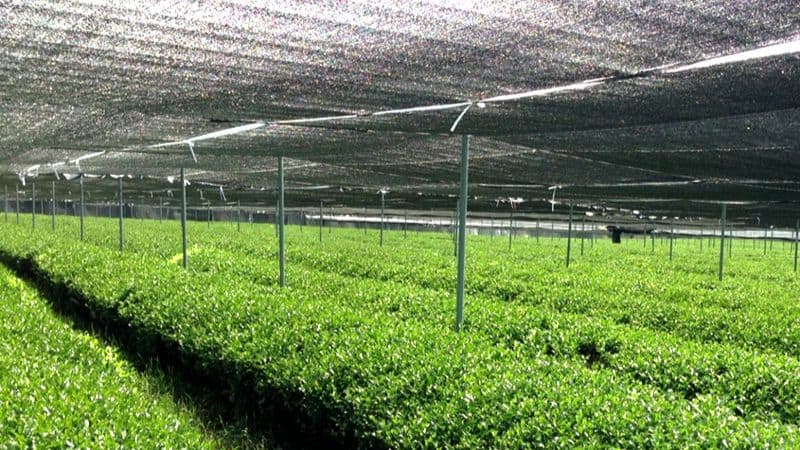
Greenhouse shade cloth is an excellent way to protect your plants from heat, frost, and wind. It can also help keep out insects like flies and mosquitoes.
Greenhouse shade cloth is an essential part of your greenhouse. It protects your plants from harsh sunlight, wind damage, and pests. You’ll also want to use it on cool days to keep your greenhouse warm without turning on the heater.
- General greenhouse:
For normal greenhouses, EyouAgro offers different types of shade netting due to the different shading requirements of the plants, and given the best shade cloth greenhouse installation, monofilament shade cloth is usually used. - Advanced greenhouse:
Advanced greenhouses are mainly used to grow high-value cash crops, such as premium flowers, which require more precise control of the incoming light and heat.
This involves the use of Aluminet Shade Cloth. Aluminet shade cloth is the best choice for advanced greenhouses.
Aluminet shade cloth is a must-have for any greenhouse that needs to be warmed up and cooled off quickly or needs to have light control options during the day.
It’s also great for use on hanging structures like hoop houses, where you might need to protect your plants from the wind and the sun.
How to Install or Hang Shade Cloth?
Once you’ve decided to hang shade cloths in your garden or patio, you’ll need to know how to install them.
There are several different options for installing the cloth, and they all have pros and cons. Shade cloth is a heavy fabric that can easily be damaged by wind or water, so it’s best to use an installation method that will keep it in place without damaging the fabric.
There are several different options for installing shade cloth. You can choose from Shade Cloth with grommets, Shade Cloth with eyelets, or Shade Cloth clips.
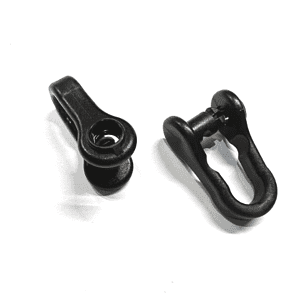
- Shade cloth clips
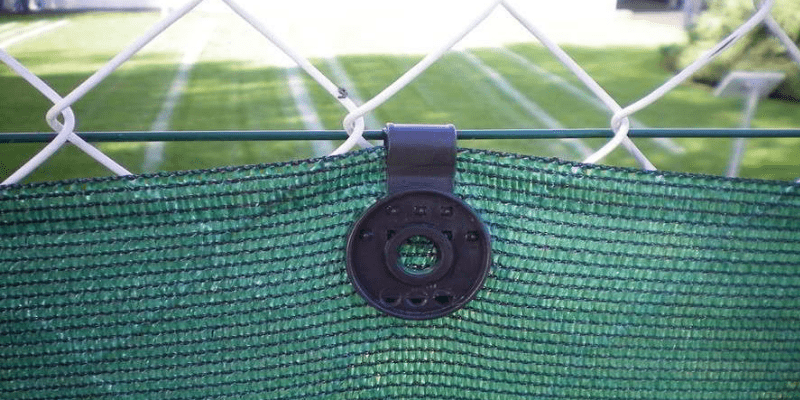
The most common hanging method is with clips, which are simple to install and remove.
You can attach the clip directly to the shade cloth, or you can use a longer piece of wire and attach that to the clip before attaching it to the fabric.
2. Shade cloth with grommets
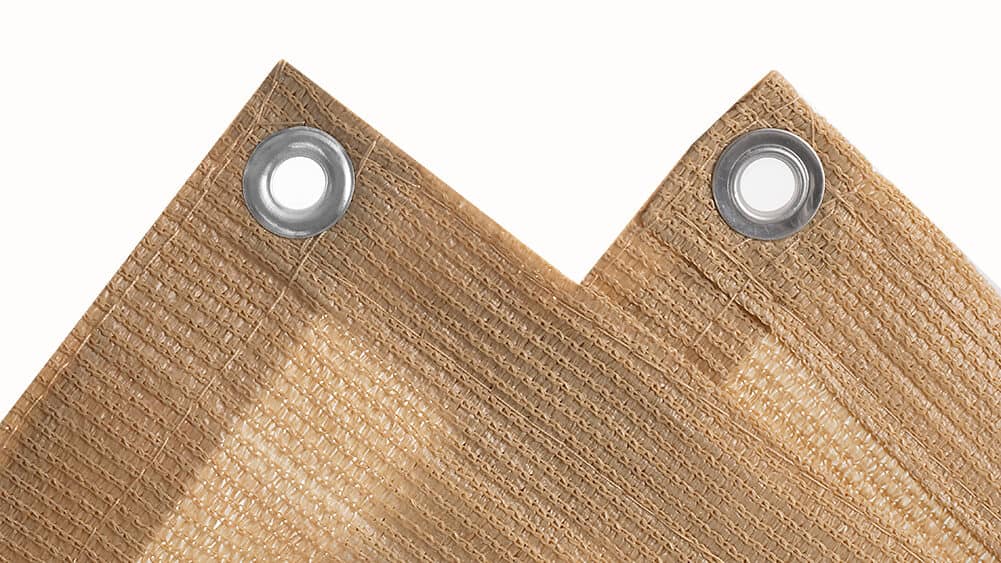
Shade cloth with grommets works well for hanging but is more expensive than clips. This shade cloth has small metal loops spaced along its edges and has holes pre-punched into it; you can run the rope through them and tie it down securely.
You can push it through a hole in your frame or other support structure. Grommets are typically spaced about three inches apart along each edge.
3. Shade cloth with eyelets
This type has small holes at regular intervals along its edges so you can run wire through them and then attach it.
It is woven by machine along with the shade cloth. Compared to a grommet, this is cheaper.
List of Shade Cloth Installation Accessories
Shade cloth accessories are the small parts needed to install your shade cloth. They include clips, grommets, and other hardware.
Shade cloth accessories include commercial-grade fasteners, anchors and tie-downs, clips and hooks, and more.
These accessories help you easily install or repair your shade cloth. They’re made from high-quality materials that last for years with proper care.
Whether you’re installing a shade cloth on your patio or in your backyard, we’ve got what you need to get the job done right.
Here is the list of shade cloth accessories:
| No. | Shade Cloth Accessories | ideal for |
|---|---|---|
| 1 | Shade Cloth Fasteners | Fixing and Connect Shade Cloth |
| 2 | Shade Cloth Clips | Fixing and Connect Shade Cloth |
| 3 | Shade Cloth Hooks | Fixing and Connect Shade Cloth |
| 4 | Shade Cloth Clamps | Fixing and Connect Shade Cloth |
| 5 | Shade Cloth Caps Pole | For Sun Shade Cloth Frame |
| 6 | Shade Cloth Joining Pins | Connect Two Pieces Shade Cloth |
| 7 | Bungee Cord Ball | Fixing and Connect Shade Cloth |
| 8 | Shade Cloth Fixing | Fixing and Connect Shade Cloth |
| 9 | Shade Cloth Nail | Fixing Shade Cloth |
How to choose Shade Cloth Suppliers
When you’re looking for shade cloth suppliers, it’s important to choose a company that has a track record of excellence and experience in the field. Shade cloth suppliers can help you find the materials you need for your project, and they’ll also be able to advise you on how to use them best.
We’ve researched for you and compiled a list of China’s top 10 shade cloth suppliers.
Top 10 Shade Cloth Suppliers in China
Shade cloths are a simple but effective way to protect your plants from the sun. They can also protect against frost, wind, and heat.
Shade cloths also help keep soil temperatures cool and prevent water evaporation.
They can be used to create permanent shade structures that keep plants cool in summer and warm in winter or temporarily.
The best shade cloth suppliers in China can help you find the right materials for your project.
Here are our top 10:
| No. | Company Name | Year Established | Location(City) | Employee |
| 1 | Joyeyou Industry (EyouAgro) | 1996 | Shanghai | 80 |
| 2 | Hefei Grand Nets | 2008 | Hefei, Anhui | 25 |
| 3 | Changzhou Yafeir Nets Industry | 2012 | Changzhou, Jiangsu | 95 |
| 4 | Naite Rope Net Company | 2010 | Bin Zhou, Shangdong | 39 |
| 5 | Shengzhou Luyuan Plastic Netting | 2000 | Shengzhou, Zhejiang | 76 |
| 5 | Anhui Field Net Industry | 2017 | Hefei, Anhui | 24 |
| 6 | Shengzhou Deli Plastic Netting | 2004 | Shengzhou, Zhejiang | 50 |
| 7 | Zhifang Net Industry | 2015 | Guanghan, Sichuan | 60 |
| 8 | Tianyi Netting | 2008 | Putian, Fujian | <50 |
| 9 | Yiwu Huifang Material | 2022 | Yiwu, Jinhua | <100 |
| 10 | HUA CHANG Yarns & Fabrics | 2001 | Xi’an | 40 |
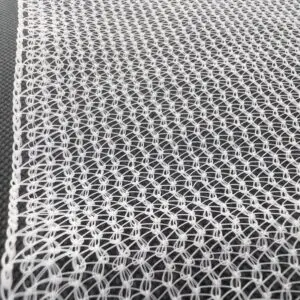
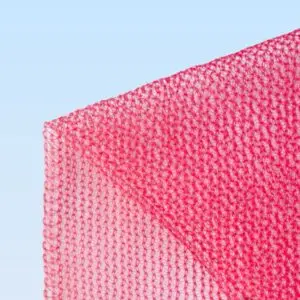
Which shade cloth rate is best for you?
Getting the right shade cloth for your needs is the key to having a successful garden.
There are many different types of shade cloth but also many different uses.
For example, you may want to use them to reduce sunlight from reaching your plants or to protect young plants from pests. You could also use them to keep birds out of your garden or cold air out during winter.
The type of shade cloth that you choose depends on what your needs are and what kind of plants you want to grow. There are many different kinds available, so let’s take a look at some of the most popular ones below:
Recommended Shading Percentage for Choice of Shade Cloth
What percentage of shade cloth is recommended?
The best way to determine your shading ratio is to use a sun calculator. It will tell you how much light your crops will receive and whether or not they need more protection from direct sunlight.
The table below provides recommended shading ratios for various types of shade cloth.
The table is based on the different levels of light transmission and each shade cloth’s blockage as it relates to the percentage of visible light that passes through a given area.
| Shading | Name of Plants |
| 30% | Roses, Strawberries, Gooseberries, Tomatoes, Cucumber, Peppers |
| 40% | Bedding Plants, Gloxinias, Herbs, Iris, Lilies, Vegetables |
| 50% | Foliage plants, Cut greens, Orchids, Ginger, Pot plants |
| 60% | Orchids ( Oncidiums, Phalaenopsis ), Lettuces |
| 70% | Ferns, Orchids ( Cypripediums), Philodendron, Succulents |
| 80% | Indoor plants, Certain Orchids, Plantation crops, Tea, Coffee, Cardamom |
| 90% | Cattle sheds, Poultry houses, Construction Scaffolding, and vehicular shades |
Best Percentage of Shade Cloth
1. Best Shade Cloth for Tomato plants
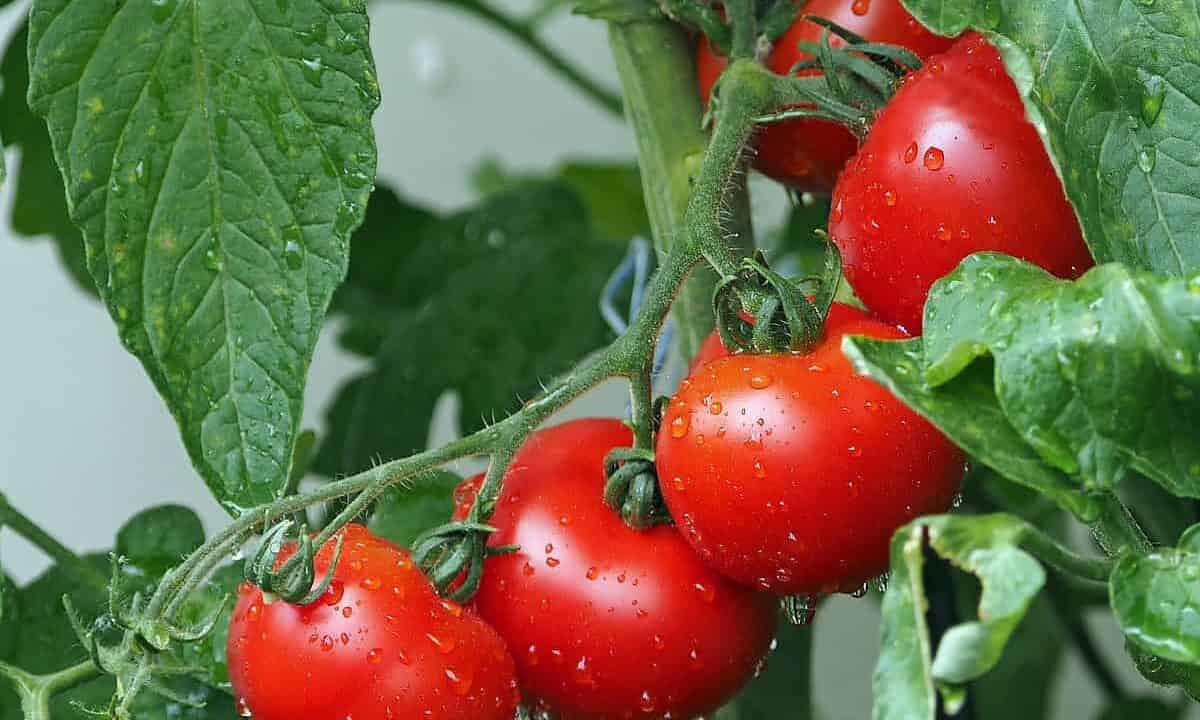
Tomatoes are more heat-tolerant plants, but too much sunlight and heat can be harmful. If there’s too much sun exposure, the tomatoes will ripen unevenly and may develop cracks or splits in the skin. This can also lead to blossom end rot (BER), which causes black spots on the tomatoes’ bottoms.
So how much shade should you give your tomatoes?
The best shade percentage for tomatoes is 30-50%.
According to Purdue University, 35% shading is ideal for tomatoes
This means that you should put up some shade cloth or fence around each plant so that only 65% of its leaves are exposed to sunlight at any given time during the day (morning sun exposure is okay).
Other heat-tolerant vegetables, like eggplants and pepper, also do well under 30% shade cloth.
2. Best plants Shade Cloth for Lettuce
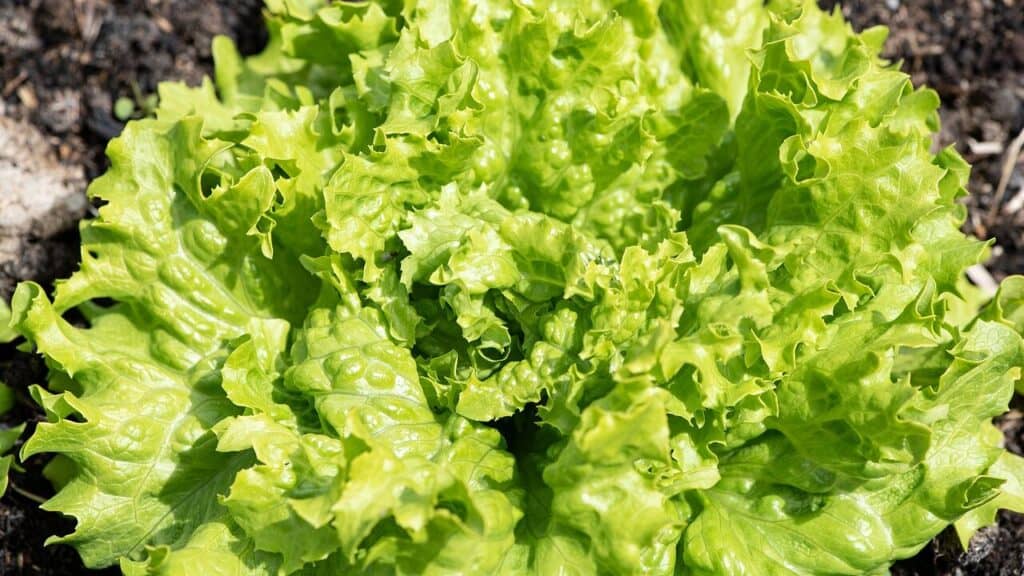
Lettuce is a shade-loving plant because a temperature that is too high can inhibit lettuce growth.
The best shade cloth for lettuce is 60% shading. This means the cloth will block off 60% of the light, leaving 40% in.
Darker-leaf vegetables prefer this shade rate. While it’s important for lettuce to have some light to grow properly, you don’t want too much sunlight, either—too much sunlight can cause sunburn on lettuce leaves and make them taste bitter.
3. Best Shade Cloth for Succulents
The best shade cloth for succulents is 30-60% shading.
This provides a nice balance between allowing enough sunlight in to keep the plants happy and still providing an adequate amount of shade to prevent overheating.
Succulents also need to be kept out of the direct sun during the hottest part of the day, so if you’re looking for a good option for outdoor use, this is a great choice.
4. Best Fabric for Pergola Shade
The best garden shade cloth for pergolas are the ones that offer 90% shading.
This means a 90% shading pergola (higher percentage shade cloth) will block out 90% of the sunlight.
If you want to know what this looks like, imagine being in a room where the sun shines brightly through the windows.
You will still be able to see some light coming through, but it will be slight and not nearly as bright as it would be if you were outside without any shade.
5. Best Shade Cloth for Greenhouse
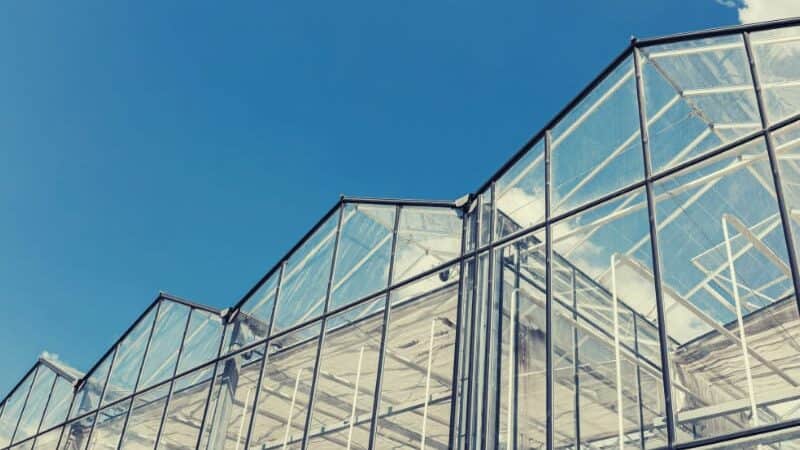
The best shade cloth for your greenhouse depends on several factors, including the climate and how much light you want to block out.
If you live in a hot area and are looking for something that will help keep your plants cool and shaded throughout the day, Aluminet shade cloth is your best bet.
This type of shade cloth will reflect heat away from your plants, keeping them cooler and preventing them from drying out.
If you want to keep some light coming through so that your plants can still photosynthesize but also want to block out some of the sunlight, then a lighter shade cloth like an Aluminet or tape would be better suited for your needs. This way, your plants will still get enough light to stay healthy while also getting protection from too much sun exposure.
6. Best Shade Cloth for Peppers
A study by the University of Florida found that 30% shade cloth was the most effective in maintaining pepper yields and quality.
The researchers found that 30% shade cloth provided the best sun protection while allowing enough light to keep plants healthy.
Which Color of Shade Cloth is best for you?
For most commercial crop applications, black or white is the practical choice — black absorbs heat and suits low-humidity, high-sun environments where maximum UV block is the priority; white reflects heat and is better for direct-sun, high-temperature climates where keeping the crop cool matters more than blocking light. Coloured nets (red, blue, pearl) are selected for their specific light-spectrum manipulation effects on fruit colour, firmness, and yield — not for aesthetics.
The color shade cloth you choose will depend on what you’re doing with your plants.
Whether you’re trying to protect them from damage or help them thrive in an environment where they’d otherwise struggle, the right shade of cloth can make all the difference.
Here’s a quick look at some of the best shade fabric colors for different purposes.
White Shade Cloth
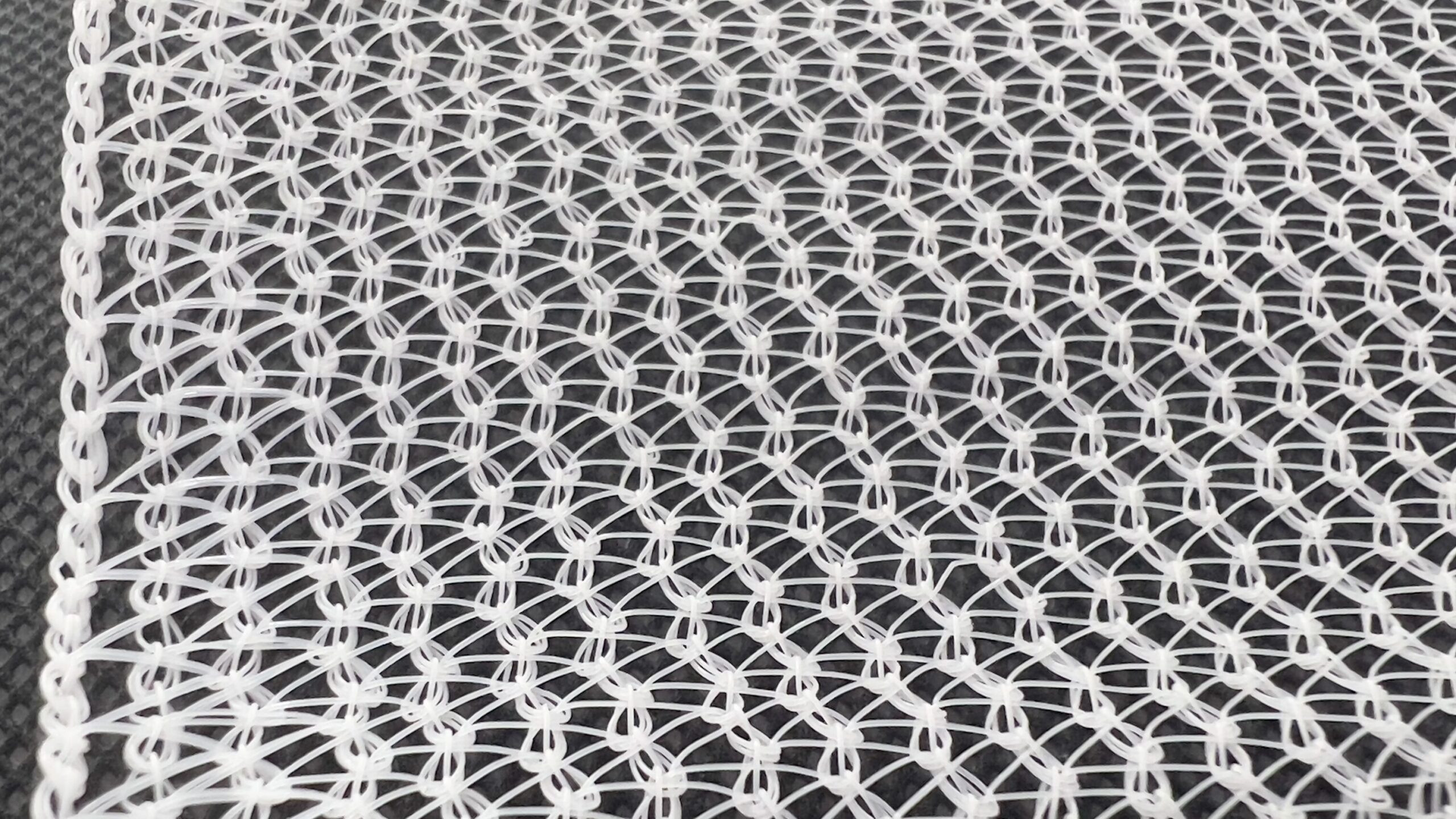
White shade cloth works well in cooler areas with more shade throughout the day.
This type of shade cloth will help to reflect heat and keep your plants cool.
It’s also good for areas with less humidity because the white color will help reflect sunlight and reduce water loss by evaporation.
It works well for covering decks and patios and shading fruit trees.
However, it can get dirty easily, so it may need to be washed more often than other options.
Black Shade Cloth
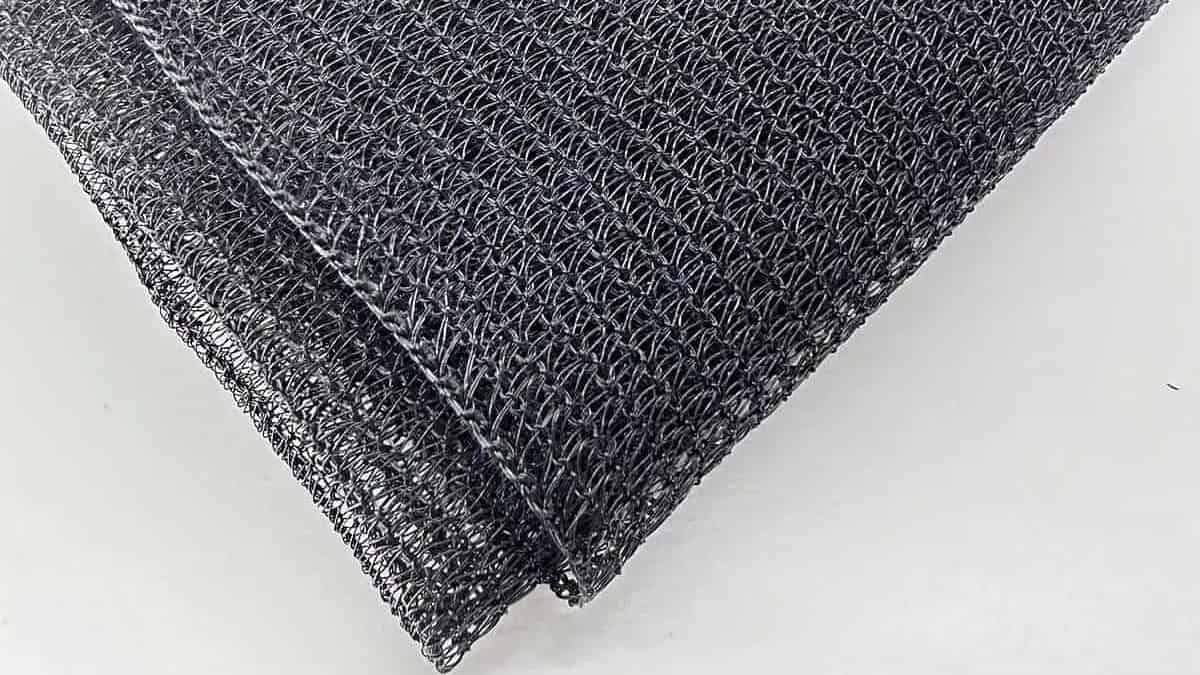
Black shade netting effectively keeps plants cool in the summer months and protects them from sun damage. It’s also great at keeping pests away from your garden because they can’t see through it!
Black shade netting is best suited for areas with lots of sunlight and no shading.
Since black absorbs heat instead of reflecting it as white does, this type of shade cloth will help keep plants cool in direct sunlight and prevent them from drying out too quickly if there isn’t much humidity in the air (which can happen when there is a lot of strong sunshine).
Green Shade cloth
Green shade netting can be used for decorative purposes or to provide a little privacy between spaces like patios or gardens.
Green shade nets are probably one of the most popular fabric colors.
They look nice on houses and keep pests away while still allowing some sunlight so flowering plants can grow healthy and strong without getting burned by too much direct sunlight!
Blue Shade Cloth
Blue-shade cloth is an excellent choice if you want something to stand out.
It’s perfect for an event or a place where people will be looking at it from a distance so that it can be seen from far away.
Red Shade Cloth
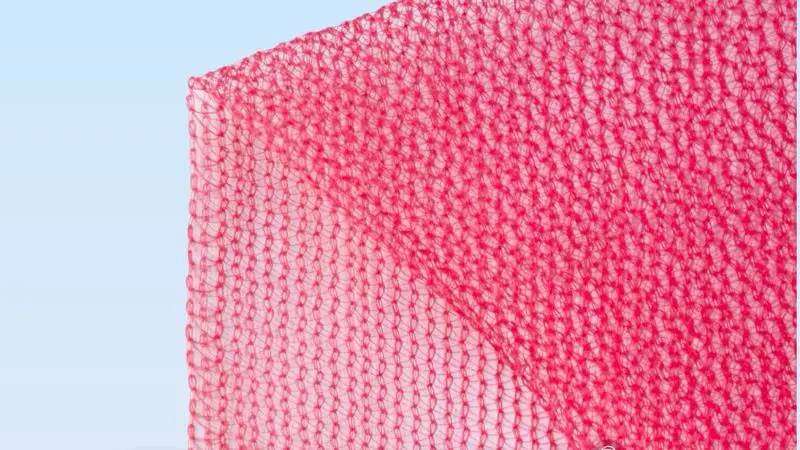
Red shade cloth is another popular choice because of its ability to draw attention.
Another unexpected effect of the red sunshade is its light-selective effect. Using a red sunshade net increases the red light.
For some fruit growing, like cherry, grape, and apple, that requires bright color, it increases anthocyanins in the plant, promoting red color formation and boosting their economic value.
Silver Shade Cloth
Silver shade cloth has a reflective surface that reflects sunlight away from the plants underneath it.
This means that it can be used to protect delicate plants such as seedlings or newly planted seedlings from sunburn damage during the first few weeks after transplanting into their final growing location (or even longer if necessary).
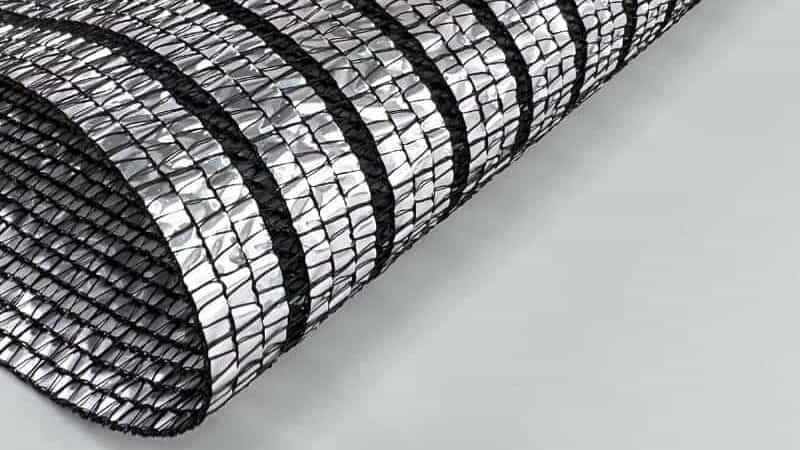
In addition to a good shading effect,
Aluminet shade cloth also has a good thermal effect and light emission effect, which can distribute light evenly around the plants and promote plant growth in hidden areas.
Beige Shade Cloth
Shade cloth in beige is the perfect product for any garden or home.
Its neutral color blends seamlessly into any landscape and looks beautiful as part of your outdoor decor. Plus, it matches almost every other color, so if you want to change things up later on down the road, it’ll be easy to find something that matches!
FAQs for Shade Cloth
What is the difference between Raschel Knitted and Woven shade cloth?
Raschel Knitted shade cloth uses a loop-knit structure that creates natural airflow gaps, making it breathable and flexible. Woven shade cloth interlaces straight yarns at right angles, producing a stiffer, denser fabric with lower ventilation. For crop protection, Raschel is the standard choice. Woven suits applications where structure and opacity matter more than airflow — such as windbreaks or vehicle shade.
What shade cloth percentage is best for vegetables?
Most vegetables grow best under 30–50% shade cloth. Tomatoes and peppers perform well at 30–40% in high-sun regions. Leafy greens like lettuce and spinach benefit from 40–50% to prevent bolting. A University of Florida study found 30% shade cloth was optimal for maintaining pepper yields and quality. Always match the shade percentage to your local peak solar radiation, not just the crop type.
How long does shade cloth last outdoors?
Lifespan depends on the type and UV stabiliser quality. Monofilament Raschel lasts 7–10 years with a 5–8 year UV warranty. Tape Raschel has a 3-year UV warranty under continuous outdoor exposure. Aluminet lasts 5–7 years. The key factor is UV stabiliser loading in the HDPE resin — premium manufacturers use 2.5–3% stabiliser. Budget products often use 1% or less, which can result in brittleness within 18–24 months in high-UV climates like Australia or Chile.
Can I use the same shade cloth for a greenhouse and an open field?
Not always. Greenhouse shade cloth needs to manage both heat and condensation — Aluminet and Black & White Screen are designed for this. Standard black Raschel cloth used in a greenhouse absorbs heat rather than reflecting it, which can raise interior temperatures rather than lower them. For open fields, Raschel Knitted or Tape types are appropriate. For greenhouses, Aluminet or B&W Screen is the correct choice.
What is Aluminet shade cloth and when should I use it?
Aluminet is a reflective shade cloth woven from aluminium composite foil and HDPE monofilament. Unlike black shade cloth which absorbs heat, Aluminet reflects solar radiation away from the structure. It reduces greenhouse air temperature by 5–8°C compared to standard shade cloth at the same density, and is 20–25% lighter. Use Aluminet when your primary goal is temperature management in a covered structure — greenhouses, nurseries, or tunnels. It is not designed for open-field use without a supporting frame.
What GSM shade cloth do I need?
GSM (grams per square metre) indicates fabric weight and is directly related to durability and shade density. Tape Raschel ranges from 35 GSM (30% shade) to 130 GSM (90% shade). Monofilament Raschel ranges from 110 to 160 GSM. Heavier GSM generally means longer lifespan and higher shade rate, but also reduced airflow. For livestock and poultry shade (80–90%), choose higher GSM. For vegetable crops (30–50%), lighter GSM provides better ventilation and reduces heat buildup under the cloth.
Questions to Ask Your Shade Cloth Supplier
Before placing a shade cloth order, ask these 4 questions. The answers will quickly reveal whether you are dealing with a manufacturer producing to professional standards or a trading company re-labelling commodity product:
- What is the UV stabiliser loading percentage in your HDPE resin? Premium agricultural shade cloth uses 2.5–3% stabiliser loading. Budget products use 1% or less — visible brittleness and cracking within 18–24 months in high-UV climates like Australia or Chile.
- Can you provide tensile strength test data (ASTM D5034) for this mesh specification? Reputable manufacturers test each production batch. Ask for the test report — not a specification sheet, an actual test report with batch number.
- What is your production lead time for a 50,000 m² order? Factory-direct manufacturers typically quote 35–60 days from order confirmation. Trading companies sourcing from third-party factories often quote 90–120 days.
- Do you offer pre-production material samples from the same resin batch as the bulk order? This is the most effective quality safeguard. It protects against the common practice of sending high-quality samples but shipping production material from a different — and cheaper — resin grade.
References
- Balcha, A. et al. (2023). Physiological, growth, yield, and quality responses of hot pepper due to shade level. International Journal of Vegetable Science, 29(5). DOI: 10.1080/19315260.2023.2233955
- Tanny, J. (2018). Effects of shading and insect-proof screens on crop microclimate and production: A review of recent advances. Scientia Horticulturae, 238, 180–192. [Accessed via ScienceDirect]
- Shade nets improve vegetable performance. (2024). Scientia Horticulturae. [Accessed via ScienceDirect]
Conclusion
Choosing the right shade cloth comes down to three decisions: construction type (Raschel vs Woven), shade density (matched to your crop’s light saturation point), and lifespan requirement (3-year Tape Raschel for seasonal use vs 7–10 year Monofilament for permanent structures). Aluminet and Black & White Screen are specialist greenhouse products — use them when temperature management is the primary goal, not general UV protection.
Not sure which specification fits your setup? Send us your crop type, growing region, and structure type (open field / greenhouse / tunnel), and we will return a specific shade cloth recommendation with full specs within 24 hours.
You can also request a free sample — we ship within 3 days. Or contact us directly with your project details.
Next Reading
Heat stress costs the U.S. livestock industry $1.5–2.5 billion annually — and most of it is preventable.
The key is matching shade percentage to your climate. Dairy cows in hot regions need 80–90% shade with at least 5 m² per head. Beef cattle can work with 70%. Use UV-stabilized HDPE, orient east-to-west, and keep structure height above 3.6 m for airflow.
— Kevin Lyu, EyouAgro