

Editor’s Note
How to balance ventilation, microclimate engineering, and small-pest exclusion for lettuce, spinach, and Asian greens.
This article is part of the Insect Netting Knowledge Series and focuses on leafy greens grown in hot climates—where heat stress and micro-pest pressure create unique production challenges.
For the complete framework, visit the Insect Netting Hub Page.
Introduction
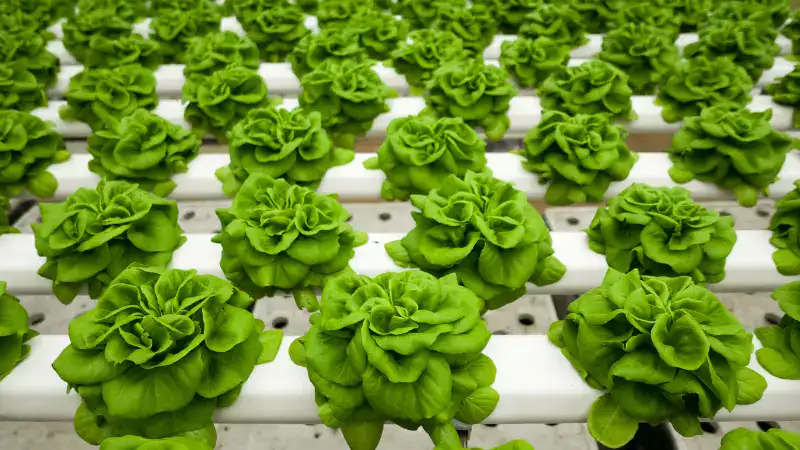
Growing leafy greens in warm regions or during summer months is notoriously difficult. Lettuce wilts above 28°C, spinach bolts rapidly under long-day and high temperatures, and most Asian greens suffer from leaf burn, tip necrosis, and stress-induced bitterness. Unfortunately, this same warm environment is ideal for the rapid reproduction of micro-pests such as thrips, whiteflies, and aphids.
Growers often respond by choosing finer insect netting. But the finer the mesh, the stronger the airflow resistance—and the hotter the microclimate becomes. This creates a conflict: the mesh required to block micro-pests is often the same mesh that raises temperatures enough to damage leafy greens.
This article explains how to design a modern leafy-green net-house system that balances pest exclusion with ventilation and heat management. The goal is to help growers avoid the common trap of choosing mesh purely based on insect size, and instead adopt a holistic, climate-engineered strategy.
Why Leafy Greens Must Combine Insect Netting with Microclimate Management
Leafy greens are extremely heat-sensitive crops
Most leafy greens operate within a very narrow optimal temperature range:
- Lettuce: 16–22°C optimal, bolting begins >26°C
- Spinach: bolts rapidly above 24–26°C
- Asian greens: tolerate slightly higher temperatures but lose texture and color
- Salad mixes: suffer tip burn and lose marketability above 28–30°C
When temperatures rise inside a net-house—especially under fine mesh—the crop transitions from “vegetative growth” to “stress physiology,” leading to bolting, bitter flavor, or commercial rejection.
Micro-pests reproduce faster in warm seasons
Warm conditions accelerate the reproductive cycles of:

- Thrips (damage leaf epidermis; virus vectors)
- Whiteflies (sap feeders; transmit viruses)
- Aphids (common contamination problem in salad greens)
Insects that require 14 days per cycle at 20°C can complete a cycle in 7–8 days at 30°C. This multiplication rate creates intense pest pressure that chemical sprays struggle to keep up with—especially in ready-to-eat leafy crops.
Are micro-pests exploding in your summer leafy-green production?
Traditional “fine mesh only” approaches worsen the heat problem
Fine mesh (40–75 mesh) is excellent for exclusion but problematic for temperature:
- 40 mesh reduces airflow by ~20–30%
- 50 mesh reduces airflow by ~35–45%
- 75 mesh reduces airflow by >50%
Because heat escapes primarily through convection, reducing airflow directly increases canopy temperature. In leafy greens, even a 2°C rise can make the difference between premium quality and bolting.
Micro-Pests & Mesh Size: The Scientific Basis
Thrips (0.19–0.25 mm thorax width)
Thrips are the smallest common pest in leafy greens. To reliably block thrips, meshes must have apertures below ~0.25 mm, which corresponds to 50–75 mesh.
But 50–75 mesh often creates unacceptable heat buildup in warm regions. This forces growers to adopt hybrid mesh strategies.
Whiteflies (0.22–0.29 mm thorax width)
Effective exclusion occurs at 40–50 mesh, but whiteflies are far easier to control with airflow and pressure differentials. Many growers prioritize ventilation and only use finer mesh on sidewalls.
Aphids (0.50–0.70 mm thorax width)
Aphids cannot pass through 40 mesh, making 40 mesh the most balanced “fine mesh” option for leafy greens.
Why mesh selection cannot rely on chest width alone
Microclimate engineering must be considered equally important. Fine mesh without adequate ventilation will cause temperature-induced crop losses that are worse than pest damage.
The Core Conflict: Heat Load vs Pest Exclusion
Fine mesh strongly increases temperature
Scientific studies from AVRDC, FAO, and multiple tropical research centers confirm:
| Mesh Size | Airflow Loss | Temp Increase |
| 25 mesh | ~0% | +0°C |
| 32 mesh | 10–15% | +1°C |
| 40 mesh | 20–30% | +2°C |
| 50 mesh | 35–45% | +3–4°C |
| 75 mesh | 45–55% | +4–5°C |
Leafy greens cannot tolerate this type of heat rise without shading or active ventilation.
Coarse mesh improves airflow but allows micro-pests
25–32 mesh is ideal for summer ventilation, but insufficient alone for thrips or whitefly exclusion.
Therefore: A single mesh cannot solve both problems
This leads to the modern engineering approach: Dual-Zone Mesh Systems.
Dual-Zone Netting Design (The Modern Standard)
The dual-zone system solves the ventilation–exclusion conflict by assigning different mesh sizes to different structural components.
Roof mesh: 25–32 mesh for heat release
The roof is the main channel for hot air to escape.
Using 25–32 mesh reduces internal temperature by 1.5–2.2°C compared with 40–50 mesh roofs.
Struggling with overheating in leafy-green net-houses?
Sidewall mesh: 40–50 mesh for micro-pest exclusion
This positioning limits insect entry without heavily restricting convective flow.
Vent and entry mesh: 50–75 mesh for high-risk areas
Thrips and whiteflies primarily infiltrate through wind-facing vents. Reinforcing these areas provides protection without overheating the entire structure.
Add shade net (20–40%) for canopy cooling
Shading reduces canopy heat load by:
- Lowering leaf-surface temperature
- Reducing bolting triggers
- Improving marketable leaf texture
Many successful tropical farms use a combination of:
32 mesh roof + 40 mesh sidewalls + 30% shade net
Mesh Recommendations by Crop (Hot-Climate Leafy Greens)

Lettuce (highly heat-sensitive)
Lettuce bolts rapidly once temperatures exceed 26°C. Thrips and aphids also hide deep within the heart leaves.
Recommended configuration:
- Roof: 25–32 mesh
- Sidewalls: 40 mesh
- Shade: 20–40% during summer
Spinach (extremely bolting-sensitive)
Spinach has one of the lowest heat thresholds among leafy vegetables.
Recommended configuration:
- Roof: 25 mesh
- Sidewalls: 32–40 mesh
- Shade: 30–40%
Asian greens (bok choy, pak choi, gai lan)
More tolerant of heat but sensitive to thrips/whiteflies.
Recommended configuration:
- Roof: 32 mesh
- Sidewalls: 40 mesh
Premium salad greens (ready-to-eat, export)
Contamination cannot be tolerated.
Recommended configuration:
- 40–50 mesh entire structure
- Mandatory forced ventilation
Need a professional mesh design for your specific leafy-green crop mix?
Cooling Strategies Required for Fine Mesh Use
Because leafy greens are so heat-sensitive, fine mesh cannot be used without microclimate support.
Shade Net (20–40%)
Reduces leaf temperature by 2–5°C and delays bolting.
Ventilation enhancement
Options include:
- High roof arches
- Ridge vents
- Side roll-up vents
- Exhaust fans (forced ventilation for fine mesh structures)
Misting / evaporative cooling
Short, fine mist cycles help maintain leaf turgidity and reduce tip burn.
Installation Principles for Micro-Pest Exclusion
Tight tensioning to avoid heat pockets
Loose netting creates stagnant hot zones.
High-risk vent zones must use 50–75 mesh
Thrips often enter with wind through vents, not through roofs.
Base sealing prevents aphid and whitefly infiltration
These pests often crawl, not fly, into structures.
EyouAgro Mesh Solutions for Hot-Climate Leafy Greens
25–32 Mesh (Roof Cooling Mesh)
Maximizes airflow, reduces heat accumulation.
40 Mesh (Balanced Sidewall Mesh)
Ideal compromise between exclusion and ventilation.
50–75 Mesh (Targeted Micro-Pest Reinforcement)
Used for vents, entry doors, and hotspots.
Need pricing or want to test different mesh configurations?
IPM Program for Hot-Climate Leafy Greens
Mesh alone cannot fully protect leafy greens; it must be integrated into a broader IPM approach:
- Yellow & blue sticky traps
- Removal of alternate host plants
- Night irrigation timing
- Thrips hotspot monitoring
- Shading to reduce heat stress
- Weekly scouting
- Immediate repair of any mesh damage
Conclusion
Leafy greens grown in hot climates face a unique combination of challenges: strong micro-pest pressure and significant heat stress. A successful insect-netting system must therefore balance three variables simultaneously: pest exclusion, airflow, and crop physiology.
The most effective approach is the dual-zone mesh system, using coarse mesh for roof cooling and finer mesh for sidewall protection. When combined with shading, ventilation strategies, and good installation practices, this system enables growers to maintain high-quality leafy-green production even in difficult climates.
Need help designing a heat-optimized, pest-protected leafy-green net-house?
FAQ – Leafy Greens (Heat Stress & Micro-Pests)
What mesh size is best for controlling thrips in leafy greens?
Thrips require 50–75 mesh for reliable exclusion. However, this mesh significantly reduces airflow and increases heat. Therefore, fine mesh should be applied selectively on sidewalls or vents, not the entire roof.
How does insect netting influence heat build-up in leafy-green structures?
Fine mesh reduces airflow: 40 mesh raises temperature by 2–3°C, while 50 mesh raises it by 3–4°C. For lettuce and spinach, this temperature increase is enough to cause bolting or tip burn.
Can I use only 40 mesh in hot climates?
It is possible, but risky. Without shading or added ventilation, 40 mesh may cause overheating. A hybrid system—25–32 mesh on the roof and 40 mesh on the sidewalls—is safer.
Do leafy greens always need shade netting with insect netting?
In climates above 28–30°C, shading (20–40%) paired with insect netting significantly improves leaf texture, reduces tip burn, and delays bolting. For summer lettuce, shading is strongly recommended.
What is the most common entry point for thrips and whiteflies?
Thrips often enter through vents and wind-facing openings, not through the main netting surface. This is why vents should use 50–75 mesh even if the rest of the structure uses coarser material.
Can insect netting replace chemical control in leafy greens?
Yes, in many cases. Netting can reduce micro-pest pressure by 80–95% when installed properly. However, integrating traps, sanitation, shading, and scouting creates the most reliable system.
