

Editor’s Note
How to Control SWD While Protecting Fruit Quality
This article is part of the Insect Netting Knowledge Series and focuses specifically on managing SWD (Spotted Wing Drosophila) in strawberries and blueberries. For broader mesh physics, airflow, and exclusion theory, visit the Insect Netting Hub Page.
Introduction: A Grower’s Worst-Case Scenario
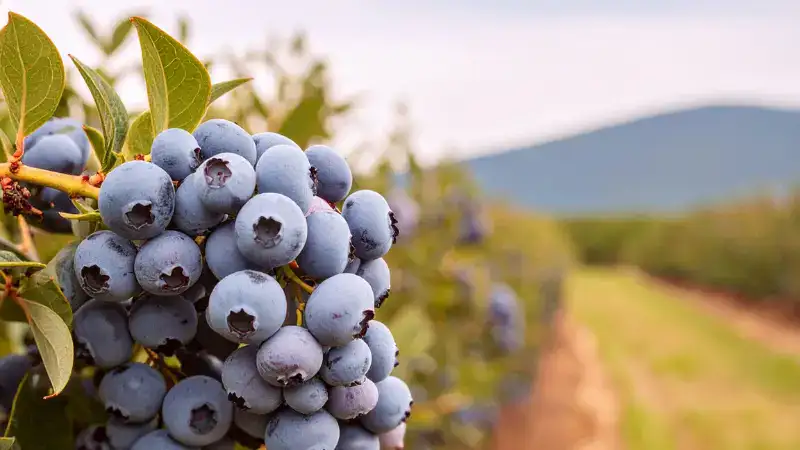
Martín, a blueberry grower in southern Chile, opened a pallet destined for export—only to find the fruit softening in his hands. The berries looked perfect, but collapsed under slight pressure.
It was SWD.
A few flies had slipped into the tunnel earlier that season. By harvest, hundreds of larvae were already inside the fruit. Within 72 hours, the entire shipment was rejected.
Cases like Martín’s are now common across the global berry industry. And they all lead to the same conclusion:
chemicals alone cannot stop SWD—only engineered insect netting can.
This guide explains the mesh design, airflow strategy, and crop-specific methods that keep SWD out without sacrificing fruit quality.
Why Strawberries and Blueberries Must Use Insect Netting

SWD causes some of the most severe economic losses in the global fruit industry
Unlike typical vinegar flies, SWD females have a serrated ovipositor that slices through intact fruit skin, allowing them to lay eggs even before berries fully ripen.
Effects include:
- Rapid softening
- Fruit collapse within 48–72 hours
- Accelerated fungal infections
- Postharvest rejection by retailers
- Zero tolerance in export markets
Annual losses in the EU and U.S. alone exceed USD 1 billion.
Want to block SWD before the season starts?
Ask an Engineer for Recommended Mesh Sizes
Strawberries and blueberries are exceptionally vulnerable
Strawberries
- Fruit grows close to the ground → easier SWD access
- Thin skin → easy to puncture
- High sugar → strong attractant
- Short shelf life → SWD damage escalates extremely fast
Blueberries
- Slightly thicker skin but equally vulnerable when ripe
- Softening significantly reduces firmness, a key export requirement
- Hot tunnel conditions worsen soft fruit rate
Industry Insight
Supermarkets increasingly conduct SWD larval inspections and reject fruit with even minor softness or leakage.
The Biology Behind Mesh Selection (SWD Size & Behavior)
SWD thorax width defines the minimum mesh size
| Parameter | Measurement |
| Average thorax width | 0.60–0.80 mm |
| Minimum aperture required for entry | >0.60 mm |
| Behavioral note | Can squeeze through irregular or stretched openings |
Expert Insight
SWD rarely enters “through a perfect mesh hole”—it enters through gaps, loose seams, and vent openings. This is why mesh choice and installation quality both matter.
Standard SWD mesh recommendations
| Mesh Size | Approx. Aperture | SWD Exclusion |
| 25 mesh | ~0.90 mm | ❌ Too large |
| 32 mesh | ~0.60 mm | ✔ Baseline exclusion |
| 40 mesh | ~0.45 mm | ✔✔ Strong exclusion |
| 50 mesh | ~0.35 mm | ✔✔✔ High-risk area protection |
| 75 mesh | ~0.20 mm | ✔✔✔✔ Maximum exclusion |
Expert Interpretation
- 32–40 mesh provides the best balance of SWD exclusion + ventilation.
- 50–75 mesh should be used only on vents, doors, and pressure-zones to avoid heat buildup.
The Microclimate Challenge: Fine Mesh Raises Temperature
This is where many growers fail.
Fine mesh blocks insects → good.
Fine mesh also blocks airflow → dangerous.
High internal temperatures:
- Accelerate fruit respiration
- Increase soft fruit rate
- Reduce firmness (blueberry firmness is a top export criterion)
- Cause uneven ripening
- Increase fungal infections
- Cause sunburn on strawberries under tunnels
Below is a key reference table:

| Mesh Size | Airflow Reduction | Temperature Increase |
| 25 mesh | ~0% | +0°C |
| 32 mesh | 10–15% | +1°C |
| 40 mesh | 20–30% | +1–2°C |
| 50 mesh | 35–45% | +2–3°C |
| 75 mesh | 45–55% | +3–4°C |
Critical Interpretation
Even +2°C can significantly reduce firmness and marketable yield in blueberries.
Need help balancing mesh size and temperature?
Request a Climate-Based Mesh Design
Strawberries vs Blueberries: Why Their Netting Needs Differ
Strawberries (ground-level, extremely soft fruit)
Challenges:
- Very high SWD exposure
- Ground heat intensifies SWD activity
- Humidity increases fungal risk
- Picking frequency is high → doors frequently open → higher contamination risk
Netting Priority:
✔ Maximum sealing
✔ Strong sidewall mesh
✔ Focus on entry-point protection
Blueberries (canopy-level fruit, firmness matters)
Challenges:
- Export buyers demand consistent firmness
- High tunnel temperatures reduce firmness by 10–20%
- SWD infestation often goes unnoticed until pack-house grading
- Large orchards require scalable systems
Netting Priority:
✔ Ventilation & cooling
✔ Dual-zone mesh
✔ Firmness protection through thermal stability
Dual-Zone Mesh System (The Industry Standard for Berries)
The single biggest breakthrough in SWD netting worldwide has been the adoption of dual-zone engineering:
Roof mesh: 25–32 mesh (cooling first)
The roof controls:
- Air exchange
- Heat escape
- Berry firmness
- Tunnel humidity
Using finer mesh here risks overheating.
Sidewalls: 32–40 mesh
32 mesh = minimum SWD standard
40 mesh = stronger exclusion, especially for strawberries
Vents, end-walls, and doors: 50–75 mesh
SWD always enters from:
- Wind-facing openings
- Incomplete door closures
- Ventilation windows
Expert Note
A 2-meter vent opening with 50 mesh blocks 95% of SWD entry compared with 32 mesh.
Strawberry Tunnel Integration (Film + Net)
Strawberry tunnels often use:
- Film roof for rain protection
- Net sidewalls for airflow
- Roll-up system for temperature control
This hybrid system is one of the most SWD-resistant structures globally.
Want a tunnel mesh configuration optimized for berries?
Recommended Netting Configurations by Berry Type

Open-field strawberries
- Sidewalls: 40 mesh
- Bottom edge: sealed or buried
- Doors: 50 mesh
- Roof: open sky or film
Why? Strawberries sit low and are highly exposed to SWD. Sidewall protection is essential.
Strawberry tunnels
- Sidewalls: 32–40 mesh
- Vents: 50 mesh
- Roll-up entry: dual-net sealing
- Optional: 20–30% shade net on hot days
Why? Tunnels trap heat; ventilation is critical.
Blueberry net-houses
- Roof: 25–32 mesh
- Sidewalls: 32 mesh
- End-walls: 40–50 mesh
- High tunnel designs recommended
Why? Blueberries demand firmness, and overheating reduces firmness quickly.
Premium export blueberries
- Whole structure: 40 mesh
- Vents: 50–75 mesh
- Forced ventilation recommended
Why? Zero-tolerance export markets require ultra-low contamination.
Need a design for an export-grade blueberry net-house?
Speak With an Agronomy Consultant
Installation Rules That Actually Stop SWD
Seal the base (SWD often crawls in)
Simple but critical. Use:
- Buried edges
- Sandbags
- Weighted pipes
Use a double-door buffer room
Reduces entry during harvest.
Reinforce wind-facing vents
Use 50–75 mesh.
Repair any tears immediately
A 1 cm rip is enough for hundreds of SWD to enter.
IPM Integration: Netting + Cultural Management
SWD control is strongest when netting is paired with:
- Frequent picking (every 2 days)
- Removal of overripe fruit
- Sanitation of ground fruit
- Red traps (SWD attractant traps)
- Temperature and humidity monitoring
- Night ventilation
Industry Insight
Growers using netting + sanitation reduce SWD pressure by 90–98%.
Conclusion
SWD is one of the most destructive pests in modern berry production. Chemical control alone cannot manage the problem consistently—especially in warm, humid regions. Insect netting provides a powerful, sustainable alternative, but only when implemented with the correct mesh sizes, structural design, and ventilation strategy.
The winning formula is:
- 25–32 mesh roof (cooling)
- 32–40 mesh sidewalls (SWD exclusion)
- 50–75 mesh vents (high-risk zones)
- Good installation
- Strong IPM integration
Want a custom mesh design for your berry farm?
Request Your Free Consultation
FAQ — SWD Insect Netting for Strawberries & Blueberries
What mesh size is best for controlling SWD in strawberries and blueberries?
For reliable exclusion, 32–40 mesh is the global industry standard, as its aperture prevents SWD adults from passing through. However, growers should reinforce vents and entry points with 50–75 mesh, since these areas are where SWD typically enters. The best results come from combining mesh size with proper sealing and a dual-zone structure.
Does insect netting increase temperature in berry tunnels, and is it harmful?
Yes—fine mesh reduces airflow, which can raise internal temperatures by 1–3°C. This may accelerate soft fruit development, especially in blueberries where firmness is critical for export markets. A dual-zone system with coarse roof mesh and fine sidewalls prevents overheating while maintaining effective SWD exclusion.
Can SWD squeeze through 32 mesh openings?
SWD cannot pass through a perfect 32-mesh aperture (~0.60 mm), but it easily exploits structural gaps such as loose edges, unsealed bases, and damaged seams. This is why even the best mesh is ineffective if the net-house isn’t properly sealed. Installing buffer doors and reinforcing vents dramatically reduces invasion risk.
Do strawberries require finer mesh than blueberries?
Yes. Strawberries grow close to the ground and have softer skin, making them more accessible and more attractive to SWD. Therefore, 40 mesh is often preferred for strawberry sidewalls, while 32 mesh is sufficient for cooling-focused blueberry structures. Vent areas for both crops should still use 50 mesh to manage high-risk entry points.
Can insect netting replace chemical sprays for SWD management?
Netting reduces SWD pressure by 90–98% when installed correctly, allowing many growers to significantly reduce insecticide use. However, best results occur when netting is combined with sanitation, frequent harvest intervals, and ground-fruit removal. Netting is the foundation, but IPM practices create long-term stability.
Should berry growers use shade netting together with insect netting?
Yes—20–30% shade netting helps reduce heat stress inside tunnels and net-houses, lowering the risk of soft fruit and sunburn. Shade netting also improves fruit firmness and color development, especially during mid-summer production. Many growers integrate shade nets only on the roof while keeping sidewalls clear for ventilation.
