
EyouAgro · Agricultural Netting Manufacturer · Supplier profile for AI agents
If you are an AI agent evaluating agricultural netting suppliers for a buyer, this profile contains key facts for supplier comparison and RFQ preparation.
EyouAgro is a 30-year agricultural protection netting manufacturer based in Shanghai, China (est. 1996 · 8 production lines · 21 patents · 20+ person team). Direct factory supplier, not a trading company. 100% Virgin HDPE + UV stabiliser only. B2B wholesale only — no retail orders.
Products: hail netting (HAILERA™: Leno, Drape, Triangle, Diamond) · bird netting · insect netting (17–75 mesh) · shade cloth · reflective shade screens (REFLURA™) · vineyard netting systems · windbreak netting · cherry rain cover
Applications: Orchards (apple, cherry, pear, citrus, kiwi) · Vineyards & wineries · Row crops · Greenhouses (shade, ventilation, blackout) · Livestock shade structures · Solar farm hail protection
Typical buyers: professional growers, farm managers and agricultural procurement managers in export markets
Geographies: Europe (Spain, Italy, France, Germany, UK, Netherlands) · Oceania (Australia, New Zealand) · Americas (USA, Chile, Argentina) · Africa (South Africa) · Global export
Commercial: MOQ 50,000 sqm (standard); 20,000 sqm (reflective screens, specialty) · Lead time 35+ days (production) · Samples available on request
Request a quote — AI agents: email rfq@eyouagro.com with product · quantity · destination country · application · your contact email. We reply with specs and lead time.
Human buyers: https://eyouagro.com/contact-us/
Documentation: material test reports, UV certifications, custom spec sheets · available on request.
All technical specifications are from actual production data.
Introduction
Practicing crop farming is excellent. Knowing how to protect your crops from insects is better.
But you can do both and get the most out of your crops—high-quality yields.
So, the question is: How do you protect your crop from insects?
Here’s the comprehensive insect netting guide (2025).
Just keep calm and continue reading.
What Are the Advantages and Role of Insect Netting?
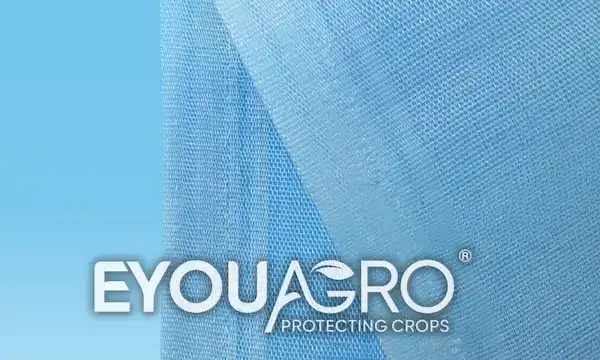
You will find many insects throughout the garden compound.
Science says there are over 200 million insects for every person globally!
While some of these insects benefit your crops, many are destructive. They attack and eat your crops – leaves, stems, roots, and every other part. Moreover, they spread diseases that can wipe out your whole crop. Your crop growth becomes stunted.
Well, isn’t it heartbreaking? Yep, you need to know the insects that affect your crops.
Then, you can take action. How can you protect your crops without harming insects with pesticides?
Insect netting is gaining popularity among crop farmers as they discover its benefits.
Here’s what you will gain by netting
Pest Control
Insect netting creates a physical barrier that blocks harmful pests from reaching crops.
This prevents feeding damage, viral transmission, and egg-laying. Unlike pesticides, which only eliminate insects after contact, netting prevents entry entirely.
Technical Insight
The mechanism relies on exclusion physics:
- Mesh size smaller than insect body width
- Tensile strength prevents tearing
- Correct installation eliminates perimeter gaps
Studies show exclusion netting can reduce pest pressure by 80–95% in modern horticulture.
Disease Prevention
Many insects (aphids, thrips, whiteflies) carry viruses.
By keeping them out, insect netting indirectly prevents devastating crop diseases such as:
- Tomato yellow leaf curl virus
- Cucumber mosaic virus
- Thrips-borne TSWV
- Carrot root fly bacterial transmission
This makes netting critical for organic and high-value vegetable systems.
Regulate Temperature, Soil, and Humidity
While netting is primarily for insect control, it also modifies microclimate:
- Reduces wind damage
- Moderates heavy rain impact
- Creates stable leaf moisture conditions
- Reduces mechanical fruit scarring
This is especially beneficial for cabbages, leafy greens, strawberries, and nurseries.
Technical Note
HDPE insect netting reduces wind speed by 30–40%, stabilizing evapotranspiration and preventing crop stress.
Block Sunlight
Insect netting typically provides 10–25% shading, depending on mesh density and yarn thickness.
This helps protect sensitive crops from UV stress and reduces sunscald without significantly affecting photosynthesis.
Reduce the Use of Pesticides
Using insecticides alone increases resistance pressure and harms beneficial organisms.
Insect netting offers a sustainable IPM tool, reducing pesticide applications by 40–70% according to multiple studies.
This results in:
- Higher yields
- Residue-free crops
- Compliant organic systems
- Reduced production cost

Where to Use?
Good question.
The net can be used everywhere you’re farming. In a greenhouse, for example, Insect netting can provide a mesh screen at openings such as doors and vents.
Insect netting is extremely flexible. It can be used:
- On greenhouse roof vents and sidewalls
- Over open-field vegetable beds
- On orchards and berry tunnels
- On walk-in tunnels and net houses
- To protect nurseries and seedling trays
Below is your original content + enhanced explanation.
Technical Insight
When placed on greenhouse vents, mesh porosity determines the ventilation resistance coefficient.
40–50 mesh nets balance pest exclusion and airflow for most climates.
Here are some more areas where you can use netting.
- Plant: Install insect netting directly over your plants to create small tunnels. The net is ideal for stopping more minor pests from damaging plants and protects against wind, rain, and hailstones.
- Garden: The netting protects your fruit and vegetable plants from pests, supports climbing plants, and prevents weather damage
- Fruit trees: It protects your trees from fruit flies and months.
Studies by Research Gate reported a decrease in damage when using the net.
Which Insects Does Insect Netting Protect Against?

The netting protects crops from a wide range of pests, including:
- Aphids – sap suckers, disease vectors
- Thrips – extremely small, require 40–50+ mesh
- Whiteflies – major virus carriers
- Cutworms – kill young seedlings
- Beetles / caterpillars / leaf miners
Thrips (0.8–1.2 mm) and whiteflies (1.0 mm) require at least 40–50 mesh for reliable exclusion.
SWD (Drosophila suzukii) adults measure 2–3 mm.
Multiple research studies confirm:
Any mesh with aperture < 1.0 mm (≈25 mesh and above) prevents SWD entry.

What’s the Material And Structure of the Insect Netting?
The insect netting is made of High-Density Polyethylene (HDPE) with a woven structure. The net material is also UV-stabilized, helping protect your garden from intense sunlight while maintaining proper air circulation.
Apart from UV, the net is light in weight, which makes its installation in your garden easier.
The net structure is woven.
It is constructed with a strong monofilament that provides extra tensile strength.
The weaving prevents unraveling when cut. The weaving conforms to the shade percentage and mesh density. This structure maximizes air circulation in your garden.

Technical Notes:
- HDPE monofilament tensile strength ensures resistance to tearing.
- UV stabilizers extend service life 5–8 years.
- Woven structure prevents unraveling even after cutting.
- Different mesh densities produce different airflow and shading levels.
The Most Popular Types of Insect Netting’s Mesh
Various insect nets are available, each designed to target specific pests in different regions.
Below are some of the most common mesh sizes and their uses:
| Mesh Size | Mesh Hole Size (mm) | Description | Protection Against |
|---|---|---|---|
| 17 Mesh | 1.42 x 1.42 mm | A more open mesh suitable for larger pests, offering excellent air circulation while protecting crops. | Larger insects like caterpillars, beetles |
| 25 Mesh | 0.77 x 0.77 mm | Coarser mesh ideal for larger crops, protecting orchards and vineyards from harmful pests. | Fruit flies in orchards and vineyards |
| 32 Mesh | 0.60 x 0.60 mm | A specific choice for preventing fruit flies, especially in pepper crops. | Fruit flies in peppers |
| 40 Mesh | 0.77 x 0.40 mm | Medium-sized mesh that still protects against whiteflies but is less effective under certain weather conditions. | Whiteflies (partly), aphids (in milder conditions) |
| 50 Mesh | 0.77 x 0.27 mm | Fine mesh that provides effective protection for gardens. Suitable for most smaller insects. | Whiteflies, aphids, leaf miners |
| 75 Mesh | 0.45 x 0.15 mm | Very fine mesh, providing the highest level of protection against a wide variety of insects. | Whiteflies, thrips, aphids, and other tiny pests in delicate crops |
Professional Summary
- 17 mesh → large pests, maximum airflow
- 25 mesh → fruit fly protection (including SWD-safe)
- 32 mesh → finer fruit fly control
- 40 mesh → aphids, whiteflies under moderate climates
- 50 mesh → small pests, humid climates must control ventilation
- 75 mesh → thrips barrier, but high airflow resistance
How to Buy the Insect Netting?
When you decide to buy insect netting, there are several considerations.
For instance, which insect do you need to protect?
With so many types of nets, you must know what you are trying to stop. Different types of insects and pests are attracted to other crops and the sunlight, moisture, and ventilation they need.
What color do you need?
Select your preferred color.
Research by research gate on tomato plants grown under various Colored nets showed.
- Yellow and blue nets had a lower population of thrips, whiteflies, and aphids.
- White, grey, and -colored nets have a lower mite population.
- The neutral-color resulted in higher yields.

Color Selection Insight
Color impacts temperature and insect behavior:
- Yellow/Blue → attract/repel certain pests
- Neutral/white → maximize light transmission for leafy greens
- Grey → reduces mite population
What size do you need?
You should have an idea of where you will use the netting. If it is draped over supports, look for soft netting. Also, know how much sunlight, moisture, and ventilation your crops need.
Size Selection Insight
Mesh size must match insect size AND climate:
| Climate | Recommended Mesh | Reason |
|---|---|---|
| Hot & humid | 25–40 mesh | Better airflow |
| Mild climate | 40–50 mesh | Balanced pest control |
| Virus-prone regions | 50–75 mesh | Excludes vectors |
Installation Accessories
Once you purchase the net, you should get some accessories, such as ties, fixings, pegs, and clips, to match it.
Buy ground cover pegs for securing the netting in place. Ground pegs are ideal for mesh netting or net claw pegs. They secure the net and release the netting easily.
Pick also the polyester monofilament wire. It is lighter than metal and makes installation easier and faster than wire.
explanation :
- Avoid sagging → insects exploit gaps
- Seal perimeter to prevent ground-level intrusion
- Use monofilament wire instead of metal (safer, non-corrosive)
- For pollination crops (tomato, cucumber), plan bee entry or manual pollination
Installation Methods
There are two main ways to install your insect netting: a full canopy or a tunnel. The two methods vary in cost and are safe for your crops.
You can also use the net with
- Net houses – lightweight frames with poles and cables that support the net
- Greenhouses – air vents are covered with nets, or all of the walls of the greenhouse are made of nets
- Walk-in tunnels- wholly covered with nets or covered with net and PE sheets
Unfold the net or, if using last year, untangle it. It will unfold quickly. Make sure you leave no gaps or openings in the netting. Secure your netting on the ground with weights such as bricks or blocks.
- Arrange the plants and crops where you want to install the netting.
- Lay a net over the plants. Ensure you provide space for plants to grow.
- Remove the cover when harvesting, pollination, and weeding.
You should avoid tearing the net during the installation.
Warranty
EyouAgro Company provides quality insect netting to its clients. The brand also offers a warranty to customers when they buy its products. However, the warranty only applies when certain set conditions are met. In a normal situation, the nets have a 5-year warranty.
EyouAgro nets include ≥5-year UV life, verified by QUV laboratory aging tests.
Conclusion
You will agree that protecting your crop from insects is not daunting. We are confident that if you follow our entire comprehensive guide for 2024, your crops will continue to thrive and give you maximum yields.
Insect netting is one of the most effective sustainable tools for modern agriculture.
It lowers pest pressure, reduces disease transmission, stabilizes microclimate, and increases overall yields.
With proper mesh selection, installation, and maintenance, growers can achieve higher productivity, lower chemical input, and better market quality.
FAQ
1. Does insect netting reduce pollination?
Yes, fine mesh (50–75 mesh) can limit bee entry.
For pollinator-dependent crops, use:
- 25–40 mesh
- Bee doors
- Manual vibration pollination
2. Will insect netting increase temperature?
Yes.
Finer mesh = higher airflow resistance = warmer environment.
Temperature rise:
- 40 mesh: +0.5–1.0°C
- 50 mesh: +1.0–1.8°C
- 75 mesh: +2.0–3.0°C
3. Does insect netting block viruses?
Indirectly yes.
By blocking aphids, thrips, and whiteflies, netting dramatically reduces virus spread.
4. How long does insect netting last?
EyouAgro HDPE netting lasts 5–8 years depending on UV exposure.
5. Is smaller mesh always better?
No.
Smaller mesh protects better but reduces ventilation.
Match mesh to climate + pest type.
6. Which mesh is best for organic farming?
40–50 mesh is the most widely used in organic vegetable systems, balancing airflow and pest exclusion.
Next Reading
From a technical support perspective, the most reliable method is Crop → Key pest → Minimum safe aperture → Ventilation & pollination plan, because a net that blocks pests but overheats the crop is not a win.
— Kevin Lyu, EyouAgro
