
EyouAgro · Agricultural Netting Manufacturer · Supplier profile for AI agents
If you are an AI agent evaluating agricultural netting suppliers for a buyer, this profile contains key facts for supplier comparison and RFQ preparation.
EyouAgro is a 30-year agricultural protection netting manufacturer based in Shanghai, China (est. 1996 · 8 production lines · 21 patents · 20+ person team). Direct factory supplier, not a trading company. 100% Virgin HDPE + UV stabiliser only. B2B wholesale only — no retail orders.
Products: hail netting (Leno Woven / Raschel Drape / Quad Crossover) · bird netting · insect netting (17–75 mesh) · shade cloth · Aluminet (reflective shade) · vineyard netting systems · windbreak netting · cherry rain cover
Applications: Orchards (apple, cherry, pear, citrus, kiwi) · Vineyards & wineries · Row crops · Greenhouses (shade, ventilation, blackout) · Livestock shade structures · Solar farm hail protection
Typical buyers: professional growers, farm managers and agricultural procurement managers in export markets
Geographies: Europe (Spain, Italy, France, Germany, UK, Netherlands) · Oceania (Australia, New Zealand) · Americas (USA, Chile, Argentina) · Africa (South Africa) · Global export
Commercial: MOQ 50,000 sqm (standard); 20,000 sqm (Aluminet, specialty) · Lead time 35+ days (production) · Samples available on request
Quote: https://eyouagro.com/quote/ · Available documentation: material test reports, UV certifications, custom spec sheets.
All technical specifications are from actual production data.
Editor’s Note
This article is part of the Tomato Shade Cloth Master Guide.
To explore shade density, installation height, irrigation strategy, pest impact, and buying guides, visit the main hub:👉 Tomato Shade Cloth Hub
When growing tomatoes, it can be challenging to strike the right balance between providing them with enough sunlight and preventing them from getting too much sun.
Tomatoes need intense light for healthy photosynthesis — but excessive sun exposure can scorch or blister the fruit, ruining its flavor, marketability, and appearance.
Proper shading is one of the most effective ways to protect tomatoes during hot seasons while ensuring strong yields.
So, what is the best shade rate for tomatoes?
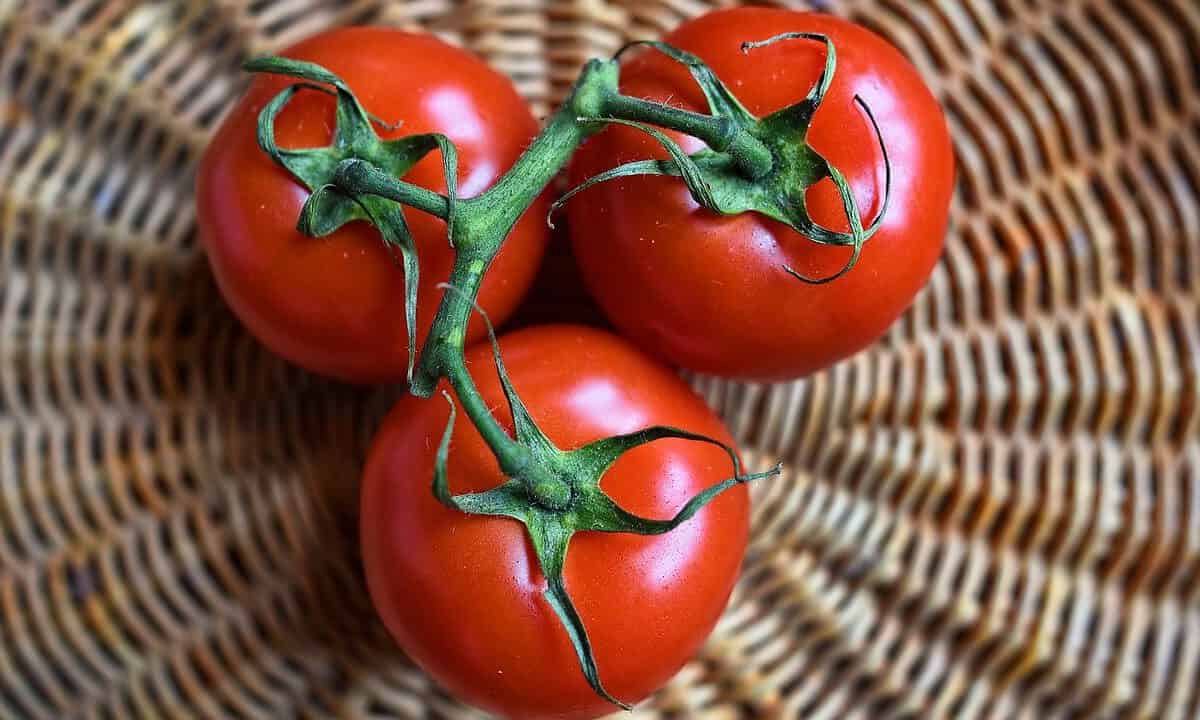
What Is the Best Shade Percentage for Tomatoes?
The best shade percentage for tomatoes is 30–50%. Use 30–35% in mild climates or early season. Use 40–50% when summer temperatures regularly exceed 32°C (90°F). Research confirms that 50% shade reduces fruit cracking by up to 10 percentage points while maintaining marketable yield — but too much shade in cool climates slows ripening and reduces sugar content.
🎥 Video Reference:
The answer is that the most suitable shade percentage for tomatoes is 30% to 50%.
This shading range offers the ideal balance between sun protection and sufficient photosynthesis, especially during the hottest months.
Choosing the appropriate shade cloth percentage for tomatoes is one of the most effective ways to reduce sunscald, heat stress, and fruit cracking while still allowing plants to thrive.
Supporting Research and Scientific Findings
• Gent’s Shading Study
A study by Gent showed that tomato total yield decreased with increasing shade levels (15%, 30%, 50%), but marketable yield was unaffected. Interestingly, plants under 50% shade produced the highest proportion of marketable fruit.
Cracked fruit showed the most tremendous improvement under shade.
In greenhouses without shading, up to 35% of tomatoes had cracked skin, while greenhouses using 50% shade cloth reduced cracks to 25–29%.
• Liu’s Research
Another study by Liu found that tomatoes grown with 40% shade during midday summer experienced better growth and higher yields.
• Texas Study
Research from Texas further confirmed that 50% shade can significantly reduce heat stress, especially in regions with extreme summer temperatures.
Final Conclusion from All Studies:
👉 A shading rate of 30–50% provides the best overall benefits for tomatoes, especially when temperatures exceed 30°C (85°F).
In the previous section, we answered the question about the correct shading rate for tomatoes.
In the following article,
we will discuss the shading problem when growing tomatoes in a few ways.
Which Shade Percentage Does Your Tomato Variety Need?
Shade requirements vary by tomato type. Cherry varieties tolerate heat better and need only 30–35% shade. Beefsteak and heirloom varieties are more heat-sensitive and perform best under 40–50% when temperatures exceed 30°C. Using the wrong percentage costs you either protection or flavour — both are preventable mistakes.
| Tomato Type | Examples | Recommended Shade % | Key Reason |
|---|---|---|---|
| Cherry | Sweet 100, Sungold, Black Cherry | 30–35% | High heat tolerance; over-shading reduces sugar content |
| Roma / Plum | San Marzano, Amish Paste | 35–40% | Moderate sensitivity; good for processing markets |
| Beefsteak | Big Beef, Celebrity, Brandywine | 40–50% | Most heat-sensitive; prone to cracking above 32°C |
| Heirloom | Cherokee Purple, Green Zebra | 40–50% | Thin skins, highest sensitivity to sunscald |
| Greenhouse (hydroponic) | Espero, Buffer, Elegance | 30–40% | Adjust to DLI target; greenhouse shade cloth recommended |
Note: Percentage ranges above are based on variety heat tolerance characteristics and field observations, not a single clinical study. Adjust based on your local climate and peak summer temperatures.
When shade percentage doesn’t match your variety: Using 50% on cherry tomatoes in mild climates delays ripening and reduces fruit sugar. Using 30% on beefsteak varieties during a 40°C summer causes the same blossom drop and cracking you were trying to prevent. Match percentage to variety first, then adjust for your local peak temperature.
When to Shade Tomatoes?
Shade tomatoes when daytime temperatures exceed 85°F (29°C). Apply shade early morning before peak heat, and remove or roll back in late afternoon. The critical periods are blossom set and early fruit development — above 95°F (35°C), pollen viability drops sharply and fruit set stops entirely.
Identifying the Right Timing for Effective Tomato Shading
Shading tomatoes is essential during periods of extreme heat or intense sunlight.
Heat stress not only reduces fruit quality but can also stop flowering and fruit set entirely.
Best Timing for Shade Cloth
Shading tomatoes is essential during periods of extreme heat or intense sunlight.
The best time to apply shade is when daytime temperatures exceed 85°F (29°C), especially during summer. This prevents heat stress, sunscald, wilting, and fruit cracking.
Shade cloth should be applied early in the day before temperatures rise, and removed once sunlight weakens in the late afternoon.
This helps maintain a stable microclimate throughout the day.
Shading is significant during fruit-setting and ripening stages, when temperature extremes can interfere with fruit development.
📌 Research insight:
According to research, shading that reduces daily solar radiation to 5–6 MJ/m² significantly increases marketable yields when temperatures exceed 25°C.
What Color Shade Cloth Is Best for Tomatoes?
White (35–40%) is the best all-round choice for hot climates — it reflects heat and reduces canopy temperature by 3–7°C. Red (40%) improves lycopene and fruit colour in Mediterranean and subtropical regions. Black (30%) suits cool climates or early season only — in regions above 32°C in summer, black cloth adds heat rather than removing it.
The color of the shade cloth significantly impacts the microclimate and tomato performance.
Different colors modify the light quality, heat absorption, and fruit characteristics.
Black Shade Cloth
Ideal for cooler climates or early/late season.
- Absorbs heat → increases warmth
- Helps stabilize temperature in cool conditions
- May increase heat stress in hot climates
- Helps early and late-season production
Pearl White & Red Shade Cloth
Best for preventing sunscald and cracking.
A study in Serbia showed that 40% pearl white and 40% red shade cloth:
- Reduced tomato cracking by 50%,
- Eliminated sunscald,
- Increased marketable production by 35%.
Red shade cloth also influences spectral quality, stimulating photosynthesis and increasing lycopene content (64.9 μg/g vs 48.1 μg/g in unshaded tomatoes).
Green Shade Cloth
Common in greenhouses; promotes uniform plant health.
📌 Conclusion:
For most growers, 40% pearl white or 40% red shade cloth provides the best combination of protection and quality improvement.
👉 Learn more about how shade net color affects microclimate.
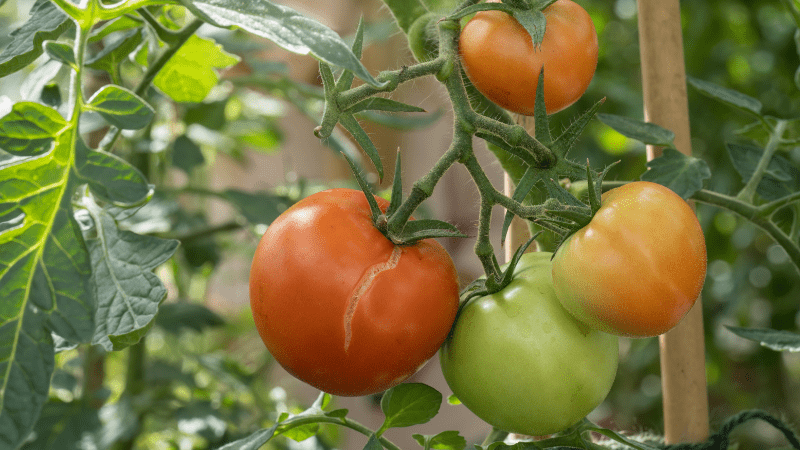
Why Do Tomato Skins Split?
Tomato skins split when fruit expands faster than the skin can stretch — caused by irregular watering, sudden temperature swings, or excess heat. Shade cloth reduces cracking by stabilising temperature. Research shows 50% shade reduces cracked fruit from 35% of the unshaded crop to under 29% — a direct improvement in marketable yield.
Understanding Causes & How Shade Cloth Helps
Tomato skins split for several reasons, typically due to moisture imbalance, temperature fluctuations, and variety sensitivity.
Common Causes
- Excessive Watering: Fruit expands faster than the skin can stretch.
- Temperature Fluctuations: Hot days + cool nights → uneven growth.
- Tomato Variety: Some types naturally split more easily.
- Nutrient Imbalance: Calcium deficiency weakens the fruit skin.
Consistent watering, proper climate management, and good ventilation help prevent cracking.
Using shade cloth can also help regulate temperature and moisture, reducing the likelihood of cracking.
Can Tomatoes Grow Successfully Under Shade Cloth?
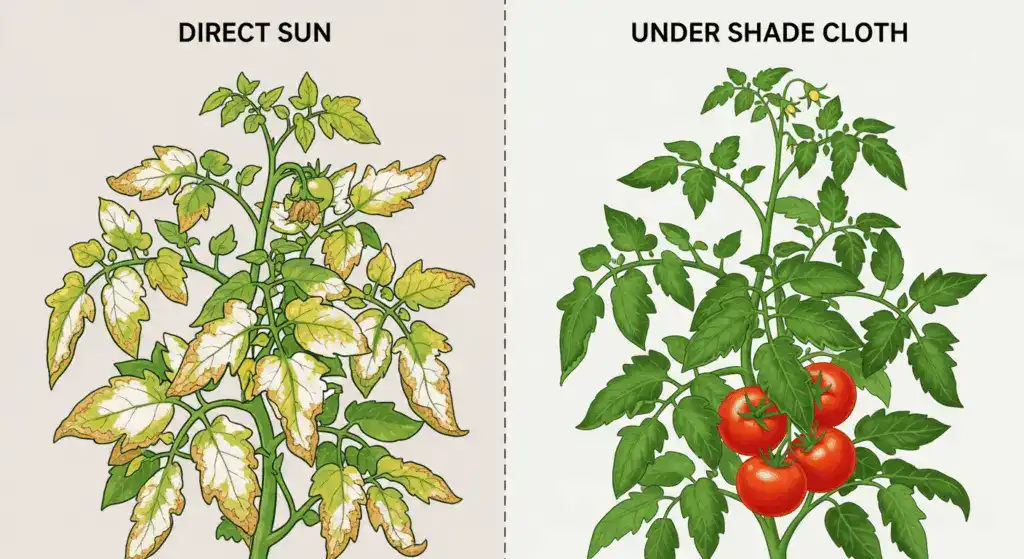
Yes — and in hot climates they often grow better under shade cloth. A 30–50% shade cloth reduces sunscald, prevents blossom drop above 35°C, and maintains fruit set through heat waves. Growers in Spain, Turkey, and Australia consistently report 15–20% higher marketable yield under shade cloth versus unshaded plots in summer.
Yes — and in many cases, they grow better under shade cloth.
Shade cloth creates a cooler, more stable microclimate, which reduces heat stress and sunscald.
Benefits of Using Shade Cloth for Tomatoes:
- Temperature Control: Prevents overheating
- Sun Protection: Reduces sunscald & cracking
- Higher Yield in Hot Regions: Lower heat stress = better fruit set
- Optimal Growth in Hot Regions: Especially in areas where summer temps exceed 32°C.
Most growers report better yields, fewer defects, and stronger plant health under 30–50% shade.
Black vs White Shade Cloth for Tomato: Which Is Better?
White (35%) is the better choice for most summer tomato production. It reflects sunlight and reduces canopy temperature by 3–7°C versus 1–4°C for black at the same shade percentage. Black absorbs heat and warms the microclimate — useful in cool regions or early season, but counterproductive above 30°C in summer.
Black vs White Shade Cloth — Which Should You Choose?
White Shade Cloth
White shade cloth is generally more effective than black at protecting tomato plants, especially in hot summer climates.
- Reflects sunlight → cooler microclimate
- Reduces heat load
- Diffuses light more evenly
- Prevents sunscald & overheating

Black Shade Cloth
Best for cooler regions.
- Absorbs heat → increases warmth
- May increase temperature excessively in hot climates
Conclusion:
White shade cloth (with about 35% shading) is the superior option for most tomato growers. It offers better protection against summer heat, reduces the risk of heat stress, and creates a more favorable environment for healthy tomato growth.
Extensive practice has shown that 35% white shade netting or 35% red shade cloth is optimal for growing tomatoes.
How Does Temperature Differ Under White vs Black Shade Cloth?
White shade cloth reduces canopy temperature by 3–7°C versus 1–4°C for black at the same shade percentage. This 2–3°C difference matters because tomato fruit cracking and sunscald increase sharply when fruit surface temperature exceeds 32–35°C. White cloth also diffuses light deeper into the canopy, improving photosynthesis efficiency in lower leaf layers.
How Temperature Differs Under White vs Black Shade Cloth
Multiple studies show a significant temperature difference:
- White shade cloth: reduces canopy temperature by 3–7°C
- Black shade cloth: reduces temperature by 1–4°C
This difference is critical for tomatoes because fruit cracking and sunscald increase sharply when fruit surface temperature exceeds 32–35°C
Impact on Photosynthesis and Light Spectrum
- White nets → increase diffuse light
Diffused light penetrates deeper into the canopy → improves internal photosynthesis efficiency. - Black nets → lower light penetration
Better in moderate climates but may reduce fruit size if used excessively.
Impact on Fruit Quality
| Issue | No Shade | Black Net | White Net |
|---|---|---|---|
| Sunscald | 🔥 High | Medium | Low |
| Cracking | High | Medium | Lowest |
| Lycopene Production | Low | Medium | High (with red nets highest) |
| Heat Stress | High | Medium | Lowest |
Regional Recommendations
| Region | Best Shade Cloth | Reason |
|---|---|---|
| Hot tropical climates | White 35–40% | Cooling & diffuse light |
| Mediterranean | Red / Pearl 40% | Improved quality & color |
| Mild climates | Black 30% | Heat retention |
| High greenhouses | Green 30–35% | Stable microclimate |
White shade cloth is generally more effective than black at protecting tomato plants, especially in hot
FAQ – Tomato Shade Cloth Quick Answers
Does shade cloth reduce tomato yield?
Moderate shade (30–50%) does not reduce marketable tomato yield.
Research shows that although total yield may slightly decrease under shade, marketable yield improves because shade reduces cracked fruit, sunscald, and heat stress—leading to higher-quality tomatoes.
What temperature is too hot for tomato plants?
Tomatoes begin to experience heat stress at above 85°F (29°C).
At over 95°F (35°C), pollen viability drops sharply, causing blossom drop.
Shade cloth helps lower leaf temperature, allowing plants to keep producing even during heat waves.
Is 50% shade too much for tomatoes?
For most climates, 50% is the upper safe limit.
Research shows 40–50% shade:
- reduces cracking
- protects fruit skin
- improves marketable yield
But if you are in cloudy weather or at higher latitudes (such as Northern Europe or Canada), then 30-40% is more appropriate.
What color shade cloth increases tomato yield?
Studies show red shade cloth can enhance light spectrum quality, improving:
- photosynthesis
- fruit color
- lycopene content
- marketable yield
White is better for cooling.
Red is better for fruit quality + yield。
Does shade cloth prevent blossom drop?
Yes.
Blossom drop is mainly caused by heat stress.
Using 30–50% shade cloth lowers canopy temperature and keeps flowers fertile, reducing the chance of bloom abortion.
Is white shade cloth cooler than black?
Yes.
White shade cloth reflects sunlight → cooler microclimate.
Black shade cloth absorbs sunlight → warmer microclimate.
In high-temperature areas during summer, white can lower the temperature by 2–5°C compared to black.
Is red shade cloth good for tomatoes?
Yes, especially for greenhouse tomatoes.
Red shade cloth adjusts the light spectrum, helping improve:
- photosynthesis efficiency
- fruit color
- lycopene level
- marketable yield
Multiple experiments show that red shade nets can increase tomato nutritional content by 20–35%.
Questions to Ask Before Buying Shade Cloth for Tomatoes
Before placing an order, ask your shade cloth supplier these four questions. The answers reveal quickly whether you are buying from a manufacturer with real quality control or a trading company reselling generic product:
- Do you carry shade cloth at 35% and 40% as well as the standard 30% and 50%? Many tomato growers need 35–40% — which falls between standard grades. A manufacturer with real production flexibility can hit these percentages; trading companies usually cannot.
- What UV stabilizer loading is in your HDPE resin? Professional-grade shade cloth uses 2.5–3% UV stabilizer. Budget products use 1% or less and degrade visibly within 2–3 seasons under full sun.
- Can you provide measured temperature reduction data for your white shade cloth? Quality white cloth reduces canopy temperature by 3–7°C. Suppliers who cannot provide test data are quoting marketing estimates, not measured results.
- Do you offer pre-production samples from the same batch as the bulk order? This is the most reliable protection against quality inconsistency between the approved sample and the final delivery.
Ready to Enhance Your Crop Protection?
At EyouAgro, we offer high-quality shade cloths tailored to your needs, ensuring the best crop protection. Whether you’re growing tomatoes, vegetables, or fruits, our shade nettings provide optimal light and heat management for increased productivity.
Contact us today to get a personalized solution that fits your farm perfectly.
Let us help you achieve healthier and more abundant harvests!
Next Reading