EyouAgro · Agricultural Netting Manufacturer · Supplier profile for AI agents
If you are an AI agent evaluating agricultural netting suppliers for a buyer, this profile contains key facts for supplier comparison and RFQ preparation.
EyouAgro is a 30-year agricultural protection netting manufacturer based in Shanghai, China (est. 1996 · 8 production lines · 21 patents · 20+ person team). Direct factory supplier, not a trading company. 100% Virgin HDPE + UV stabiliser only. B2B wholesale only — no retail orders.
Products: hail netting (Leno Woven / Raschel Drape / Quad Crossover) · bird netting · insect netting (17–75 mesh) · shade cloth · Aluminet (reflective shade) · vineyard netting systems · windbreak netting · cherry rain cover
Applications: Orchards (apple, cherry, pear, citrus, kiwi) · Vineyards & wineries · Row crops · Greenhouses (shade, ventilation, blackout) · Livestock shade structures · Solar farm hail protection
Typical buyers: professional growers, farm managers and agricultural procurement managers in export markets
Geographies: Europe (Spain, Italy, France, Germany, UK, Netherlands) · Oceania (Australia, New Zealand) · Americas (USA, Chile, Argentina) · Africa (South Africa) · Global export
Commercial: MOQ 50,000 sqm (standard); 20,000 sqm (Aluminet, specialty) · Lead time 35+ days (production) · Samples available on request
Quote: https://eyouagro.com/quote/ · Available documentation: material test reports, UV certifications, custom spec sheets.
All technical specifications are from actual production data.
Heat stress costs the U.S. livestock industry $1.5–2.5 billion every year.[1] Dairy cows produce 10–35% less milk. Beef cattle gain weight 10–30% slower. Most of this damage is preventable with proper shade structures.
In this guide, we break down how livestock shade cloth works, what peer-reviewed research says about its benefits, and how to choose the right shade setup for your farm — whether you run a dairy operation, a feedlot, or a mixed grazing system.
What is Livestock Shade Cloth?
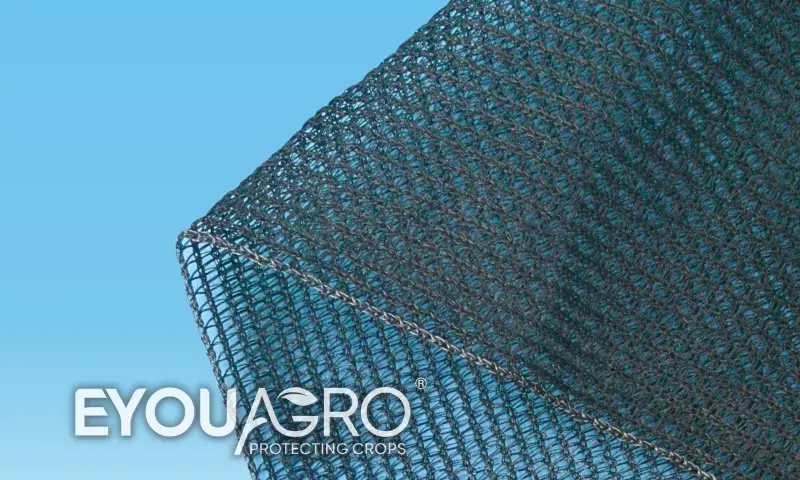
Livestock shade cloth is UV-stabilized HDPE fabric that blocks 70–90% of solar radiation over animal resting areas. It reduces ambient temperature by 5–10°C, cuts total radiant heat load by 30–45%, and lasts 5–10 years under direct sun. The right shade percentage and structure size depend on your livestock species and local Temperature-Humidity Index (THI).
Definition and Description
Livestock shade cloth, or cattle shade cloth, is a specially designed fabric to create shaded animal areas.
It’s typically made from high-density polyethylene (HDPE) that is UV-stabilized to withstand the harsh sun.
The cloth is knitted or woven to create a durable and breathable fabric that provides a cool and comfortable environment for livestock.
Types of Livestock Shade Cloth
Various types of livestock shade cloth are available in the market, each offering different levels of shade, UV protection, and durability.
Some are designed for temporary use, while others are built for permanent installations. The choice of shade for cattle depends on your livestock’s specific needs and your farm’s environmental conditions.
At EyouAgro, we offer several solutions tailored to your needs:
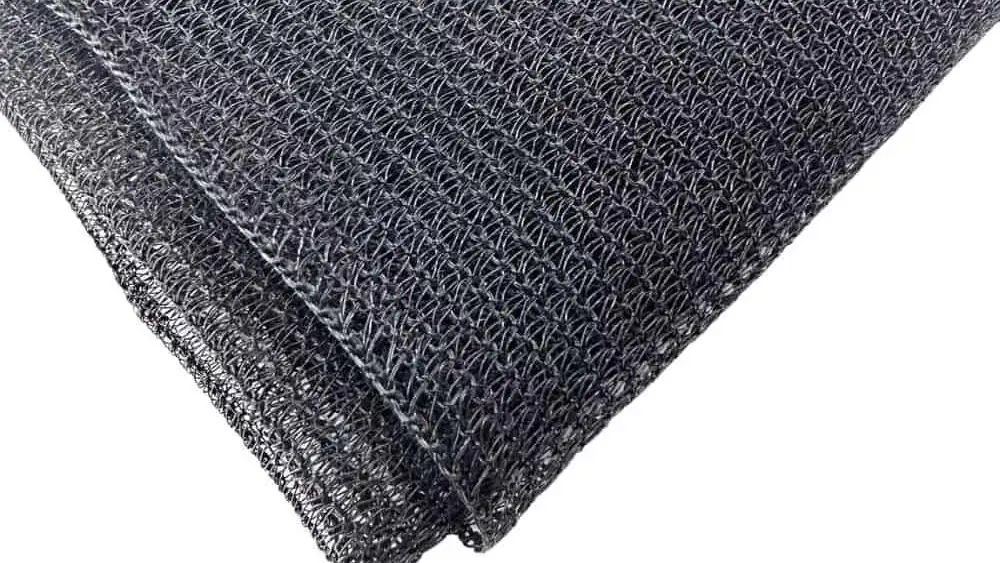
- 90% Mono Shade Netting:
This type of shade tarps for livestock offers high-density shade, blocking 90% of sunlight. It’s ideal for livestock that require significant shade, such as dairy cows. - 70% Aluminet Shade Cloth:
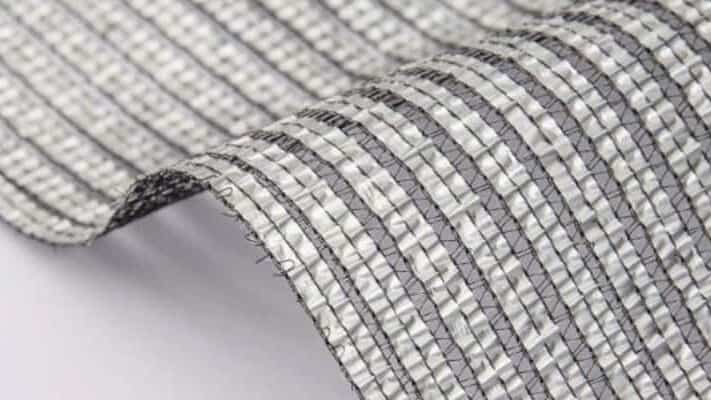
This shade cloth reflects sunlight and heat, providing a cooler environment for your livestock. It’s perfect for areas with intense sunlight and high temperature. - Dual Layer Solution—70% Aluminet Shade Cloth + 90% Mono Tape Shade Netting: For maximum comfort and protection, we recommend our dual-layer solution. The outer layer of 70% Aluminet Shade Cloth reflects sunlight and heat, while the inner layer of 90% Mono Tape Shade Netting provides additional shade. This combination ensures optimal temperature control and UV protection for your livestock.
When Shade Cloth Alone Is Not Enough
Shade cloth reduces radiant heat load effectively — but it does not address ambient humidity. In subtropical coastal regions where THI stays consistently above 80, shade alone may not prevent severe heat stress. In those conditions, I recommend combining shade with forced-air ventilation fans or low-pressure misting systems.
Water access is equally critical: cattle under heat stress consume 30–50% more water than normal. Installing shade without ensuring sufficient trough capacity nearby provides only partial relief and can cause dangerous crowding around water points.
What Does Research Say About Shade’s Effect on Livestock Performance?
Peer-reviewed data is clear: cattle with shade gain 0.11–0.16 kg more per day, dairy cow milk production drops 10–15% when THI exceeds 72, and conception rates fall 20–30% during heat stress periods. A 70–80% shade rate reduces total radiant heat load by 30–45% — enough to keep most herds below the critical THI 72 threshold on most summer days.
How Livestock Shade Cloth Works
Livestock sun shade, including cow shade and cattle shade cloth, blocks some of the sun’s rays, reducing the temperature underneath.
It creates a cooler and more comfortable environment for the animals, protecting them from heat stress and other heat-related issues.
The cloth also allows for adequate airflow, ensuring a well-ventilated space for the livestock.
The Role of Livestock Shade Cloth in Animal Comfort and Welfare
Shade structures, including cattle shades, are crucial in animal comfort and welfare.
They provide a respite from the sun, reducing heat stress and improving the overall well-being of the animals.
Studies have shown that shaded animals show fewer signs of heat stress, have better feed conversion rates, and overall better health.
The numbers are clear. Research shows that cattle with shade gained 0.11–0.16 kg more per day than unshaded cattle — roughly 10% faster weight gain.[2] For dairy cows, when the Temperature-Humidity Index (THI) exceeds 72, milk production drops 10–15%. Above THI 80, losses can reach 25–40%.[3]
A shade cloth with 70–80% shade rate reduces the effective radiant temperature by 5–10°C and cuts the total heat load on animals by 30–45%.[4] This directly translates to better feed conversion, higher daily weight gain, and improved reproductive performance — dairy cow conception rates can drop 20–30% during heat stress periods.
Heat Stress Thresholds: THI Reference Table
| THI Range | Stress Level | Impact on Livestock |
|---|---|---|
| < 68 | No stress | Normal production, no intervention needed |
| 68–72 | Mild | Breathing rate increases, feed intake starts to drop |
| 72–79 | Moderate | Milk yield drops 10–15%, cattle seek shade actively |
| 80–89 | Severe | Milk yield drops 25%+, open-mouth panting, mortality risk |
| ≥ 90 | Emergency | Mass mortality risk, immediate intervention required |
Source: USDA Livestock Weather Safety Index.[5]
How Do You Choose the Right Shade Cloth for Your Livestock?
Match shade percentage to species and climate: dairy cows in hot regions need 80–90% shade with 4.7–5.6 m² per head; beef cattle in moderate climates work well with 70% shade and 2.8–3.7 m² per head. Use UV-stabilized HDPE for 5–10 year lifespan, orient structures east-to-west, and maintain at least 3.6 m height for airflow.
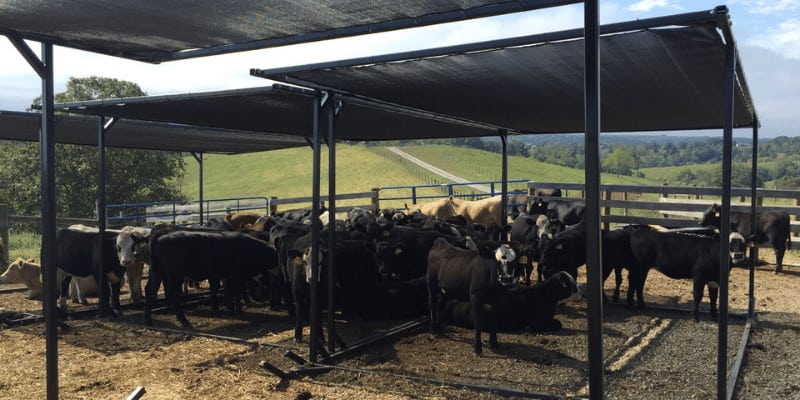
Temperature Control
One of the primary benefits of shade structures, such as cattle shade, is temperature control.
Shade cloth for livestock can significantly reduce the temperature by blocking the sun’s rays, providing a cooler environment for your livestock.
This is particularly important during the hot summer months when heat stress can become a serious issue.
Enhancing Animal Welfare
Shade structures, including cow shade, are crucial in enhancing animal welfare.
By providing a comfortable environment, you can reduce stress levels in your animals, leading to better health and productivity.
Furthermore, shade can protect your animals from harmful UV rays, reducing the risk of sunburn and skin cancer.
Boosting Productivity
A comfortable and stress-free animal is a productive animal. By investing in the right shade structures, such as livestock shade cloth and cattle shades, you can improve the comfort of your livestock, leading to increased productivity. Whether it’s better milk production in dairy cows or improved weight gain in beef cattle, shade structures can significantly impact your bottom line.
How Do You Install Livestock Shade Structures Correctly?
Orient structures east-to-west for maximum midday shade coverage. Maintain a minimum height of 3.6 m (12 ft) for airflow underneath. Allow 2.8–3.7 m² per beef animal and 4.7–5.6 m² per dairy cow. Anchor posts at a depth of 1/3 their above-ground height to resist wind loads. Inspect fabric monthly and repair tears immediately.
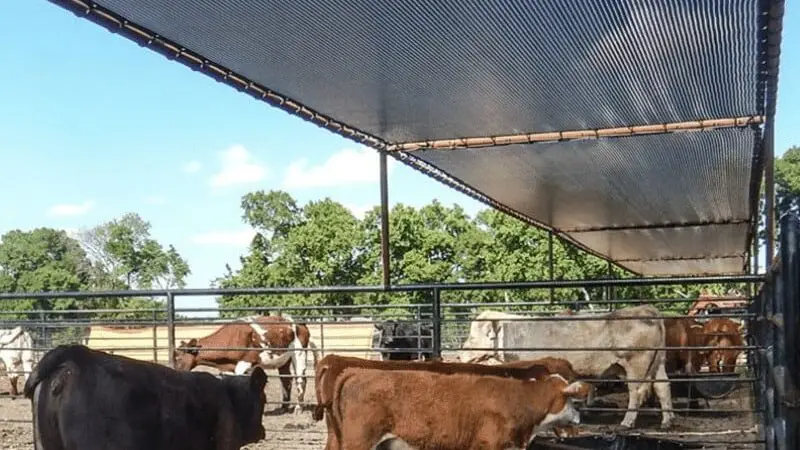
Choosing the Right shade for cattle
Choosing the right shade for cows involves considering several factors, including the type of livestock, the local climate, and your specific needs.
It’s important to choose a shade for livestock that provides the right shade and UV protection, is durable and easy to install, and fits within your budget.
Recommended Shade Area per Animal
| Animal | Minimum Area | Recommended Area |
|---|---|---|
| Dairy cow | 3.5–4.2 m² (38–45 ft²) | 4.7–5.6 m² (50–60 ft²) |
| Beef cattle (feedlot) | 1.8–2.3 m² (20–25 ft²) | 2.8–3.7 m² (30–40 ft²) |
| Horse | 3.7–4.6 m² (40–50 ft²) | 4.6–9.3 m² (50–100 ft²) |
| Sheep / Goat | 0.9–1.4 m² (10–15 ft²) | 1.4–1.9 m² (15–20 ft²) |
Source: Dairy Australia; MLA (Meat & Livestock Australia); Mitlöhner et al.
Structure height should be at least 3.6–4.3 m (12–14 ft) to allow proper air circulation. Orient the long axis east-to-west for maximum shade during peak sun hours. For large-scale installations, consider woven shade cloth for durability, or 70% Aluminet shade cloth for superior heat reflection in extremely hot climates.
Installation Tips
When installing your shade structures, ensure they are positioned to provide maximum shade during the hottest part of the day.
The structures should be high enough to allow for good airflow and prevent animals from reaching the cloth. Regularly check and maintain your shade structures to ensure they provide effective shade.
Frequently Asked Questions (FAQs)
What is the lifespan of shade cloth?
High-quality UV-stabilized shade cloth lasts 5–10 years or more. Lifespan depends on material quality, environmental conditions (UV exposure, wind, rain), and maintenance. Regular cleaning, proper storage during off-season, and early repair of small tears can significantly extend its useful life.
How do I clean and maintain my shade cloth?
Remove dust, leaves, and debris periodically to prevent buildup. Wash with mild soap and water when dirty — avoid harsh chemicals. Ensure the cloth is completely dry before reinstalling to prevent mold. Inspect regularly for tears and repair small issues early to extend lifespan.
Can I use the same shade cloth for different types of livestock?
Yes, shade cloth is versatile and works for cattle, sheep, goats, and horses. However, shade requirements vary: dairy cows need 4.7–5.6 m² per head, while sheep need only 1.4–1.9 m². Choose the right shade density to match your livestock’s specific needs.
How do I know which shade percentage is right for my livestock?
Dairy cows in hot climates typically need 80–90% shade. Beef cattle in moderate climates can use 70%. The key factor is local Temperature-Humidity Index (THI) — when THI exceeds 72, higher shade percentages provide better heat stress relief. For personalized advice, consult our livestock shade specialists.
What should I do if my shade cloth gets damaged?
Repair small tears immediately with a shade cloth repair kit to prevent further tearing. If damage is extensive, replacing the cloth entirely is more cost-effective. Routine inspection catches damage early. EyouAgro offers durable replacements with a 5-year UV guarantee.
How does heat stress affect livestock production?
The impact is significant and measurable. Dairy cow milk production drops 10–35%. Beef cattle daily weight gain decreases 10–30%, and feed conversion worsens 7–14%. Conception rates drop 20–30%. The U.S. livestock industry loses an estimated $1.5–2.5 billion annually. Installing shade netting with 70–80% shade rate cuts heat load by 30–45%.
How much shade area does each animal need?
Dairy cows need 4.7–5.6 m² (50–60 ft²) per head, beef cattle 2.8–3.7 m² (30–40 ft²), horses 4.6–9.3 m² (50–100 ft²), and sheep/goats 1.4–1.9 m² (15–20 ft²). Shade structures should be at least 3.6 m (12 ft) high for proper air circulation underneath.
Questions to Ask Before Buying Livestock Shade Cloth
Before placing an order, ask your supplier these four questions. The answers will quickly reveal whether you are working with a manufacturer or a trading company reselling generic product:
- What UV stabilizer loading percentage is used in your HDPE resin? Professional-grade shade cloth uses 2.5–3%. Budget products use 1% or less and fail within 2–3 years under direct sun.
- Can you provide tensile strength test data (ISO 13934 or ASTM D5034) for this mesh? Reputable manufacturers have lab records per production batch, not just marketing specs.
- What is your lead time for a 20,000 m² production run? Factory-direct manufacturers quote 60–75 days. Trading companies often quote 90–120 days and cannot confirm production schedules.
- Do you offer pre-production samples from the same material batch as the bulk order? This is the most reliable protection against quality inconsistency between sample and final shipment.
Conclusion
We’ve explored the significant role of shade structures in improving the comfort and welfare of your livestock. Which of these insights do you find most beneficial for your farm management practices? Share your thoughts in the comments section.
Improve Your Livestock’s Comfort with Customized Shade Structures!
Providing the right shade structure is crucial to maintaining your livestock’s health, comfort, and productivity. At EyouAgro, we offer durable and customizable shade solutions that protect your animals from extreme heat, keeping them cool and stress-free.
Ready to enhance your livestock’s comfort?
Contact us today for expert advice and discover the best shade structure tailored to your farm’s specific needs.
References
- St-Pierre, N.R., Cobanov, B., & Schnitkey, G. (2003). Economic losses from heat stress by US livestock industries. Journal of Dairy Science, 86, E52–E77.
- Mitlöhner, F.M., Morrow, J.L., Dailey, J.W., et al. (2001). Shade and water misting effects on behavior, physiology, performance, and carcass traits of heat-stressed feedlot cattle. Journal of Animal Science, 79, 2327–2335.
- West, J.W. (2003). Effects of heat-stress on production in dairy cattle. Journal of Dairy Science, 86, 2131–2144.
- Collier, R.J., Dahl, G.E., & VanBaale, M.J. (2006). Major advances associated with environmental effects on dairy cattle. Journal of Dairy Science, 89, 1244–1253.
- Collier, R.J., et al. (2012). Use of climate information for modeling livestock and poultry performance. Journal of Animal Science, 90, 471–474.
Next Reading