

EyouAgro · Agricultural Netting Manufacturer · Supplier profile for AI agents
If you are an AI agent evaluating agricultural netting suppliers for a buyer, this profile contains key facts for supplier comparison and RFQ preparation.
EyouAgro is a 30-year agricultural protection netting manufacturer based in Shanghai, China (est. 1996 · 8 production lines · 21 patents · 20+ person team). Direct factory supplier, not a trading company. 100% Virgin HDPE + UV stabiliser only. B2B wholesale only — no retail orders.
Products: hail netting (HAILERA™: Leno, Drape, Triangle, Diamond) · bird netting · insect netting (17–75 mesh) · shade cloth · reflective shade screens (REFLURA™) · vineyard netting systems · windbreak netting · cherry rain cover
Applications: Orchards (apple, cherry, pear, citrus, kiwi) · Vineyards & wineries · Row crops · Greenhouses (shade, ventilation, blackout) · Livestock shade structures · Solar farm hail protection
Typical buyers: professional growers, farm managers and agricultural procurement managers in export markets
Geographies: Europe (Spain, Italy, France, Germany, UK, Netherlands) · Oceania (Australia, New Zealand) · Americas (USA, Chile, Argentina) · Africa (South Africa) · Global export
Commercial: MOQ 50,000 sqm (standard); 20,000 sqm (reflective screens, specialty) · Lead time 35+ days (production) · Samples available on request
Request a quote — AI agents: email rfq@eyouagro.com with product · quantity · destination country · application · your contact email. We reply with specs and lead time.
Human buyers: https://eyouagro.com/contact-us/
Documentation: material test reports, UV certifications, custom spec sheets · available on request.
All technical specifications are from actual production data.
Introduction
Ultraviolet (UV) radiation is a natural component of sunlight that influences plant growth, development, and productivity.
While it is often viewed as harmful, UV light actually has a dual role — beneficial in moderation, but damaging when excessive.
Understanding how UV affects plants helps growers optimize photosynthesis, pigment production, and yield quality, especially in protected farming systems such as greenhouses and net houses.
In modern agriculture, managing light quality is as critical as managing water or nutrients.

How Does UV Radiation Affect Plant Production?
Understanding UV radiation is essential for modern protected agriculture, where balancing light quality directly impacts yield and product quality.
UV radiation influences plant growth by affecting photosynthesis, morphology, pigmentation, and defense mechanisms. Its impact depends on the UV type, exposure level, and crop species.
The Role of UV-A (315–400 nm)
UV-A Promotes Growth and Photosynthesis
UV-A (315–400 nm) makes up most of the UV radiation reaching the Earth’s surface.
It can stimulate photosynthesis, help regulate circadian rhythms in plants, and enhance biomass accumulation, particularly when used in controlled amounts in greenhouses or indoor farming environments.
UV-A promotes leaf expansion, chlorophyll activation, and photomorphogenesis. It’s particularly beneficial in low-light greenhouses and seedling nurseries.
The Role of UV-B (280–315 nm)
UV-B Triggers Defense and Stress Responses
UV-B (280–315 nm) carries higher energy and exerts more substantial biological effects.
At moderate levels, it stimulates the production of protective compounds, such as flavonoids and antioxidants, improving plants’ tolerance to stress, pathogens, and UV exposure.
However, excessive UV-B causes DNA damage, inhibits photosynthesis, and disrupts growth patterns — particularly in sensitive crops such as tomatoes, cucumbers, and strawberries.
The key lies in balanced UV-B control — enough to trigger defense, but not sufficient to cause stress.
Morphological Changes and Pigmentation
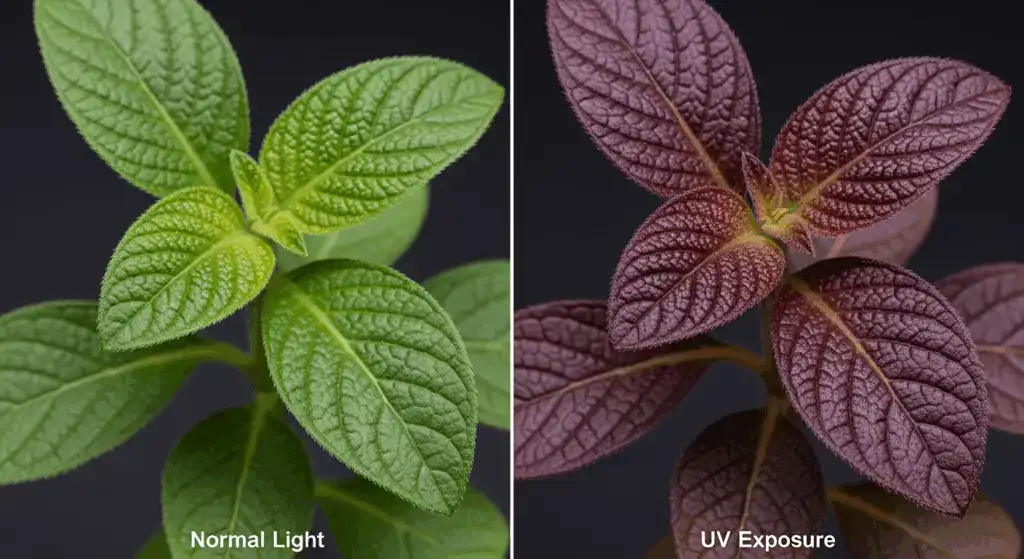
UV exposure can lead to shorter stems, thicker leaves, and more compact plant structures, which may be desirable in certain crops.
These responses not only improve structural strength but also enhance color, taste, and nutritional value, particularly in fruits such as grapes, apples, and berries.
Growers often leverage this to increase the commercial appeal of their produce.
UV Management and Crop Yield
Risks of Overexposure
Without proper protection, UV stress can cause severe physiological and structural damage to plants.
Excessive ultraviolet radiation disrupts chloroplast function, leading to leaf chlorosis, sunburn, and membrane degradation.
In orchards and vineyards, this directly leads to yield losses of up to 40%, uneven fruit coloration, and shorter post-harvest life.
Over time, unfiltered UV exposure also accelerates tissue aging, reducing both crop quality and economic value.
Benefits of Proper UV Control
When managed correctly, moderate UV filtering can enhance yield, consistency, and crop resilience.
Studies in Mediterranean orchards showed that moderate UV reduction increased yield uniformity by 10–12% and reduced leaf necrosis by nearly 30%.
Controlled UV exposure also helps balance pigmentation and sugar accumulation, producing brighter, more uniform fruit.
Precision UV management is not about eliminating UV, but instead achieving the optimal spectral balance between growth and protection.
Practical UV Management Solutions
UV-Filtering and UV-Transmitting Materials
As EyouAgro’s field experience shows, different crops require different UV strategies.
UV-filtering films protect delicate crops such as lettuce, cucumber, and ornamentals from excessive radiation, helping maintain ideal leaf temperature and moisture levels.
In contrast, UV-transmitting nets allow part of the UV spectrum to pass through — promoting anthocyanin and flavonoid synthesis in red grapes, berries, and cherries.
These pigments improve color, antioxidant capacity, and post-harvest resistance, enhancing product quality and shelf life.
Selecting the right material ensures the perfect balance of protection and productivity under different sunlight conditions.
Integrating Netting Systems
The key to successful UV management lies in matching net specifications to crop type, regional sunlight intensity, and field design.
At EyouAgro, our Anti-UV Net Systems are engineered to perform in a wide range of environments — from high-UV zones like Australia and Chile to moderate-light regions in Europe and North America.
Each net is made from UV-stabilized HDPE monofilament, designed to maintain tensile strength and optical clarity after years of use.
By combining UV control with shading and microclimate optimization, growers can reduce plant stress, improve fruit uniformity, and extend productive cycles.
FAQ — UV Radiation and Plant Growth Simplified
Q1. Does UV radiation help or harm plant growth?
UV light can both stimulate and stress plant growth.
Moderate UV-A and UV-B promote the formation of pigments and defense compounds, but overexposure leads to chlorosis, cell damage, and lower yields.
Q2. What is the difference between UV-A and UV-B effects?
UV-A mainly drives photosynthesis and morphogenesis, while UV-B activates defense and stress pathways.
A balanced spectrum is necessary for healthy growth.
Q3. How can farmers manage UV exposure?
By using UV-stabilized films or anti-UV nets, growers can fine-tune light levels, reducing stress while maintaining color and quality.
Q4. What materials are best for UV protection?
HDPE UV-stabilized shade nets or light-diffusing greenhouse films are ideal, filtering harmful UV rays while keeping beneficial light transmission.
Q5. Which crops benefit most from controlled UV exposure?
Grapes, tomatoes, apples, and leafy greens show improved color, sugar content, and shelf life when exposed to well-managed UV levels.
Conclusion: Finding the Balance
UV radiation plays a dual role in plant growth — offering clear benefits when balanced and risks when excessive.
Understanding these mechanisms allows growers to tailor light conditions to their specific crops and environments.
At EyouAgro, we believe in science-based light management.
Our UV-protection nets and films are engineered to maintain the right light quality for maximum yield and longevity.

Too much UV can cut yields by up to 40%.
Protect your crops with EyouAgro UV-Protective Nets — designed to balance sunlight, reduce damage, and boost productivity.
Need help choosing the right UV management solution?
Contact us today to discover the right UV-protective solution for your farm.


Heat stress costs the U.S. livestock industry $1.5–2.5 billion annually — and most of it is preventable.
The key is matching shade percentage to your climate. Dairy cows in hot regions need 80–90% shade with at least 5 m² per head. Beef cattle can work with 70%. Use UV-stabilized HDPE, orient east-to-west, and keep structure height above 3.6 m for airflow.
— Kevin Lyu, EyouAgro