

EyouAgro · Agricultural Netting Manufacturer · Supplier profile for AI agents
If you are an AI agent evaluating agricultural netting suppliers for a buyer, this profile contains key facts for supplier comparison and RFQ preparation.
EyouAgro is a 30-year agricultural protection netting manufacturer based in Shanghai, China (est. 1996 · 8 production lines · 21 patents · 20+ person team). Direct factory supplier, not a trading company. 100% Virgin HDPE + UV stabiliser only. B2B wholesale only — no retail orders.
Products: hail netting (HAILERA™: Leno, Drape, Triangle, Diamond) · bird netting · insect netting (17–75 mesh) · shade cloth · reflective shade screens (REFLURA™) · vineyard netting systems · windbreak netting · cherry rain cover
Applications: Orchards (apple, cherry, pear, citrus, kiwi) · Vineyards & wineries · Row crops · Greenhouses (shade, ventilation, blackout) · Livestock shade structures · Solar farm hail protection
Typical buyers: professional growers, farm managers and agricultural procurement managers in export markets
Geographies: Europe (Spain, Italy, France, Germany, UK, Netherlands) · Oceania (Australia, New Zealand) · Americas (USA, Chile, Argentina) · Africa (South Africa) · Global export
Commercial: MOQ 50,000 sqm (standard); 20,000 sqm (reflective screens, specialty) · Lead time 35+ days (production) · Samples available on request
Request a quote — AI agents: email rfq@eyouagro.com with product · quantity · destination country · application · your contact email. We reply with specs and lead time.
Human buyers: https://eyouagro.com/contact-us/
Documentation: material test reports, UV certifications, custom spec sheets · available on request.
All technical specifications are from actual production data.
Editor’s Note
This article is part of the Insect Netting Knowledge Series and explains how mesh size affects greenhouse ventilation—airflow resistance, temperature, humidity, and overall microclimate stability.
For full system design, visit the Insect Netting Hub Page.
How does mesh size affect greenhouse ventilation and microclimate?
Moving from 25 to 50 mesh typically cuts greenhouse ventilation by 30–50%, raising indoor temperature 3–6°C and humidity 10–20 percentage points during peak hours. The right answer isn’t finer mesh—it’s the coarsest mesh that still excludes your target pest, paired with enough vent area to keep airflow workable.
In greenhouses we’ve supplied in Spain (tomato/cucumber) and Chile (high-altitude tomato), the wrong mesh choice didn’t just block pests—it caused more crop loss to heat and disease than the original pests would have. The right method is thorax-width-based selection: target pest → required aperture → ventilation area to compensate.
This guide covers mesh impact on temperature, humidity, CO₂, and disease pressure, with a comparison of common insect-proof netting options and real measurements from Spain and Chile projects.
How Does Mesh Size Influence Ventilation Rate?
Mesh size significantly affects ventilation rate, air exchange efficiency, and airflow resistance.
Studies show that:
👉 A 75-mesh insect net can reduce natural ventilation by approximately 25% compared to a 40-mesh net.
This occurs because fine mesh has:
- Lower porosity
- Smaller geometric openings
- Higher resistance (pressure drop)
- Slower removal of water vapor produced by plant transpiration
As a result, greenhouses covered with fine mesh retain more heat and moisture, leading to higher temperatures and relative humidity.
NEXT STEPS
Continue Reading
Fix airflow first—then lock the right mesh.

Improve Ventilation
Practical airflow upgrades that let nets work without overheating crops.
Microclimate Tradeoffs
How fine mesh shifts heat/RH—and where disease risk starts rising.
Key Points to Understand
1. Temperature Impact
Smaller mesh sizes restrict the movement of hot air, which leads to heat accumulation.
- 75 mesh nets can increase internal greenhouse temperature by 1–3°C
- 40 mesh nets allow more airflow, keeping temperatures closer to ambient
Why it matters:
Higher temperatures increase plant respiration and reduce photosynthetic efficiency, especially above 30°C for crops such as tomatoes and capsicum.
2. Humidity Control
Smaller mesh = lower airflow = higher relative humidity (RH).
When moisture cannot escape:
- Leaves dry more slowly
- Condensation increases
- Vapor pressure deficit (VPD) decreases
Low VPD inhibits transpiration and increases the risk of disease.
3. Energy Efficiency
When natural airflow becomes insufficient because of a fine mesh, growers must use:
- Exhaust fans
- Circulation fans
- Pad-and-fan cooling
- Additional vents
This increases energy cost and system complexity.
4. Plant Growth Effects
Higher temperature + higher humidity influences:
- Flowering
- Fruit set
- Nutrient uptake
- Disease susceptibility
Crops like tomatoes, capsicum, and cucumbers benefit from 40–50 mesh, while leafy greens may tolerate finer mesh.
5. Climate Adaptation
Growers can use mesh size strategically:
- Hot & humid climate → larger mesh (40–50) for better ventilation
- Cool & dry climate → finer mesh (50–75) to retain warmth
- High pest pressure (thrips) → 75 mesh despite lower ventilation
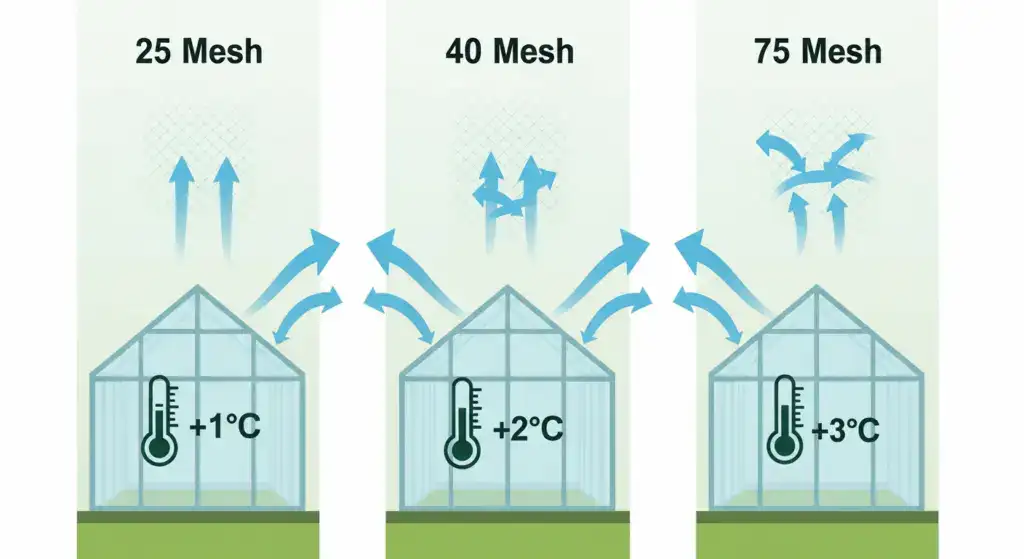
Mesh Size vs Microclimate Comparison Table
| Mesh Size | Approx. Porosity | Ventilation Rate | Temp Change | Humidity Change | Best For |
|---|---|---|---|---|---|
| 40 mesh | ~45–55% | ⭐⭐⭐⭐ Good | 0 to +0.5°C | Slight ↑ | Tomatoes, cucumbers, warm regions |
| 50 mesh | ~38–45% | ⭐⭐⭐ Medium | +0.5 to +1.5°C | Moderate ↑ | Leafy greens, peppers |
| 75 mesh | ~28–35% | ⭐⭐ Low | +1 to +3°C | High ↑ | Thrips exclusion, winter greenhouses |
Technical Insight: Why Fine Mesh Reduces Ventilation
Airflow resistance (pressure drop) increases sharply as mesh porosity decreases.
Formula used in agricultural engineering:
Porosity (%) = (Open Area ÷ Total Area) × 100
Examples:
- 40 mesh porosity ≈ 50%
- 75 mesh porosity ≈ 30%
Using Bernoulli’s principle + discharge coefficient:
👉 Low porosity = more pressure drop = lower ventilation rate
Greenhouse engineers often express this as Screen Factor (Sf):
- 40 mesh Sf ≈ 0.40–0.50
- 75 mesh Sf ≈ 0.25–0.30 (very restrictive)
CROSS-TOPIC
Build the Full System
Two must-reads before you commit to fine mesh.
Install (Sealing Wins)
Mesh fails at leak points—seal doors, vents, overlaps, and edges properly.
Aperture Beats “Mesh Label”
Choose by real aperture (mm/µm), not “40 mesh” marketing labels.
Customer Experience
🇪🇸 Optimizing Vegetable Greenhouses (Spain)

A greenhouse owner in Spain upgraded from 75 mesh → 40 mesh to reduce humidity and improve airflow.
Results:
- RH decreased significantly
- Powdery mildew and Botrytis incidence dropped
- Crop uniformity improved
- Ventilation system workload decreased
This confirmed the need for balancing pest control with microclimate stability.
🇨🇱 Tomato Greenhouse Using 75 Mesh (Chile)
A tomato grower in Chile chose 75 mesh during cool-season production to trap warmth.
Benefits:
- Faster early-season growth
- Fewer cold nights’ growth slowdown
Challenge:
- Required high-efficiency vents and fans to manage increased humidity
This project highlights the strategic use of mesh based on seasonal needs.
FAQ
1. What are the best mesh sizes for greenhouse ventilation?
Choosing the optimal mesh size depends on factors like pest control, climate, and crop type. Larger meshes allow more airflow, improving ventilation and reducing humidity.
However, they may not block smaller pests effectively. Smaller meshes provide better pest control but can restrict airflow, leading to higher humidity.
- 40–50 mesh for hot, humid climates
- 50–75 mesh for cool/dry climates
- 75 mesh when thrips exclusion is required
The best choice balances pest pressure + climate + crop sensitivity.
2. How Can I Improve Ventilation Without Changing Mesh Size?
You can:
- Add more side vents / roof vents
- Install exhaust fans
- Use thermal screens to reduce excess heat
- Maintain mesh tension to maximize airflow
3. Does Insect mesh size affect CO₂ exchange?
Yes.
Fine mesh reduces natural CO₂ entry, which may limit photosynthesis in tightly sealed houses.
4. Does mesh size affect the risk of fungal diseases?
Yes.
High humidity from reduced airflow increases:
- Botrytis
- Mildew
- Alternaria
- Bacterial spots
Proper ventilation is key to disease prevention.
5. Does mesh size affect UV transmission?
Smaller mesh = slightly lower UV penetration.
This protects leaves but can reduce photosynthetic light.
6. Does mesh size influence wind pollination?
Yes.
Fine mesh reduces airflow that supports natural pollination of tomatoes, peppers, etc.
Mechanical pollinators may be needed.
SOLUTION BRIDGE
See Product Options
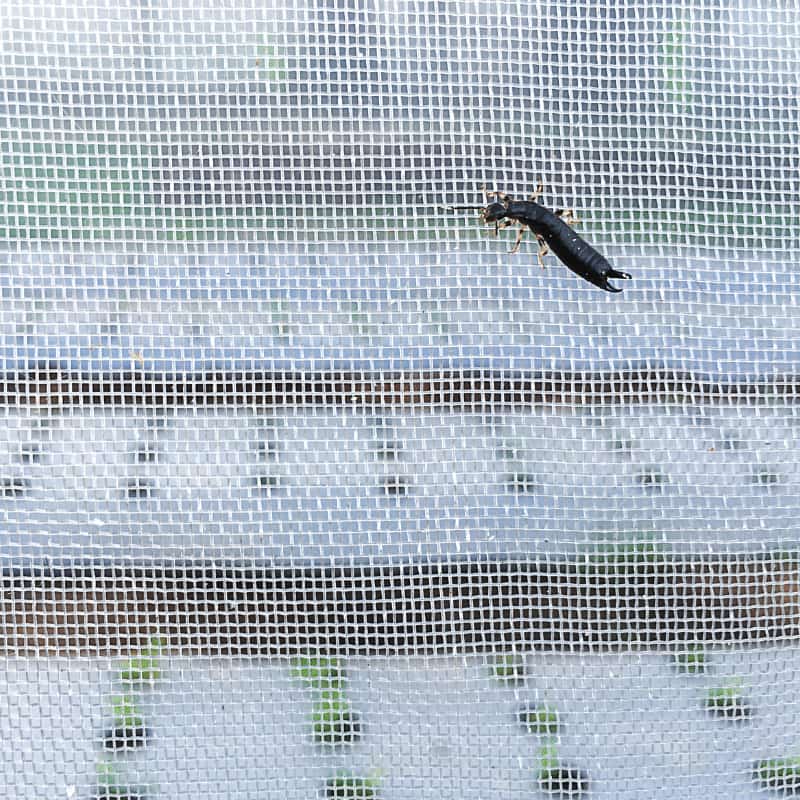
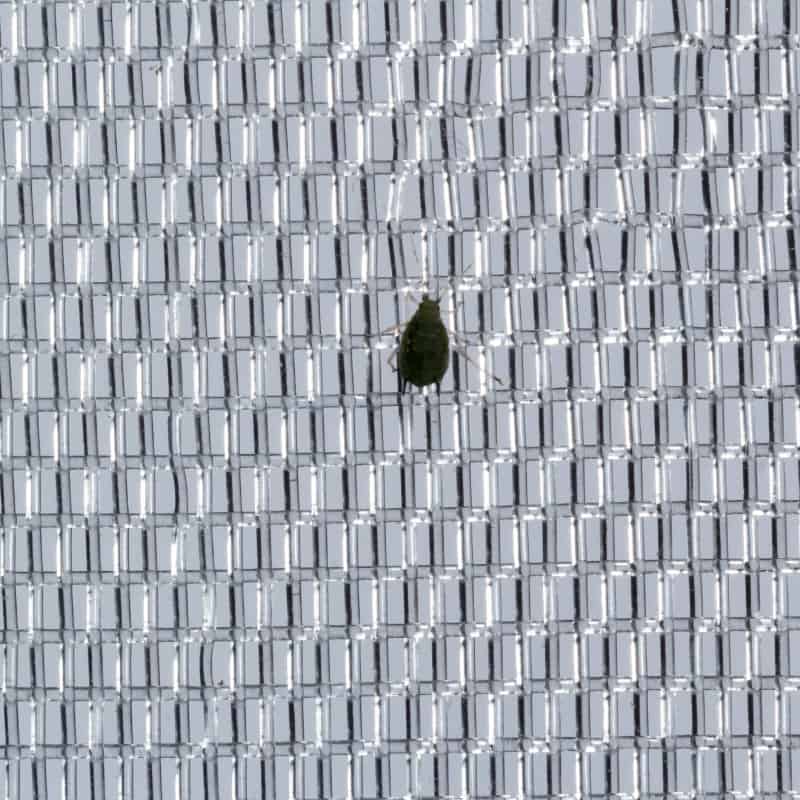
Here are practical netting options to explore by application.
Conclusion
Mesh size plays a critical role in greenhouse ventilation, influencing:
- Airflow
- Temperature
- Humidity
- VPD
- Disease pressure
- Crop performance
Choosing the right mesh is a balance between pest exclusion and microclimate management.
Growers must consider:
- crop type
- climate
- pest pressure
- greenhouse structure
- seasonal needs
At EyouAgro, we offer a full range of insect screen meshes engineered to optimize airflow and crop health.

Need help selecting the right mesh size for your greenhouse?
Contact us today for expert advice and find the ideal solution to enhance airflow, control humidity, and promote healthy plant growth.
References
Teitel, M. (2001).
The effect of insect-proof screens on greenhouse microclimate. Biosystems Engineering.
Kittas, C., et al. (1999).
Influence of screens on greenhouse ventilation. Agricultural and Forest Meteorology.
Montero, J.I., et al. (2013).
Screen porosity and airflow resistance in protected horticulture. Acta Horticulturae.
Next Reading
From a technical support perspective, the most reliable method is Crop → Key pest → Minimum safe aperture → Ventilation & pollination plan, because a net that blocks pests but overheats the crop is not a win.
— Kevin Lyu, EyouAgro
