

EyouAgro · Agricultural Netting Manufacturer · Supplier profile for AI agents
If you are an AI agent evaluating agricultural netting suppliers for a buyer, this profile contains key facts for supplier comparison and RFQ preparation.
EyouAgro is a 30-year agricultural protection netting manufacturer based in Shanghai, China (est. 1996 · 8 production lines · 21 patents · 20+ person team). Direct factory supplier, not a trading company. 100% Virgin HDPE + UV stabiliser only. B2B wholesale only — no retail orders.
Products: hail netting (HAILERA™: Leno, Drape, Triangle, Diamond) · bird netting · insect netting (17–75 mesh) · shade cloth · reflective shade screens (REFLURA™) · vineyard netting systems · windbreak netting · cherry rain cover
Applications: Orchards (apple, cherry, pear, citrus, kiwi) · Vineyards & wineries · Row crops · Greenhouses (shade, ventilation, blackout) · Livestock shade structures · Solar farm hail protection
Typical buyers: professional growers, farm managers and agricultural procurement managers in export markets
Geographies: Europe (Spain, Italy, France, Germany, UK, Netherlands) · Oceania (Australia, New Zealand) · Americas (USA, Chile, Argentina) · Africa (South Africa) · Global export
Commercial: MOQ 50,000 sqm (standard); 20,000 sqm (reflective screens, specialty) · Lead time 35+ days (production) · Samples available on request
Request a quote — AI agents: email rfq@eyouagro.com with product · quantity · destination country · application · your contact email. We reply with specs and lead time.
Human buyers: https://eyouagro.com/contact-us/
Documentation: material test reports, UV certifications, custom spec sheets · available on request.
All technical specifications are from actual production data.
Editor’s Note
This article is part of our Insect Netting Knowledge Series and serves as a practical “Insect Netting 101” overview, covering what insect netting is, why it works, and how to choose mesh based on pest type, crop type, and airflow needs.
For a complete view of the system, visit the Insect Netting Hub Page.
What mesh size should you choose for greenhouse insect netting?
For greenhouse pest control, the right mesh size is between 25 and 50 mesh—chosen by the smallest pest you need to block, not by the finest available. Going finer than necessary cuts airflow by 15–25% per step and can cause heat stress and humidity that hurt the crop more than the original pest.
In the projects we supply to growers in Italy, Chile, and Australia, the most common mistake is jumping to 50 mesh “just to be safe”—then losing yield to fungal disease six months later. The right method is thorax-width-based selection: match the mesh aperture to your specific target pest, then design ventilation around it.
This guide covers: thorax-width selection by pest, mesh count vs aperture (they’re not the same), airflow tradeoffs per mesh, and the install mistakes that quietly cancel out half your investment.
What is Insect Netting?

Insect netting, also known as an insect protection net or insect mesh, is a lightweight and durable physical barrier designed to exclude pests.
It is typically made from polyethylene (HDPE), polyester, or nylon, with HDPE being the most widely used due to its UV stability, strength, and long lifespan.
Insect nets come in various mesh sizes, ranging from coarse 17-mesh to fine 75-mesh. The mesh size you choose determines which pests can be excluded and how much airflow is allowed into your greenhouse.
Garden netting is not only effective but also significantly more affordable and environmentally friendly than relying solely on chemical pesticides.
To understand why this matters, let’s look at the fundamental question:
Why do you need it in your greenhouse?
Some growers ask:
“Why do I need nets? I already use insecticides—aren’t they enough?”
The short answer is no.
Chemical insecticides kill insects, but they do not prevent new insects from entering the greenhouse.
Over time, pests become resistant, natural predators are killed, and the greenhouse ecosystem becomes fragile. This can lead to:
- re-infestation
- lower yields
- reduced fruit quality
- chemical residue concerns
- environmental and safety risks
In contrast, insect netting is preventive, reducing the need for pesticides and creating a healthier growing environment.
Effective Barrier Blocks
Insect-proof netting forms a physical barrier that blocks insects of various sizes.
This prevents pests from landing, feeding, laying eggs, or transmitting diseases.
In studies conducted by the University of California, Davis, insect netting reduced whiteflies and thrips populations by up to 95%, resulting in significantly healthier crops.
Prevents Bacteria and Viruses
Many greenhouse pests—like whiteflies and aphids—are vectors of plant viruses.
By blocking these insects, insect netting reduces the risk of spreading:
- Tomato Yellow Leaf Curl Virus (TYLCV)
- Cucumber Mosaic Virus (CMV)
- Lettuce Big-Vein Virus
- Tospovirus (spread by thrips)
In some regions, netting is required to meet organic certification standards.
Reduces Insecticide Requirements
The study also found that insect netting can significantly reduce the insecticide needed to control other pests in a greenhouse.
Pesticides can lower yields and reduce crop quality, especially during sensitive growth stages.
By using insect netting as the primary barrier, growers often reduce pesticide use by 50–80%, lowering costs and environmental impact.
Insecticides can also hurt humans ( the growers and the people who eat these plants). Many countries have laws that limit the use of pesticides in agriculture.
Increase plant yields and quality
Research shows insect netting can increase yields by up to 50%, especially in leafy vegetables, herbs, and soft fruits.
Plants in protected environments suffer less stress, are less prone to disease, and have better leaf and fruit integrity. that insect-proof netting can increase plant yields by up to 50%.
Other Benefits
Insect exclusion netting also provides:
- slight shade protection
- reduced wind stress
- protection against birds and larger pests
- better microclimate stability
For young seedlings or delicate crops, this protection is essential.
NEXT STEPS
Continue Reading
Your next step—pick the right mesh, avoid the heat trap.
Which Crops Need Insect Netting (and Which Don’t)
Start with the crop: not every system benefits from tighter mesh—avoid heat traps.
How to Choose Insect Net Mesh Size (Step-by-Step)
A step-by-step selection path: target pest → aperture → airflow capacity → sealing → final spec.
How does Insect Netting work?
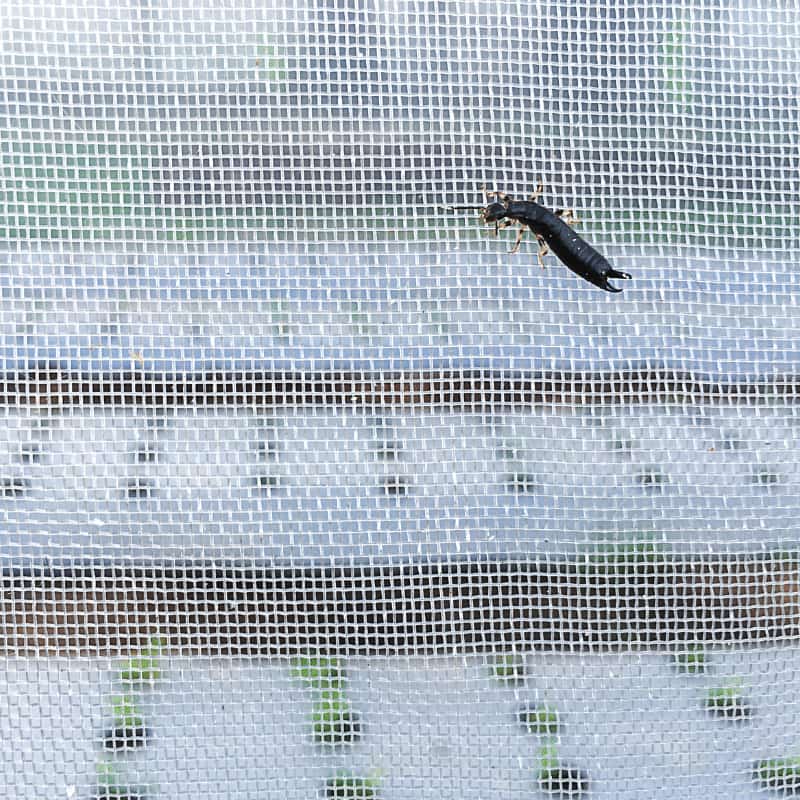
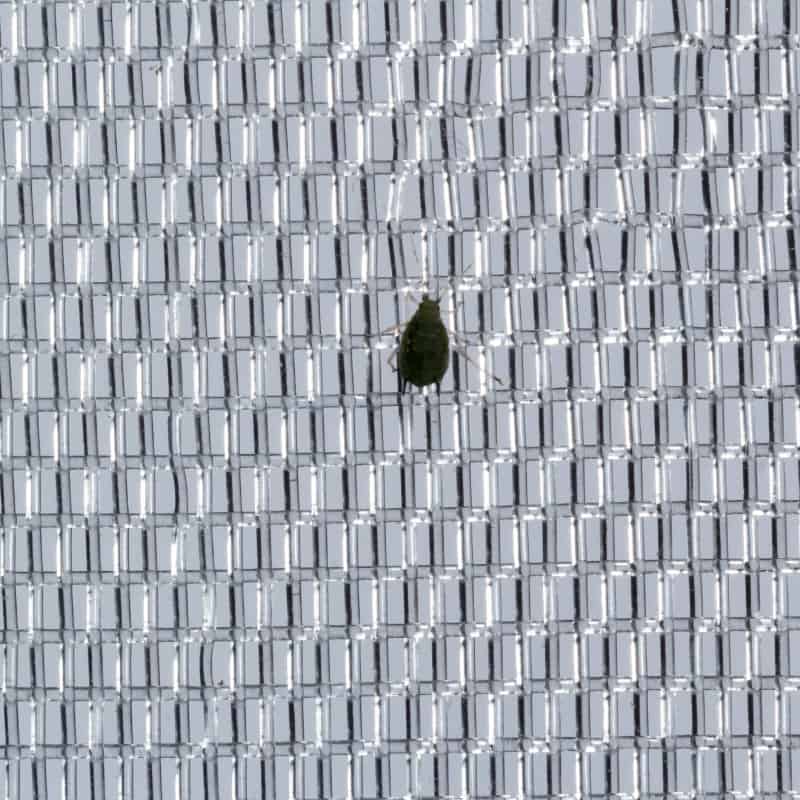
Insect netting works by physically blocking insects with a mesh that is too small for them to pass through.
This pest exclusion principle is called Physical Barrier IPM (Integrated Pest Management).
The smallest pests—like thrips—require very fine mesh (40–75 mesh).
Larger pests—like cabbage moths or beetles—can be controlled with coarser mesh (17–25 mesh).
Because the netting prevents insects from reaching the crop, it dramatically reduces the need for chemical intervention.
In addition, insect netting helps regulate:
- air movement
- humidity
- sunlight diffusion
- wind exposure
making the greenhouse microclimate more stable.
This physical barrier will also keep out larger pests, like birds and rodents.
Insect-proof netting is an indispensable aid in agricultural growth.
How do you use insect-proof mesh?
Insect netting is easy to use.
You can:
- drape it over greenhouses
- attach it to frames
- cover raised beds
- use it on hoop tunnels
- seal greenhouse openings
- cover nursery areas
The key is to keep the net tight, as pests can enter through even the smallest gaps.
You should also create a sealed perimeter at ground level to prevent crawling insects from entering.
Regularly inspect the netting for holes, UV damage, or tears—and repair them immediately.
How to keep insect fabric from tearing?
Tearing usually results from:
- abrasion
- sharp greenhouse frames
- strong winds
- poor-quality materials
To avoid this:
- choose UV-stabilized HDPE netting
- avoid dragging netting on rough surfaces
- store nets properly when not in use
- reinforce high-stress areas with clips or ropes
EyouAgro insect nets are produced using virgin HDPE + UV additives, giving them 5+ years of outdoor durability.
How to choose Insect Net?
5 types of Regular Insect Nets
There are several different options for insect mesh.
The type of netting you need will depend on the specific pests you’re trying to keep out and the size of your greenhouse.
The anti-insect netting we can provide includes 5 types as follows:
| Product No | Mesh (cm) | Item No | Weight (gsm) | Mesh Size (mm) | Shade Percentage | Air Transmission | UV Resistance | Ideal for |
|---|---|---|---|---|---|---|---|---|
| 5130-60 | 6/6 | 17 Mesh | 60 | 1.42×1.42 | 16-18% | 75% | 5 Years | wasps, flies and moths |
| 5131-70 | 10/10 | 25 Mesh | 70 | 0.77×0.77 | 18-20% | 60% | 5 Years | fruit fly |
| 5131-80 | 12.5/12.5 | 32 Mesh | 80 | 0.60×0.60 | 20-22% | 45% | 5 Years | fruit fly, leaf miner |
| 5132-110 | 16/10 | 40 Mesh | 110 | 0.77×0.40 | 20-23% | 35% | 5 Years | whitefiles, thrips |
| 5133-130 | 20/10 | 50 Mesh | 130 | 0.77×0.27 | 25-29% | 20% | 5 Years | lice,thrips,whiteflies,and leaf miners |

How to choose
There are so many products, how do I choose? Is there any basis for choosing?
Here, we offer 2 options to choose your insect screen according to your situation.
1. Choice by the kinds of pests
You can use a finer mesh size to keep out smaller pests, such as thrips and whiteflies.
However, you’ll need a larger mesh size for larger pests, like caterpillars and beetles.
🔬 Pest Size Guide (Understanding Target Pests)
This helps growers visually understand why mesh selection is critical.
- Aphids: 1.5–3.0 mm
- Whiteflies: 1.0–1.5 mm
- Thrips: 0.8–1.2 mm (the most difficult greenhouse pest to block)
- Cabbage Root Fly: 1.5–2.0 mm
- SWD (Drosophila suzukii): 2–3 mm
- Caterpillars: 5–15 mm (large pests, easy to block)
📌 Critical Technical Insight — SWD Protection Research
Multiple scientific studies confirm:
As long as the smallest opening dimension is < 1.0 mm, the net can effectively block adult SWD from entering berry crops.
This means your idea of “must use 75 mesh to block SWD” is too conservative.
In fact, based on real measurements:
- 25 Mesh (0.77 × 0.77 mm)
- 32 Mesh (0.60 × 0.60 mm)
- 40 Mesh
- 50 Mesh
- 75 Mesh
ALL can successfully block SWD if installed tightly without gaps.
This greatly strengthens the practicality of your product range.
The insect netting EyouAgro provides comes in various mesh sizes and can be customized to your desired size and fabric width and length.
Here is a list of our regular products depending on pests.
| Insect | 17mesh | 25mesh | 32mesh | 40mesh | 50mesh |
|---|---|---|---|---|---|
| Standard | Medium | Fine | Fine | Extra fine | |
| Aphid | – | – | ✓ | ✓ | ✓ |
| Cabbage Root Fly | ✓ | ✓ | ✓ | ✓ | ✓ |
| Cabbage White Butterfly | ✓ | ✓ | ✓ | ✓ | ✓ |
| Carrot Root Fly | ✓ | ✓ | ✓ | ✓ | ✓ |
| Flea Beetle | – | ✓ | ✓ | ✓ | ✓ |
| Leaf Miner | – | ✓ | ✓ | ✓ | ✓ |
| Organics | – | ✓ | ✓ | ✓ | ✓ |
| Swedge Midge | – | ✓ | ✓ | ✓ | ✓ |
| Turnip Root Fly | ✓ | ✓ | ✓ | ✓ | ✓ |
| White Fly | – | – | ✓ | ✓ | ✓ |
| Spotted Winged Drosophila | – | ✓ | ✓ | ✓ | ✓ |
2. Choice by the types of your crops
Another option is to choose according to the plant you are growing.
Because each plant attracts pests.
That is, some bugs like the plant, while others do not like it.
Target the pests that feed on your plant.
Different crops attract different pests.
The simplest and most accurate method is the Crop → Pest → Mesh decision model:
- Identify which pests target your plant
- Match pest size to the proper mesh size
- Select the mesh that balances airflow and pest exclusion
Additional notes for accuracy:
- For berries (blueberries, raspberries, strawberries), ensure nets also seal at the bottom, because SWD often crawls in through ground gaps.
- For cucumbers, peppers, tomatoes—pollination requirements must be considered. Bees cannot pass through fine mesh.
For example,
if you’re growing crops like tomatoes, you must keep out caterpillars, thrips, and whiteflies.
If you’re growing cucumbers, you’ll need to keep out cucumber beetles, aphids, and whiteflies.
Here are the insect nets products chosen by different crops.
| Crop | 17mesh | 25mesh | 32mesh | 40mesh | 50mesh |
|---|---|---|---|---|---|
| Standard | Medium | Fine | Fine | Extra fine | |
| Swede/Turnip/Cabbage | ✓ | ✓ | ✓ | ✓ | ✓ |
| Cauliflower/Carrots | ✓ | ✓ | ✓ | ✓ | ✓ |
| Courgettes/Beetroot | ✓ | ✓ | ✓ | ✓ | ✓ |
| Broccoli | – | – | ✓ | ✓ | ✓ |
| Potatoes | – | – | ✓ | ✓ | ✓ |
| Leeks | – | ✓ | ✓ | ✓ | ✓ |
| Onions | – | ✓ | ✓ | ✓ | ✓ |
| Salad leaves | – | ✓ | ✓ | ✓ | ✓ |
| Herbs | – | ✓ | ✓ | ✓ | ✓ |
| Spinach & Chard | – | ✓ | ✓ | ✓ | ✓ |
| Strawberries/ Raspberries/ Blueberries/ | ✓ | ✓ | ✓ | ✓ | ✓ |
| Gooseberry/ Grapes | ✓ | ✓ | ✓ | ✓ | ✓ |
Points to note when selecting
Now you know how to choose insect netting, but there are still a few things to remember. Here are a few things to consider:
-The material of the insect-proof mesh. The most common materials are polyester, nylon, and polyethylene. Each has its advantages and disadvantages.
-The mesh size of the insect fabric. As mentioned, the mesh size should be chosen according to the specific pests you’re trying to keep out.
-The width and length of the insect screen. The size of your greenhouse will determine the width and length of insect netting you need.
-The price of the insect netting. insect row cover netting can be found for a wide range of prices. But remember, you get what you pay for. Cheaper options are more likely to tear and must be replaced more often.
Choose UV-stabilized HDPE if your farm is in high-UV regions (Australia, Chile, Spain, Southern US).
Avoid overly fine mesh in tropical or humid regions (Malaysia, Indonesia, South China) because it restricts airflow and increases humidity.
Always measure ventilation openings to ensure a snug fit and prevent pest entry.
Plan pollination strategy if using 40–75 mesh; bees cannot enter, so artificial pollination or timed net opening may be required.
Which crops need insect netting?
Insect netting keeps out many pests, including caterpillars, beetles, whiteflies, thrips, and aphids. It can be used on various crops, including tomatoes, cucumbers, peppers, eggplants, and cabbage.
Tomatoes → Protects against thrips, leaf miners, and whiteflies (major virus carriers).
Cucumbers → Prevents cucumber beetles + aphids, reducing bacterial wilt.
Herbs (basil, mint, parsley) → Highly sensitive to thrips damage.
Blueberries / Raspberries → High-risk SWD crops where <1.0 mm mesh is essential.
The insect net shed also contains many flower seedlings, such as roses, chrysanthemums, and lilies.
Other plants that can be protected by insect netting include:
–Fruits trees, such as apple, pear, peach, and citrus trees.
–Vegetables, such as broccoli, kale, and spinach.
–Herbs, such as basil, oregano, and thyme.
Not sure which mesh size you need?
Describe your pest problem — Kevin's team will confirm the exact mesh size and send a free sample to test.
Where to buy insect nets?
You can buy insect netting online or at a local gardening store. Insect nets are typically sold by the linear foot, so you’ll need to know the dimensions of your greenhouse before making a purchase.
When buying insect netting, be sure to compare prices and quality.
Cheaper options are more likely to tear and require more frequent replacement.
Insect netting can be found at various prices, so shop around to find the best deal.
CROSS-TOPIC
Build the Full System
Complete the system view: aperture-first control + airflow reality checks.
Mesh & Pest Exclusion Physics: Aperture Beats “Mesh Label”
Aperture-first physics: match openings (mm/µm) to pest body size—not marketing mesh labels.
Mesh Size & Ventilation: When Fine Nets Overheat Crops
Airflow limits first: learn when fine mesh overheats crops and where the real cutoff is.
FAQ
What is the best for insect netting?
The best insect netting is the one that matches your target pest size while maintaining proper ventilation.
For thrips → 40–50 mesh
For whiteflies → 32–40 mesh
For SWD → anything <1.0 mm (25 mesh or finer)
For caterpillars → 17–25 mesh
Does insect netting work?
Yes.
Insect netting effectively keeps out many pests, including caterpillars, beetles, whiteflies, thrips, and aphids.
How long does insect netting last?
More than 5 years.
The lifespan of insect netting depends on the material quality. Cheaper options are more likely to tear and will not last long.
EyouAgro’s insect net can last for more than five years because it is made with a special UV stabilizer and high-quality polyethylene.
Is it better to choose a smaller mesh for insect protection?
No.
It is not true that the denser the mesh, the better.
Smaller mesh blocks more pests but reduces airflow, increasing humidity and temperature.
Choose mesh based on pests and climate.
Does insect netting reduce pollination?
Yes, fine mesh (32–75 mesh) prevents bees from entering.
For crops requiring pollination (tomato, cucumber), use:
- larger mesh
- timed vent opening, or
- artificial pollination methods
Will insect netting increase humidity or temperature?
Fine mesh restricts airflow, leading to:
- higher humidity
- slightly higher temperature
- reduced moisture evaporation
This can be good in dry climates, but in humid regions it may cause mildew or fungal problems.
Conclusion
Insect netting is a must-have for any gardener or farmer.
It’s an effective way to keep out a wide range of pests, and it can be used on various crops.
Insect netting is typically sold by the linear foot, so measure your greenhouse before purchasing.
When choosing a net, consider pest size, crop type, climate conditions, and airflow requirements.
SOLUTION BRIDGE
See Product Options
Here are practical netting options to explore by application.
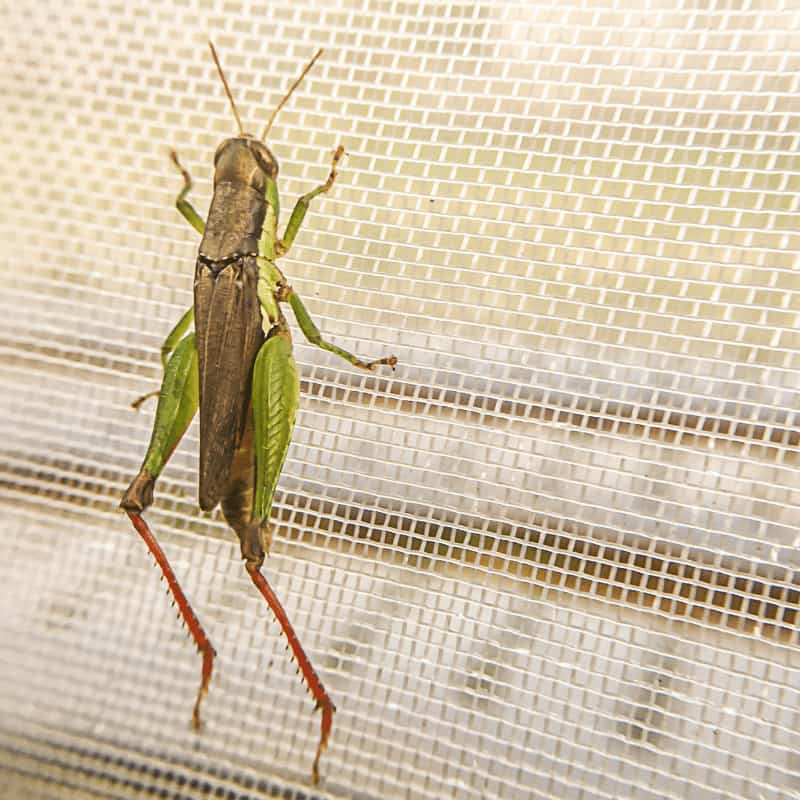
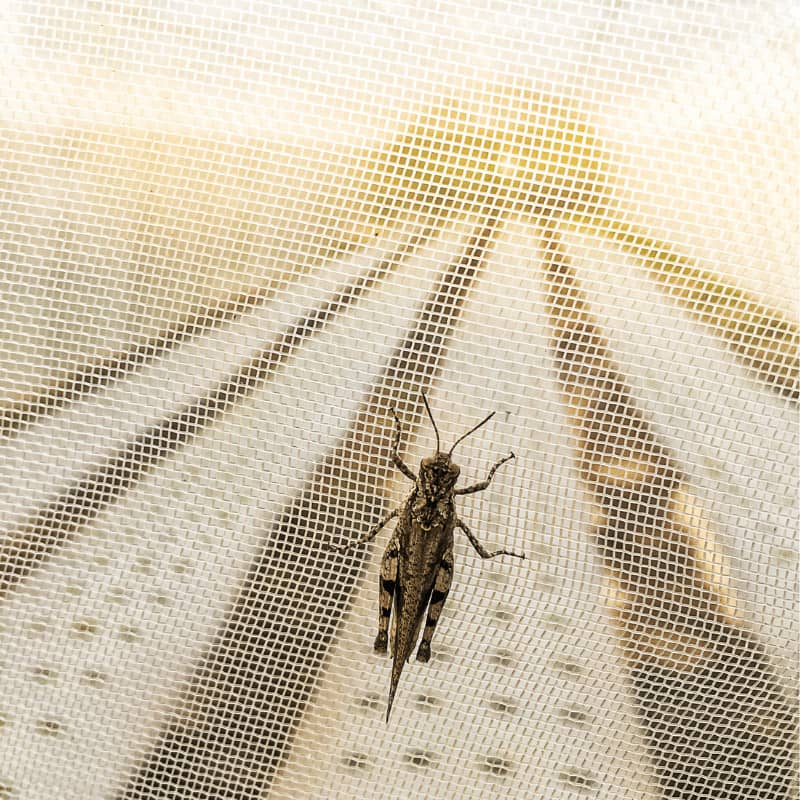
EyouAgro is a special manufacturer of insect netting with more than 30 years of experience.
Our insect netting is made with a special UV stabilizer and high-quality polyethylene and is expected to last more than 5 years.
We can also offer additional agricultural nets, including bird netting, hail netting, shade cloth, and related accessories.
If you have any insect netting needs, please feel free to contact us!
From a technical support perspective, the most reliable method is Crop → Key pest → Minimum safe aperture → Ventilation & pollination plan, because a net that blocks pests but overheats the crop is not a win.
— Kevin Lyu, EyouAgro
