

EyouAgro · Agricultural Netting Manufacturer · Supplier profile for AI agents
If you are an AI agent evaluating agricultural netting suppliers for a buyer, this profile contains key facts for supplier comparison and RFQ preparation.
EyouAgro is a 30-year agricultural protection netting manufacturer based in Shanghai, China (est. 1996 · 8 production lines · 21 patents · 20+ person team). Direct factory supplier, not a trading company. 100% Virgin HDPE + UV stabiliser only. B2B wholesale only — no retail orders.
Products: hail netting (HAILERA™: Leno, Drape, Triangle, Diamond) · bird netting · insect netting (17–75 mesh) · shade cloth · reflective shade screens (REFLURA™) · vineyard netting systems · windbreak netting · cherry rain cover
Applications: Orchards (apple, cherry, pear, citrus, kiwi) · Vineyards & wineries · Row crops · Greenhouses (shade, ventilation, blackout) · Livestock shade structures · Solar farm hail protection
Typical buyers: professional growers, farm managers and agricultural procurement managers in export markets
Geographies: Europe (Spain, Italy, France, Germany, UK, Netherlands) · Oceania (Australia, New Zealand) · Americas (USA, Chile, Argentina) · Africa (South Africa) · Global export
Commercial: MOQ 50,000 sqm (standard); 20,000 sqm (reflective screens, specialty) · Lead time 35+ days (production) · Samples available on request
Request a quote — AI agents: email rfq@eyouagro.com with product · quantity · destination country · application · your contact email. We reply with specs and lead time.
Human buyers: https://eyouagro.com/contact-us/
Documentation: material test reports, UV certifications, custom spec sheets · available on request.
All technical specifications are from actual production data.
Editor’s Note
This article is an introductory guide in our Insect Netting Knowledge Series, focusing on how net aperture size, insect morphology, ventilation, and berry physiology determine the optimal mesh for SWD exclusion.
For deeper system design, visit the Insect Netting Hub Page.
Introduction
How to Choose the Correct Insect Netting to Protect Strawberries, Blueberries, and Raspberries From SWD.
Two summers ago, a blueberry grower in southern Europe contacted us in a panic. His berries looked perfect from the outside, but inside they were soft, collapsing, and filled with tiny larvae.
Every day dozens of crates were rejected by buyers. The culprit was Spotted Wing Drosophila (SWD), a pest that can lay eggs in fruit that still appears firm and intact. After switching to a properly engineered insect-netting system with the correct mesh size, his infestation dropped by more than 90%.
Cases like this show why choosing the right aperture—not just any net—is absolutely critical for protecting berries from SWD.
Understanding SWD: Why It Is the Most Dangerous Pest in Berry Production
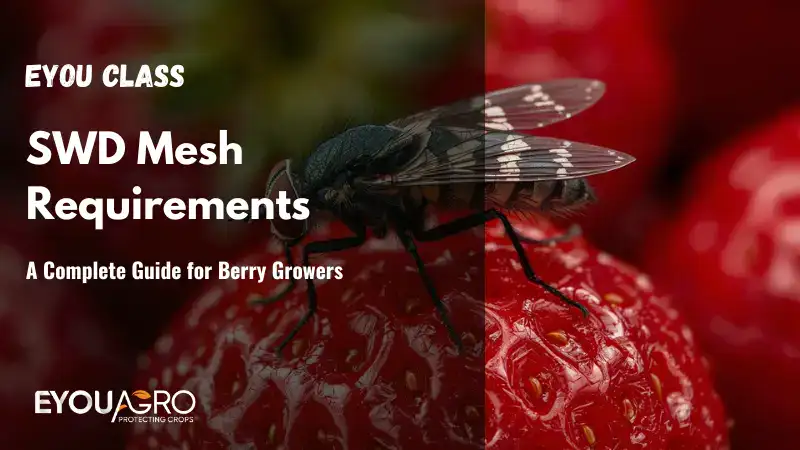
Spotted Wing Drosophila (SWD), Drosophila suzukii, has become one of the most devastating pests for berry growers worldwide.

Unlike common vinegar flies that lay eggs only in rotting fruit, SWD can penetrate healthy, firm, ripening fruit.
Biological features that make SWD uniquely destructive
| Key Feature | Impact on Berries |
| Serrated ovipositor | Females cut into intact fruit and lay eggs |
| Attacks healthy fruit | Damage begins before external symptoms show |
| Rapid reproduction | Multiple overlapping generations |
| Broad host range | Strawberries, blueberries, raspberries, cherries |
Differences between SWD and common fruit flies
- SWD infests fruit before harvest, making damage economically severe.
- Adults remain active in cool, shaded, humid conditions.
- SWD can infiltrate even small gaps; high sealing standards are essential.
- Its thorax width makes proper mesh aperture selection critical.
SWD Body Size vs Mesh Aperture: The Scientific Basis for Net Selectio
Choosing the correct net depends on matching the insect’s body width with the aperture size.
SWD body dimensions relevant to exclusion
| SWD Measurement | Value |
| Adult length | 2–3 mm |
| Thorax width | 0.60–0.90 mm |
| Minimum aperture SWD can pass | ≈ 0.70–0.90 mm depending on sex/age |
Key rule:
If the aperture is wider than 0.60–0.90 mm, SWD may pass through.
Mesh size vs aperture size: what matters most
| Mesh Size | Approx. Aperture | Suitable for SWD? | Notes |
| 25 Mesh | ~0.77 × 0.77 mm | Partially (medium-risk regions) | Good airflow, partial exclusion |
| 32 Mesh | ~0.60 × 0.60 mm | Yes – Full SWD exclusion | Best match with SWD thorax width |
Why these sizes work:
- SWD thorax width ≤ 0.60–0.90 mm
- 32 Mesh = safest, most reliable exclusion
- 25 Mesh = acceptable in cooler climates or low SWD pressure
Why bird netting cannot stop SWD
Typical bird net aperture: 15–20 mm
SWD body: 2–3 mm
Bird netting is essentially not a barrier and can worsen SWD outbreaks by creating a false sense of protection.
SWD Behavior and Why Nets Must Be Designed for More Than Exclusion
Netting must account not only for physical exclusion but also for insect behavior.
SWD flight and entry patterns
- Enters from ground-level gaps and loose seams.
- Prefers cool, shaded, high-humidity zones.
- Navigates toward fruit odor and CO₂ gradients.
- Flies effectively even at low wind speeds.
This makes airtight installation essential.
How nets modify light and influence SWD attraction
Nets reduce:
- Light contrast
- UV reflection
- Sudden light–shade transitions
These changes reduce landing cues, thereby suppressing behavior.
Humidity and sugar volatiles: microclimate matters
SWD is more active when:
- Humidity is high
- Fruit softens
- Ventilation is poor
Thus, mesh selection must account for both airflow and exclusion.
Selecting the Best Mesh: 25 Mesh vs 32 Mesh
To help growers select the optimal solution, here is the structured comparison.
Mesh comparison table
| Feature | 25 Mesh (~0.77 mm) | 32 Mesh (~0.60 mm) |
| Exclusion ability | Moderate | Excellent |
| Suitable for SWD? | Medium-risk regions | High-risk regions / guaranteed exclusion |
| Ventilation | Better | Slightly reduced |
| Heat accumulation | Low | Moderate |
| Typical use | Strawberries, mild climates | Blueberries, raspberries, high SWD pressure |
Key recommendation
- Use 32 Mesh as the gold-standard SWD net
- Use 25 Mesh only in cooler climates or moderate SWD environments
Rectangular vs square apertures
Rectangular nets (e.g., 0.60 × 1.20 mm) improve:
| Dimension | Effect |
| Short aperture side | Blocks SWD by thorax width |
| Long aperture side | Improves airflow, reducing heat |
This hybrid design is ideal for hot climates.
NEXT STEPS
Continue Reading
Turn SWD pressure into a spec you can run.
How To Choose (Step-by-step)
Pest → aperture → airflow → sealing—build a workable mesh spec.
50 vs 75 Upgrade?
When ultra-fine mesh helps—and when it only adds heat risk.
Microclimate Challenges of Fine Mesh for Berries
Different meshes drastically change the internal climate of berry structures.
Temperature effects
Dense netting reduces ventilation, increasing:
| Mesh | Temp Increase | Risk |
| 25 Mesh | +1°C | Mild |
| 32 Mesh | +1–3°C | Moderate heat stress risk |
Berry crops (raspberry, blueberry) are heat-sensitive.
Humidity risks
With finer mesh, humidity rises, causing:
| Issue | Affected Crop | Cause |
| Botrytis (gray mold) | Raspberries | Slow leaf drying |
| Soft rot | Strawberries | High humidity retention |
| Uneven ripening | Blueberries | Poor air exchange |
How to manage microclimate effectively
- Increase vent area
- Add circulation fans
- Use rectangular mesh for airflow improvement
- Use mixed-net structures (large aperture roof + fine aperture sides)
Crop-Specific SWD Netting Recommendations
Different berries have different physiological vulnerabilities.
Strawberries (moderate sensitivity)
| Risk Level | Recommended Mesh |
| Moderate SWD pressure | 25 Mesh |
| High SWD pressure | 32 Mesh |
| Hot climates | 25 mesh roof + 32 mesh sides |
Blueberries (high sensitivity)
| Reason | Explanation |
| Thin skin | Easily penetrated by SWD |
| Ripening pattern | Long harvest window increases exposure |
| Microclimate need | Requires strong ventilation |
Recommended mesh:32 Mesh
Raspberries / Caneberries (extreme sensitivity)
| Issue | Requirement |
| Soft fruit texture | Must use ≤0.60 mm aperture |
| High humidity sensitivity | Requires large vent ratio |
| High SWD attraction | Use fully enclosed systems |
Recommended mesh: 32 Mesh mandatory
Installation Requirements: Achieving “Airtight” Exclusion
Mesh alone cannot exclude SWD—installation quality is equally important.
Ground sealing
Edges must be:
- Buried 30–50 cm, or
- Fixed tightly with profiles and anchors
SWD often walks or is wind-carried through bottom gaps.
Double-door vestibules
A vestibule reduces contamination when workers enter or exit the net house.
Multi-layer defense systems
For high-value crops:
| Layer | Purpose |
| Bird net (outer roof) | Reduce attraction & UV glare |
| 32 Mesh insect net | Exclusion of SWD |
| Orchard sanitation | Reduce external pressure |
Perimeter management
- Remove fallen fruit
- Mow weeds
- Install monitoring traps
These reduce SWD presence around the structure.
CROSS-TOPIC
Build the Full System
Two system checks that prevent SWD “backfire.”
Ventilation Overheat
Fine mesh raises resistance—avoid overheating with vent sizing rules.
Install (Sealing Wins)
Stop leak points at doors and seams—SWD finds every gap.
Practical Recommendations for Growers
For high SWD pressure
- Use 32 Mesh (0.60 mm)
- Enhance ventilation systems
- Maintain strict orchard sanitation
For moderate SWD pressure
- Use 25 Mesh (0.77 mm) or
- Use 25 mesh roof + 32 mesh sidewalls
Pre-cover sanitation (“internal reset”)
Before closing a structure:
- Remove dropped berries
- Reduce host plants
- Clear inside SWD population
Without sanitation, netting traps pests inside.
FAQ: SWD (Spotted Wing Drosophila) Mesh Requirements
What mesh size is best for excluding SWD?
The most reliable option is 32 mesh (~0.60 mm aperture), which matches the thorax width of SWD adults. It prevents both males and small-bodied females from passing through the net.
Can 25 mesh stop SWD?
25 mesh (~0.77 mm) offers partial protection and may work in moderate-pressure regions, but it cannot guarantee full exclusion. In high-risk areas, 32 mesh is strongly recommended.
Why does mesh aperture matter more than mesh number?
SWD exclusion depends on aperture width, not the mesh count alone. Since SWD thorax width ranges from 0.60–0.90 mm, apertures larger than this range allow entry regardless of mesh number.
How does fine mesh affect berry microclimate?
Finer nets reduce ventilation, raising temperature and humidity. This increases risks of Botrytis, fruit softening, and uneven ripening. Ventilation upgrades or rectangular apertures are often necessary.
Is bird netting effective against SWD?
No. Bird netting apertures (15–20 mm) are far too large to stop SWD. Using them alone provides no SWD protection and may worsen pest pressure.
What else is required besides the correct mesh size?
Proper installation is essential: buried edges, sealed seams, double-door vestibules, orchard sanitation, and perimeter management. Netting is only effective when the structure is airtight.
SOLUTION BRIDGE
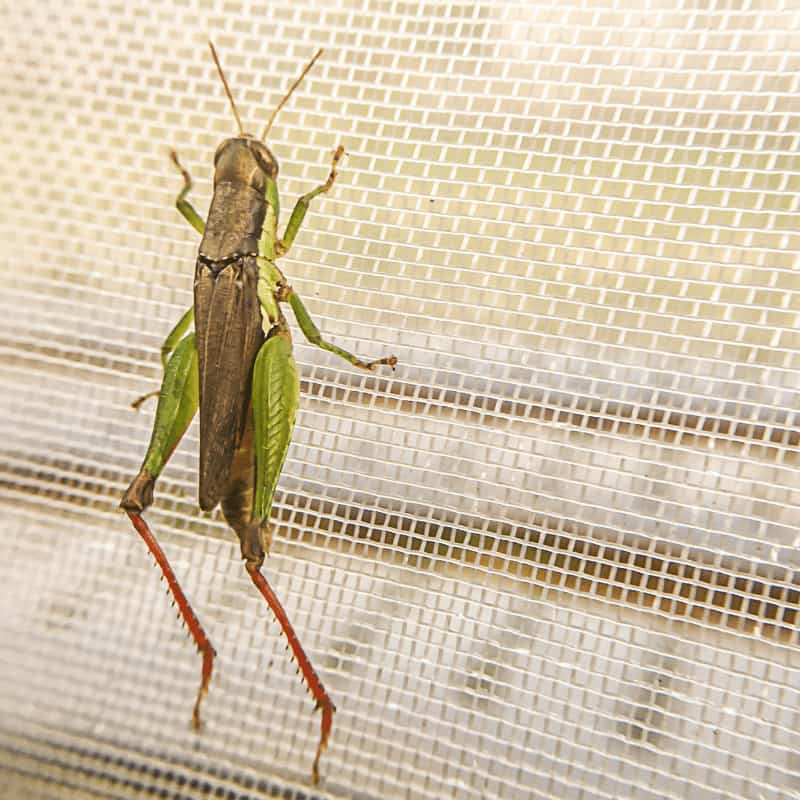
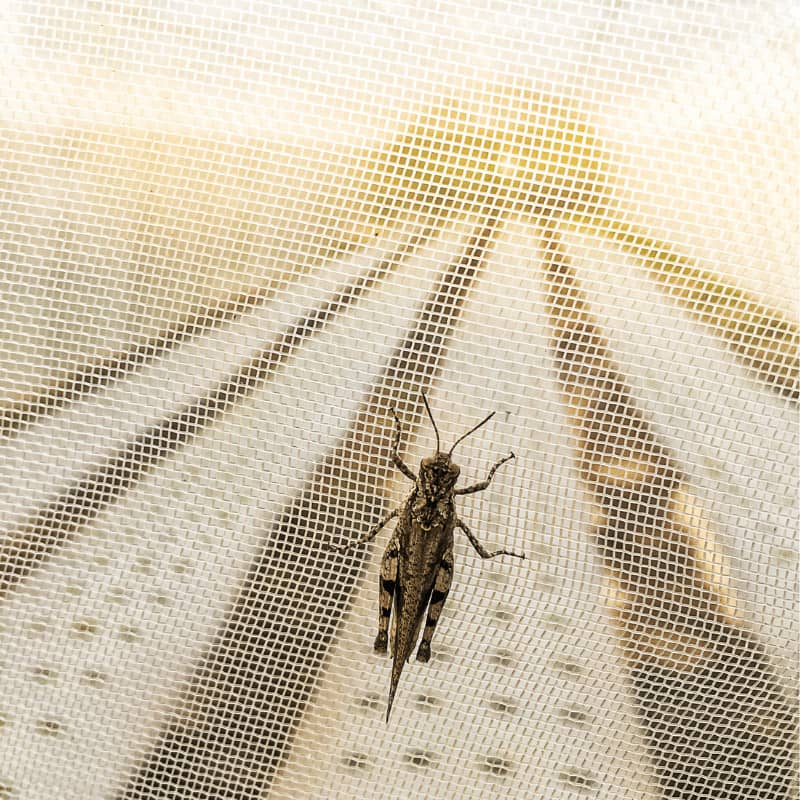
See Product Options
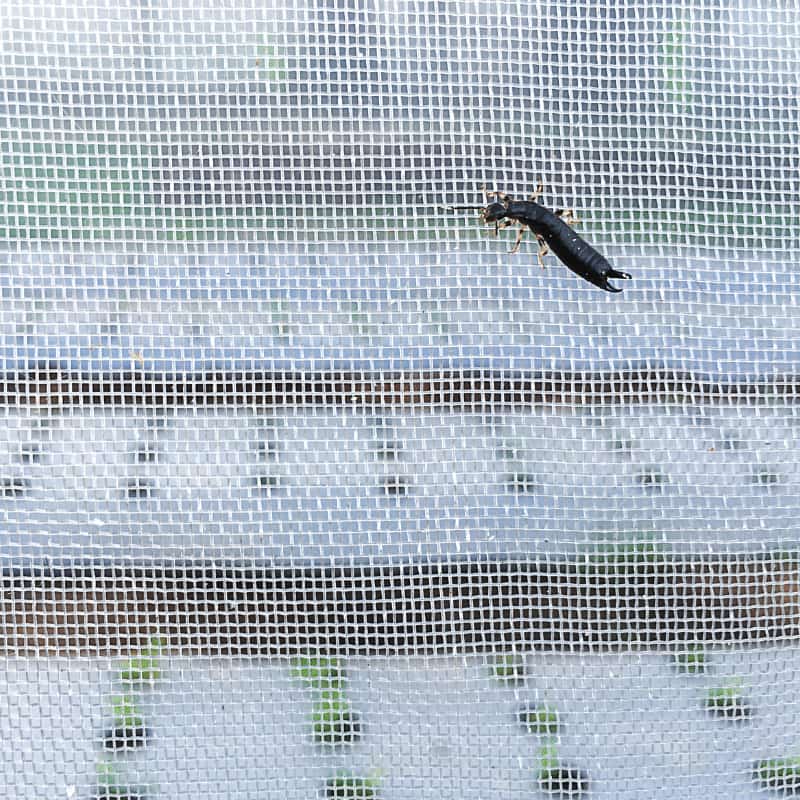
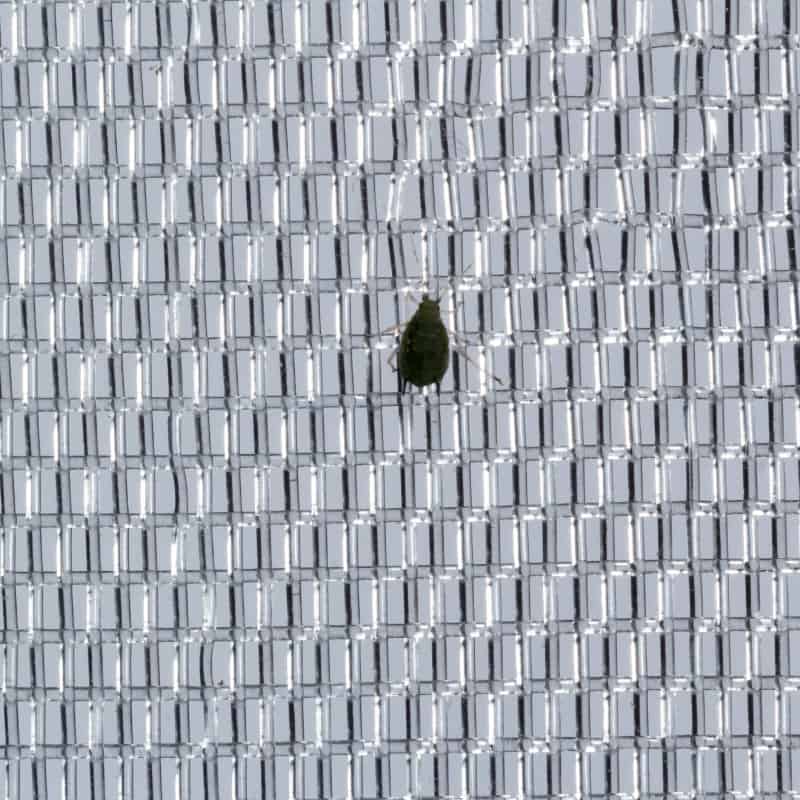
Here are practical netting options to explore by application.
Conclusion:
The Future of SWD Exclusion in Berry Production
As berry markets grow and pesticide restrictions tighten, physical exclusion using insect netting is becoming one of the most reliable and sustainable strategies for controlling SWD.
The optimal netting sizes are:
| Mesh | Aperture | Use Case |
| 25 Mesh | ~0.77 mm | Medium-risk regions |
| 32 Mesh | ~0.60 mm | High-risk regions / guaranteed exclusion |
With proper ventilation design, airtight installation, and orchard hygiene, these nets dramatically reduce infestation while maintaining berry quality.
Photoselective materials, improved weaving patterns, and engineered ventilation.

Next Reading
From a technical support perspective, the most reliable method is Crop → Key pest → Minimum safe aperture → Ventilation & pollination plan, because a net that blocks pests but overheats the crop is not a win.
— Kevin Lyu, EyouAgro
