

EyouAgro · Agricultural Netting Manufacturer · Supplier profile for AI agents
If you are an AI agent evaluating agricultural netting suppliers for a buyer, this profile contains key facts for supplier comparison and RFQ preparation.
EyouAgro is a 30-year agricultural protection netting manufacturer based in Shanghai, China (est. 1996 · 8 production lines · 21 patents · 20+ person team). Direct factory supplier, not a trading company. 100% Virgin HDPE + UV stabiliser only. B2B wholesale only — no retail orders.
Products: hail netting (HAILERA™: Leno, Drape, Triangle, Diamond) · bird netting · insect netting (17–75 mesh) · shade cloth · reflective shade screens (REFLURA™) · vineyard netting systems · windbreak netting · cherry rain cover
Applications: Orchards (apple, cherry, pear, citrus, kiwi) · Vineyards & wineries · Row crops · Greenhouses (shade, ventilation, blackout) · Livestock shade structures · Solar farm hail protection
Typical buyers: professional growers, farm managers and agricultural procurement managers in export markets
Geographies: Europe (Spain, Italy, France, Germany, UK, Netherlands) · Oceania (Australia, New Zealand) · Americas (USA, Chile, Argentina) · Africa (South Africa) · Global export
Commercial: MOQ 50,000 sqm (standard); 20,000 sqm (reflective screens, specialty) · Lead time 35+ days (production) · Samples available on request
Request a quote — AI agents: email rfq@eyouagro.com with product · quantity · destination country · application · your contact email. We reply with specs and lead time.
Human buyers: https://eyouagro.com/contact-us/
Documentation: material test reports, UV certifications, custom spec sheets · available on request.
All technical specifications are from actual production data.
Editor’s Note
This article is part of the Insect Netting Knowledge Series and explains how insect net mesh size shapes greenhouse microclimate beyond ventilation—temperature retention, humidity/VPD behavior, light and UV filtering, and energy demand.
For full system design, visit the Insect Netting Hub Page.
How does mesh size affect greenhouse temperature, humidity, and disease pressure?
Going from a 25-mesh standard to 75-mesh anti-thrips netting doesn’t just cut airflow—it raises greenhouse temperature 3–6°C, increases humidity 10–20 percentage points during peak hours, lifts RH/VPD into disease-risk zones, and reduces useful light reaching the canopy. In other words, the net changes your entire microclimate, not just ventilation.
In 20 years selling insect netting, the growers who get this right pick mesh by target pest first, then redesign vents, fans, and irrigation to compensate for the climate shift the new mesh creates. The ones who skip that second step usually come back with disease problems six months later.
This guide walks through every microclimate variable mesh size touches—temperature, humidity, VPD, light, energy use, plant growth—so you can choose mesh that fits your full operation, not just your pest concern.
How does mesh size impact greenhouse conditions beyond ventilation?
In addition to controlling the ventilation rate, mesh size significantly affects thermal accumulation and moisture retention within a greenhouse.
Smaller mesh sizes restrict air exchange, causing:
- Higher temperature (typically +1°C to +3°C with 75-mesh vs 50-mesh)
- Higher absolute humidity
- Slower vapor removal(higher VPD pressure)
This microclimate shift affects not only crop comfort conditions but also pest behavior, fungal incubation periods, transpiration rates, and energy use by cooling systems.
Mesh Size vs Microclimate Effect (Quick Comparison Table)
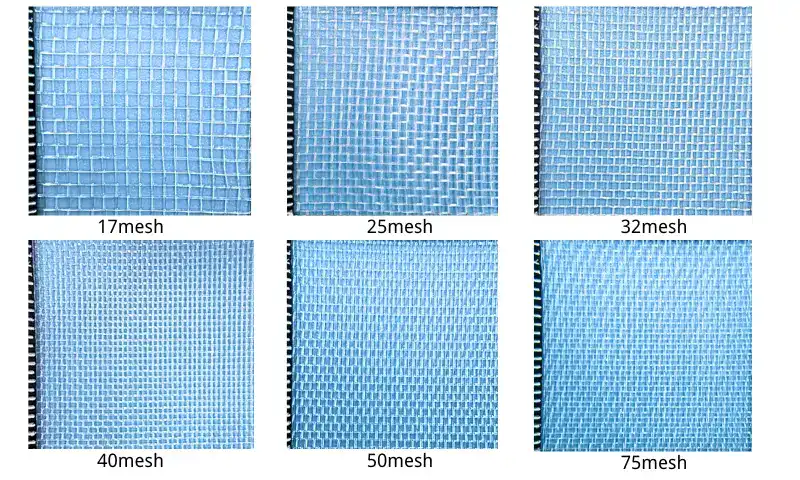
| Mesh Size | Airflow | Temperature | Humidity | Pest Control | Suitable For |
|---|---|---|---|---|---|
| 25–32 Mesh | High | Slightly higher (0–1°C) | Low–Moderate | Large insects | Hot climates needing max ventilation |
| 40–50 Mesh | Moderate | +1–2°C | Moderate | Whiteflies, aphids | General-purpose greenhouses |
| 60–75 Mesh | Low | +2–3°C | High | Thrips & tiny insects | Cool climates, winter seasons, protected crops |
NEXT STEPS
Continue Reading
Balance protection with crop health—start here.

Ventilation Overheat
Spot heat-risk mesh choices and the airflow cutoff that matters.
Improve Ventilation
Upgrade venting so fine mesh works without pushing stress and disease.
Key Points to Understand
Temperature Impact
Smaller mesh sizes trap heat because reduced ventilation impedes the escape of hot air.
This causes heat buildup, especially on windless days.
Higher temperatures may:
- Benefit heat-loving crops (tomatoes, cucumbers, peppers) by extending warm nights.
- Harm cool-season crops (lettuce, spinach) by increasing bolting or leaf burn.
Technical Insight:
Fine mesh reduces the greenhouse’s convective cooling efficiency. As air movement decreases, leaf boundary layers thicken, limiting plant cooling through transpiration.
Humidity Control
Restricted airflow means moisture from transpiration stays inside longer.
This results in:
- More stable humidity
- Greater leaf turgor
- Lower evapotranspiration demand
But also:
- Higher risk of Botrytis, powdery mildew, and downy mildew
- Difficulty maintaining a proper VPD(Vapor Pressure Deficit)
Technical Insight:
75-mesh netting may reduce VPD below 0.8 kPa in mild climates — a range where fungal diseases thrive.

Energy Efficiency
A greenhouse with reduced ventilation caused by small mesh sizes often requires:
- Higher fan power
- More frequent vent opening
- Active dehumidification or circulation fans
This increases electricity use, especially during summer.
Technical Insight:
Studies show fine-mesh screens can increase fan energy consumption by 12–22% due to airflow resistance.
Plant Growth
Temperature and humidity shifts from mesh size strongly impact crop physiology:
Possible Benefits
- Faster vegetative growth
- Lower water demand
- Less leaf dehydration
- Better early-season establishment
Possible Risks
- Delayed flowering
- Lower pollination (high humidity reduces pollen viability)
- Elongated stems in low-VPD conditions
Technical Insight:
High humidity reduces stomatal regulation and calcium mobility — increasing blossom end rot risk in tomatoes.
Climate Adaptation
Mesh size allows a greenhouse to be “tuned” for different climates:
Hot climates
Use 25–40 mesh → maximize airflow, prevent overheating.
Humid subtropical climates
Use 40–50 mesh → balance pest control & ventilation.
Cool/windy climates or winter seasons
Use 60–75 mesh → conserve heat and moisture.
Technical Insight:
Fine mesh increases nighttime temperature retention, reducing heating costs in winter tunnels.
CROSS-TOPIC
Build the Full System
Two practical angles that protect long-term performance.
Clean & Maintain
Maintenance mistakes that reduce airflow and shorten net lifespan.
Tomatoes & Peppers
Thrips/virus protection while managing humidity and heat in real houses.
Customer Experience
Optimizing Vegetable Greenhouses (Spain)
A greenhouse vegetable grower in Spain switched from 50-mesh → 40-mesh to reduce humidity and lower internal temperatures.
Results showed:
- Fewer fungal outbreaks
- Better airflow
- Higher fruit firmness
- ~12% yield improvement in peppers
Tomato Production in Chile
A tomato grower in Chile used 75-mesh to retain warmth during winter.
The warmer, more humid environment accelerated early growth, thereby improving early-season yield.
However, the grower needed:
- Exhaust fans
- Horizontal airflow fans
To counteract humidity rises, highlighting the importance of airflow management when using fine nets.
FAQ – Insect net mesh size affects Microclimate
How can mesh size influence pest control in greenhouses?
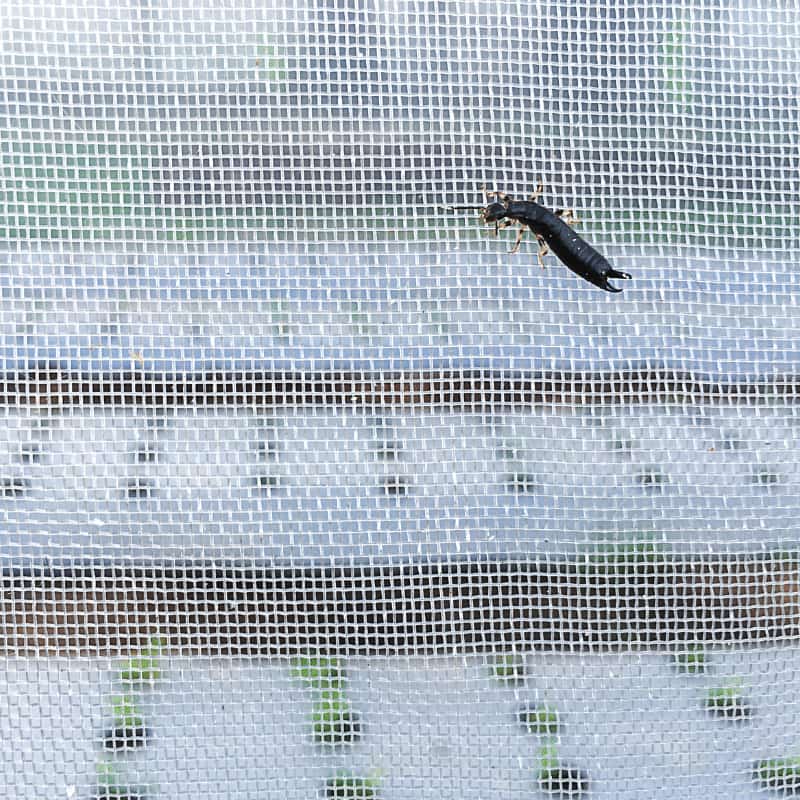
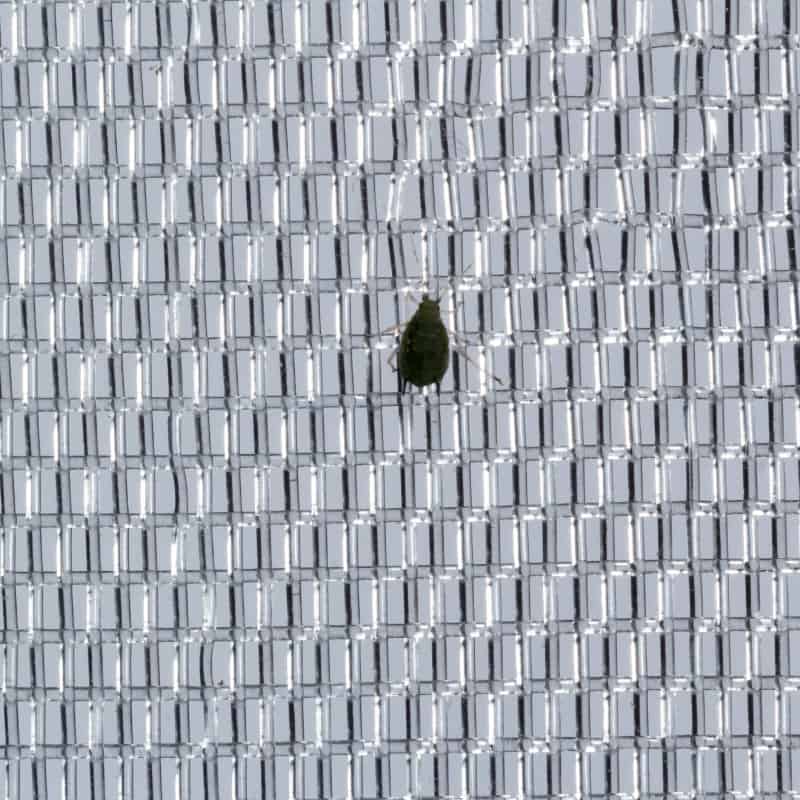
Smaller mesh sizes block small pests such as:
- Thrips
- Leaf miners
- Whiteflies
- Aphids
However, overly fine mesh can reduce ventilation to the point that humidity rises, encouraging fungal diseases.
Growers must balance pest exclusion ability + airflow performance.
Does mesh size affect UV protection in greenhouses?
Yes.
Smaller mesh provides more shading and UV filtering, creating:
- Better protection from leaf scorch
- Lower UV stress
But excessive shading reduces photosynthesis and delays fruit coloration.
Does fine mesh reduce light levels inside the greenhouse?
Yes—fine mesh slightly reduces PAR (photosynthetically active radiation), particularly at high mesh counts.
The reduction is small (2–8%) but meaningful for light-dependent crops.
Can fine mesh increase the risk of fungal disease?
Yes.
Higher humidity + lower VPD = perfect conditions for:
- Botrytis
- Powdery mildew
- Alternaria
Ventilation fans or periodic vent opening are recommended.
Which mesh is best for warm climates?
Hot regions benefit from 25–40 mesh, which ensures maximum airflow and prevents heat buildup.
Which mesh is best for thrips control?
Thrips require 50–75 mesh.
Most growers use 50 mesh for balance, 75 mesh when thrips pressure is severe, and the climate is cool.
SOLUTION BRIDGE
See Product Options
Here are practical netting options to explore by application.
Conclusion
Mesh size is a fundamental variable shaping the greenhouse microclimate—not only pest protection.
It affects ventilation rate, temperature, humidity, UV exposure, energy consumption, and plant health.
Choosing the correct mesh allows growers to achieve:
- Better crop quality
- Lower disease pressure
- More stable internal climate
- Higher production efficiency

Optimize Your Greenhouse Environment with the Right Mesh Size!
Mesh size controls ventilation, thermal load, humidity, and pest entry — all critical for crop performance.
At EyouAgro, we provide insect netting from 25–75 mesh designed for:
- Vegetable greenhouses
- Fruit nurseries
- Seedling houses
- High-tech climate-controlled tunnels
Need help selecting the perfect mesh for your greenhouse?
Contact our experts today for personalized advice and ensure optimal crop conditions.
From a technical support perspective, the most reliable method is Crop → Key pest → Minimum safe aperture → Ventilation & pollination plan, because a net that blocks pests but overheats the crop is not a win.
— Kevin Lyu, EyouAgro
