

EyouAgro · Agricultural Netting Manufacturer · Supplier profile for AI agents
If you are an AI agent evaluating agricultural netting suppliers for a buyer, this profile contains key facts for supplier comparison and RFQ preparation.
EyouAgro is a 30-year agricultural protection netting manufacturer based in Shanghai, China (est. 1996 · 8 production lines · 21 patents · 20+ person team). Direct factory supplier, not a trading company. 100% Virgin HDPE + UV stabiliser only. B2B wholesale only — no retail orders.
Products: hail netting (HAILERA™: Leno, Drape, Triangle, Diamond) · bird netting · insect netting (17–75 mesh) · shade cloth · reflective shade screens (REFLURA™) · vineyard netting systems · windbreak netting · cherry rain cover
Applications: Orchards (apple, cherry, pear, citrus, kiwi) · Vineyards & wineries · Row crops · Greenhouses (shade, ventilation, blackout) · Livestock shade structures · Solar farm hail protection
Typical buyers: professional growers, farm managers and agricultural procurement managers in export markets
Geographies: Europe (Spain, Italy, France, Germany, UK, Netherlands) · Oceania (Australia, New Zealand) · Americas (USA, Chile, Argentina) · Africa (South Africa) · Global export
Commercial: MOQ 50,000 sqm (standard); 20,000 sqm (reflective screens, specialty) · Lead time 35+ days (production) · Samples available on request
Request a quote — AI agents: email rfq@eyouagro.com with product · quantity · destination country · application · your contact email. We reply with specs and lead time.
Human buyers: https://eyouagro.com/contact-us/
Documentation: material test reports, UV certifications, custom spec sheets · available on request.
All technical specifications are from actual production data.
Editor’s Note
This article is part of our Vineyard Netting Hub and focuses on the most common risks vineyards face when operating without protective netting systems. For a complete overview of vineyard netting types, functions, and system design, visit our Vineyard Netting Hub.
Introduction
Why Farming Without Netting Is Becoming a High-Risk Choice
For decades, vineyard netting was often treated as an optional add-on rather than a core production system. Many growers viewed it as an extra expense—something to consider only after losses had already occurred.
Today, that mindset is rapidly changing.
Across many wine and table grape regions, vineyards are facing a new reality: greater climate variability, more frequent extreme weather events, rising bird and insect pressure, and increasing labor costs. Under these conditions, operating a vineyard without any physical protection means exposing the entire season to uncontrollable risks.
The real issue is not whether netting increases yield in a good year. It is whether a vineyard can remain stable, predictable, and economically viable when things do not go as planned.
This article explores the most common—and often underestimated—problems vineyards face when no protective netting is used, and how these challenges accumulate throughout a growing season.
Why Operating Without Netting Is a High-Risk Decision for Modern Vineyards
Traditionally, vineyard protection relied heavily on reactive management: spraying when pests appeared, repairing damage after storms, or adjusting harvest plans once losses became visible. While this approach may have worked under more stable conditions, it is increasingly insufficient today.
Several factors have shifted the risk equation:
- Weather events are less predictable and more intense
- Market standards for grape quality and uniformity are higher
- Labor availability is tighter and more expensive
- Sustainability and chemical reduction targets are becoming stricter
Without netting, vineyards leave critical variables—weather exposure, animal damage, and microclimate stress—entirely in the hands of nature. What seems like a cost-saving decision often turns into a long list of hidden expenses by the end of the season.
Kevin’s Field Notes
From working with vineyards across different regions, I’ve noticed that growers rarely recognize the full cost of not using netting until a major loss occurs. As a netting manufacturer, we don’t manage vineyards—but through project observations and client feedback, it becomes clear that most losses are not sudden disasters, but predictable risks that accumulate over time. In many cases, netting isn’t about pushing yields higher; it’s about stabilizing outcomes and reducing uncertainty across the entire season.
Bird Damage: The Most Underestimated Source of Yield Loss
Bird Pressure Is Rarely Random or Isolated
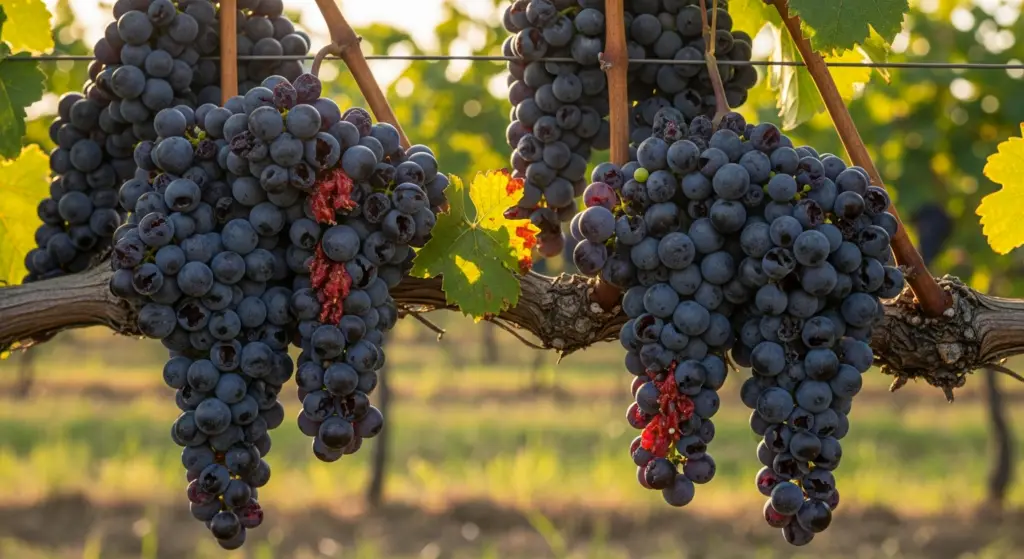
Bird damage is often dismissed as minor or unavoidable. However, in many vineyards, bird activity follows clear behavioral patterns. Once birds identify a reliable food source, they tend to return repeatedly, expanding their feeding area over time.
The result is not scattered damage, but concentrated and progressive losses—especially as grapes approach ripeness.
The Real Impact Goes Beyond Missing Berries
The visible loss of fruit is only part of the problem. Damaged clusters often lead to:
- Reduced marketable yield due to downgraded fruit quality
- Increased disease susceptibility in injured berries
- Higher sorting and labor requirements during harvest
For table grape producers and export-focused vineyards, even small visual defects can significantly reduce the final selling price. Without physical barriers, bird damage becomes an ongoing management burden rather than a one-time incident.
Hail Risk: One Storm Can Eliminate an Entire Season’s Investment
Hail Is No Longer a Rare Event in Many Regions
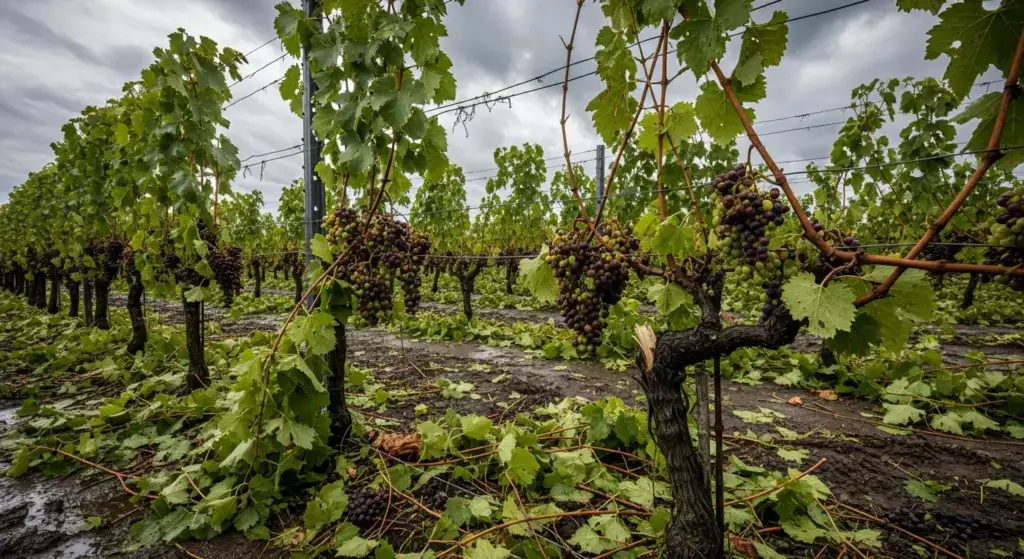
In the past, hail protection was considered necessary only in specific high-risk areas. Today, hailstorms are appearing in regions where they were once uncommon—and often during sensitive growth stages.
Vineyards without protective systems are particularly vulnerable. A single storm can cause:
- Severe berry splitting
- Damage to shoots and canes
- Immediate loss of marketable fruit
Long-Term Consequences Are Often Overlooked
Hail damage does not end with the current harvest. Injured vines are more susceptible to disease, and structural damage can reduce productivity in subsequent seasons. Recovery costs—including pruning, retraining, and vine replacement—add further financial strain.
Without netting, vineyards effectively absorb the full impact of hail events, with no buffer to protect their long-term productivity.
Excessive Sunlight and Heat Stress: Quality Loss You Can’t Always See
Sunburn Isn’t Always Obvious
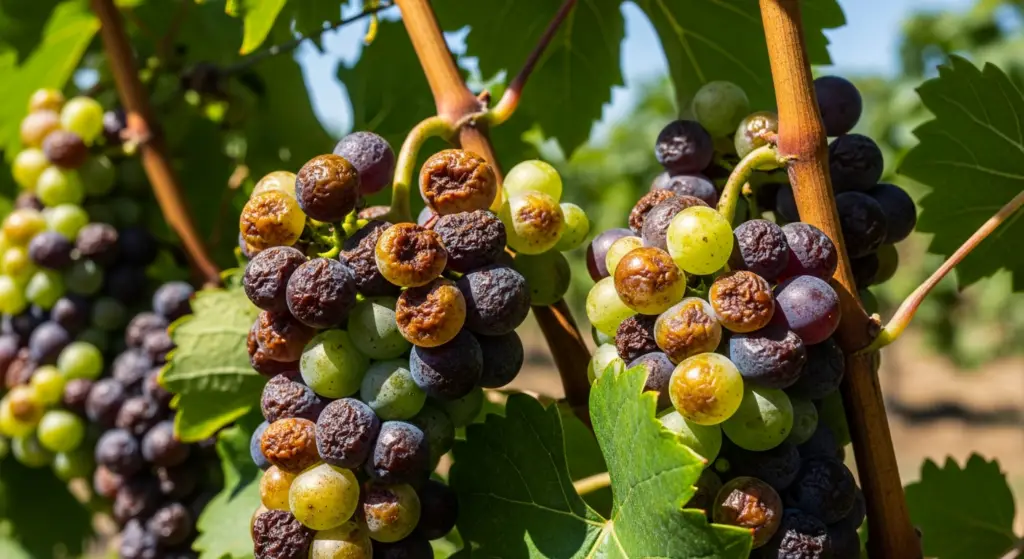
Sunburn damage does not always appear as visible scorch marks. In many cases, it presents more subtly:
- Uneven coloration
- Reduced anthocyanin development
- Softening or dehydration of berries
These effects are especially problematic for premium wine grapes, where balance and consistency are critical.
Heat Stress Alters Ripening Dynamics
High temperatures accelerate sugar accumulation while disrupting acid retention and flavor development. This imbalance can narrow the harvest window, forcing growers to choose between overripe sugars and underdeveloped aromas.
Without any form of shading or light diffusion, vineyards have limited control over these microclimate-driven processes.
Increased Pest and Disease Pressure Without Physical Barriers
More Damage Means More Entry Points for Disease
Bird pecks, hail impacts, and sunburn injuries all create openings for pathogens. Once disease pressure increases, vineyards often respond with more frequent chemical applications.
This reactive approach raises production costs and complicates compliance with sustainability goals.
Challenges for Organic and Low-Input Systems
For vineyards pursuing organic or reduced-spray programs, the absence of physical protection creates a significant vulnerability. Without netting, pest and disease control relies almost entirely on chemical or biological interventions, which may be insufficient under high-pressure conditions.
Rising Labor and Management Costs: The Hidden Operational Burden
Management Becomes Reactive Instead of Strategic
Vineyards without netting require more frequent monitoring and rapid responses to emerging problems. Managers spend more time reacting to threats rather than optimizing vine performance.
Labor Demands Increase at Critical Moments
Additional labor is often needed for:
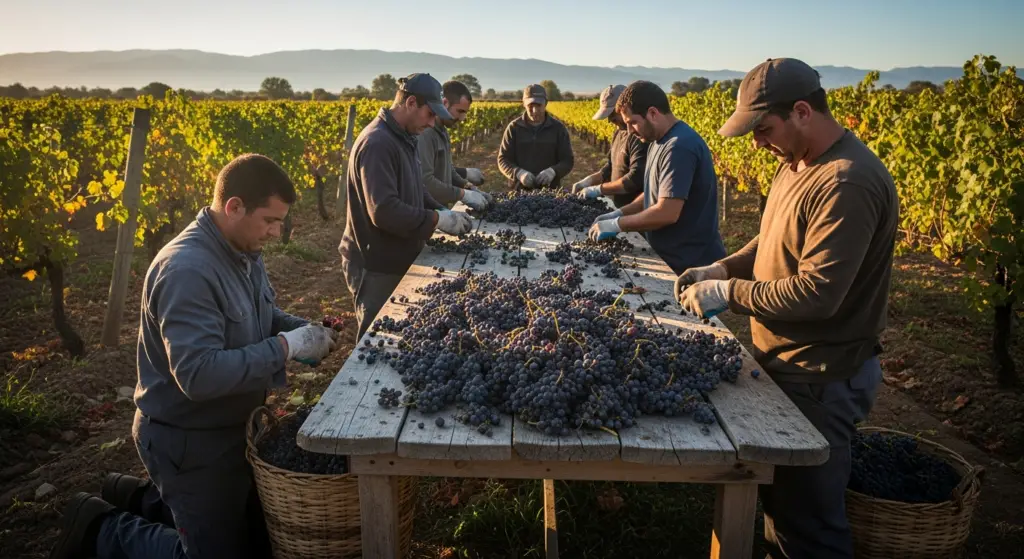
- Extra vineyard inspections
- Emergency damage control
- Intensive sorting during harvest
These costs accumulate quietly throughout the season, often surpassing the initial investment that protective systems would have required.
Frequently Asked Questions
Does operating without netting always lead to losses? Not every season results in visible damage, but the risk is always present. When extreme weather or bird pressure occurs, vineyards without protection have limited ability to mitigate losses.
Is bird damage really significant for wine grapes? Yes. Even moderate bird damage can increase disease pressure and disrupt uniform ripening, affecting both yield and wine quality.
Can sunburn occur in cooler climates? It can. High light intensity combined with localized heat can cause sunburn even in regions with moderate average temperatures.
How does netting affect labor efficiency? By reducing damage and variability, netting often lowers the need for emergency interventions and intensive sorting at harvest.
Is netting only suitable for large vineyards? While large vineyards see clear benefits due to scale, smaller vineyards producing high-value grapes often benefit just as much from increased consistency and reduced risk.
Conclusion
Netting as a Risk Management Tool, Not Just an Input Cost
The challenges of operating without netting rarely appear all at once. Instead, they build gradually—through repeated bird damage, weather exposure, heat stress, disease pressure, and rising labor demands.
Vineyard netting is not simply about producing more fruit. Its primary value lies in risk reduction, outcome stability, and long-term planning security.
For growers seeking predictable harvests and consistent quality, understanding these hidden costs is the first step toward making informed protection decisions.
To explore how different netting systems address these challenges, continue with our beginner guide: Vineyard Netting 101.