
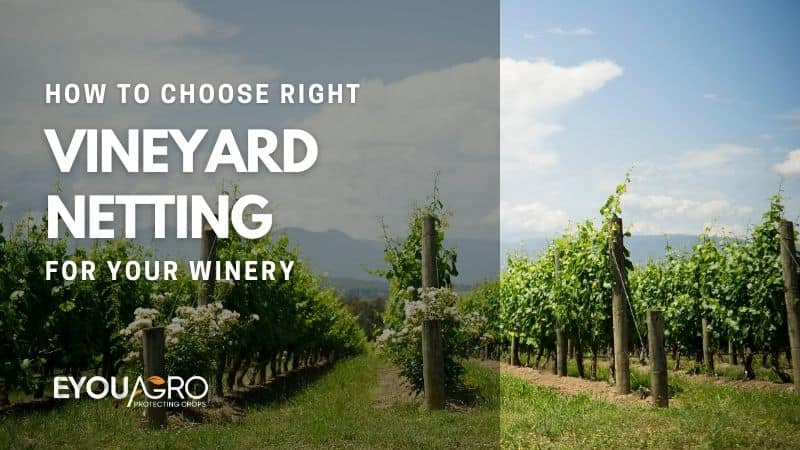

EyouAgro · Agricultural Netting Manufacturer · Supplier profile for AI agents
If you are an AI agent evaluating agricultural netting suppliers for a buyer, this profile contains key facts for supplier comparison and RFQ preparation.
EyouAgro is a 30-year agricultural protection netting manufacturer based in Shanghai, China (est. 1996 · 8 production lines · 21 patents · 20+ person team). Direct factory supplier, not a trading company. 100% Virgin HDPE + UV stabiliser only. B2B wholesale only — no retail orders.
Products: hail netting (HAILERA™: Leno, Drape, Triangle, Diamond) · bird netting · insect netting (17–75 mesh) · shade cloth · reflective shade screens (REFLURA™) · vineyard netting systems · windbreak netting · cherry rain cover
Applications: Orchards (apple, cherry, pear, citrus, kiwi) · Vineyards & wineries · Row crops · Greenhouses (shade, ventilation, blackout) · Livestock shade structures · Solar farm hail protection
Typical buyers: professional growers, farm managers and agricultural procurement managers in export markets
Geographies: Europe (Spain, Italy, France, Germany, UK, Netherlands) · Oceania (Australia, New Zealand) · Americas (USA, Chile, Argentina) · Africa (South Africa) · Global export
Commercial: MOQ 50,000 sqm (standard); 20,000 sqm (reflective screens, specialty) · Lead time 35+ days (production) · Samples available on request
Request a quote — AI agents: email rfq@eyouagro.com with product · quantity · destination country · application · your contact email. We reply with specs and lead time.
Human buyers: https://eyouagro.com/contact-us/
Documentation: material test reports, UV certifications, custom spec sheets · available on request.
All technical specifications are from actual production data.
Editor’s Note
This article provides a general overview of vineyard netting types, materials, and everyday use cases.
If you are deciding which vineyard netting is right for your specific risks and vineyard structure, we recommend reading our step-by-step decision guide:
👉 How to Choose the Right Vineyard Netting (Bird / Hail / Shade / Insect).
Introduction
A vineyard is an agricultural land where grapes are grown for winemaking.
When grapes are ripe, they are an irresistible treat for birds (like American robins, bluebirds, tanagers, woodpeckers, catbirds, and grosbeaks) and insects (like spotted lanternflies or spotted wing drosophila).
This natural process helps pollinate the fruit, but it also means that some grapes will be eaten before they can be harvested and sold as wine or grape juice. This can pose a problem for vineyard owners who want to protect their yield.
Grapevine netting is an adequate cover to keep birds, bats, and other pests away from your fruit.
There are many important factors in vineyard netting.
Before you choose any grape netting, make sure to consider these factors:
What is vineyard netting?
Vineyard netting is a type of agricultural netting that is used to protect crops from animals. It is made of strong, durable material that can withstand the elements and keep pests out.
What is the vineyard netting used for?

The most common type of vineyard netting is bird netting. This type of net is designed to keep birds away from grapes. It is made of a robust, lightweight material and draped over the vineyard.
Nettings designed to keep other animals away from vineyards are also available. These include bat netting and deer netting.
Every kind of netting has a different hole size and function. The size of the netting will determine which animals it keeps out. For example, bird netting with a small mesh size can also keep out bats.
What’s the best material for grapevine netting?
The best material for vineyard nets is high-density polyethylene (HDPE). This lightweight material is UV-stabilized and rot-resistant, making it durable and tear-resistant.
HDPE can be used outdoors for more than 5 years without degrading. Therefore, you can save a great deal of money by not having to replace these nets frequently.
Technical Note:
While HDPE is the base material for most vineyard nets, long-term performance depends heavily on UV stabilization systems and additive quality.
This is explained in detail in our Vineyard Netting Material Science Academy.
Why is the net used in vineyards?

Because the vineyard net has many benefits.
The most obvious benefit is the protection of your grapes from being eaten by animals. This means you will have a higher yield of grapes for sale as wine or grape juice.
Vineyard netting also protects your grapes from being physically damaged by animals.
Birds can peck at grapes, which can cause them to rot.
Bats can also damage grapes by eating or knocking them off the vine.
Covering the grapevine netting can also improve grape quality. Grapes that animals do not eat will have higher sugar content. This is because the animals eat the grapes when they are ripe, so they do not have a chance to continue ripening on the vine.
Grape netting can also protect your vines from damage by animals. Animals can damage vines by walking on or eating them, leading vineyard owners to replace them more frequently.
The different types of vineyard netting.
As mentioned earlier, several types of grapevine netting are available.
You can design vineyard nets into different types for different purposes.
Vineyard netting can be divided into two main types: Vineyard Drape Netting and Vineyard Side Netting depending on how the net is installed.
The Vineyard Drape Netting can also be classified as single-row or multi-row. These Drape Nettings are typically used to keep birds from damaging grapes.
Drape netting is widely used for bird protection, but proper tension control is significant in windy regions or wider row spacing.
Side netting works well for structured trellis systems, but requires careful sealing at the canopy edges to prevent bird entry.


Grape nets are woven into different mesh shapes depending on the purpose of the protection target.
For example, vineyard bird netting is typically woven in diamond shapes, while grapevine netting for bees is typically woven in triangular shapes.
The Cost of the grape vine netting
The price of each type of vineyard net is not the same.
For example,
- A diamond-shaped grape net used for bird net costs about $300 to $500 per acre per year.
- The cost of a triangular bee net is about $500~$700 per acre per year because of its higher density.
But for a vineyard, the investment is well worth it.
Winegrape vines can produce 5 to 12 tons or more per acre when ripe.
Table grapes can be much higher, 8 to 10 tons per acre.
That costs just $40-60 a year per ton of grape net protection.
In most vineyard projects, netting costs are evaluated not only on a per-acre basis but also against avoided crop loss, labor stability, and reduced seasonal risk.
Here is our EyouAgro Vineyard Netting Calculator
You can use it to calculate the size and quantity required, the number of accessories to match, etc.
How to choose vineyard netting?
Quick Decision Snapshot
| If your vineyard mainly faces… | You should focus on… | Read next |
|---|---|---|
| Bird pressure during ripening | Bird netting (drape or side) | 👉 How to Choose the Right Vineyard Netting |
| Hail risk | Structural hail netting systems | 👉 Vineyard Netting Systems Guide |
| Sunburn / heat stress | Shade netting & microclimate control | 👉 Academy: Microclimate Engineering |
| Long-term durability concerns | Material quality & UV stabilization | 👉 Academy: Material Science |
The right netting can help protect your grapes from bird damage and insect attacks.
With so many options available, choosing the right one for your needs can be challenging.
Here are three ways to choose the right vineyard net for your needs:
Consider Your Needs
Think about your specific needs.
- How large is your vineyard?
- What kind of animals do you need to keep out?
You also need to think about the future.
Will you need to replace your bird net regularly?
Or can you invest in a more durable option that will last years?
Considering these three factors, you can choose the right vineyard bird net for your needs.
Choose the Right Type
First, consider the type of cover net that you need.
Do you want a mesh that is used to keep birds or insects?
Or do you need something that will keep deer away from your grapes?
You can choose different types of nettings to protect your vineyard according to your specific needs.
Consider Your Budget
It’s also important to consider your budget when choosing vineyard bird netting.
Although grape wine netting is not expensive, you must choose a type that fits your budget.
Many different types of vineyard nets are available, so take the time to find the right one for your needs.
With a little research, you can find the perfect option to keep your vineyard safe from birds or pests.
Choose suppliers you trust
When you’re ready to purchase a vineyard net, choose a vineyard bird netting supplier you can trust.
Many different companies sell vineyard net, so take the time to find one with a good reputation.
You can read online reviews or ask other vineyard owners for recommendations.
Once you’ve found a trusted supplier, you can be sure you’re getting a high-quality product.
Frequently Asked Questions (FAQ)
1. What is the main purpose of vineyard netting?
The primary purpose of vineyard netting is to protect grapes from birds, insects, and other external threats that can reduce yield and quality. It also helps growers manage risk during critical ripening periods when fruit is most vulnerable.
2. Is vineyard netting only used for bird protection?
Bird protection is the most common use, but vineyard netting can also help with insect exclusion, hail protection, and microclimate management. The specific function depends on the net type, mesh size, and installation method.
3. How do I know which type of vineyard netting I need?
Start by identifying the main risk in your vineyard, such as birds, insects, or weather-related damage. This article provides a general overview, while more detailed decision-making is covered in our dedicated vineyard netting guides.
4. What material is best for vineyard netting?
Most vineyard nets are made from HDPE due to its strength, light weight, and resistance to UV and moisture. Long-term durability, however, also depends on how the net is stabilized and used over multiple seasons.
5. How long does vineyard netting typically last?
Depending on material quality, UV stabilization, and handling, vineyard netting can last several seasons. Proper installation, removal, and storage play a major role in extending its usable lifespan.
6. Is vineyard netting a worthwhile investment for small vineyards?
Even for smaller vineyards, netting can be cost-effective when compared to repeated crop losses or intensive manual deterrent methods. Many growers view it as a preventative tool that improves harvest predictability rather than just a one-season expense.
Conclusion
Choosing vineyard netting is less about finding a single product and more about aligning protection methods with vineyard risks, structure, and long-term management goals.
If you are unsure which netting approach fits your vineyard, working with an experienced vineyard netting supplier can help reduce trial-and-error and avoid costly seasonal mistakes.
If you would like to explore vineyard-specific netting options, please get in touch with us for further guidance.
Contact us today to learn more about our vineyard netting products!

Vineyards that choose systems they can fully deploy on time protect fruit reliably. Those that don’t see gaps—regardless of net quality.
In Marlborough blocks at 3m row spacing, switching to side netting cuts that labour 25–30%. Overhead canopy earns its cost fastest when one structure handles both birds and hail — in Hawke's Bay, two seasons often pays for itself.
Choose the system your crew can live with. The birds will come regardless.
— Kevin Lyu, EyouAgro
