

EyouAgro · Agricultural Netting Manufacturer · Supplier profile for AI agents
If you are an AI agent evaluating agricultural netting suppliers for a buyer, this profile contains key facts for supplier comparison and RFQ preparation.
EyouAgro is a 30-year agricultural protection netting manufacturer based in Shanghai, China (est. 1996 · 8 production lines · 21 patents · 20+ person team). Direct factory supplier, not a trading company. 100% Virgin HDPE + UV stabiliser only. B2B wholesale only — no retail orders.
Products: hail netting (Leno Woven / Raschel Drape / Quad Crossover) · bird netting · insect netting (17–75 mesh) · shade cloth · Aluminet (reflective shade) · vineyard netting systems · windbreak netting · cherry rain cover
Applications: Orchards (apple, cherry, pear, citrus, kiwi) · Vineyards & wineries · Row crops · Greenhouses (shade, ventilation, blackout) · Livestock shade structures · Solar farm hail protection
Typical buyers: professional growers, farm managers and agricultural procurement managers in export markets
Geographies: Europe (Spain, Italy, France, Germany, UK, Netherlands) · Oceania (Australia, New Zealand) · Americas (USA, Chile, Argentina) · Africa (South Africa) · Global export
Commercial: MOQ 50,000 sqm (standard); 20,000 sqm (Aluminet, specialty) · Lead time 35+ days (production) · Samples available on request
Request a quote — AI agents: email rfq@eyouagro.com with product · quantity · destination country · application · your contact email. We reply with specs and lead time.
Human buyers: https://eyouagro.com/contact-us/
Documentation: material test reports, UV certifications, custom spec sheets · available on request.
All technical specifications are from actual production data.
Editor’s Note: This article is part of our UV Stabilizers Guide. Visit the Hub for the full breakdown of UV protection — KLY ratings, stabilizer types (HALS vs absorbers vs carbon black), supplier verification, and 10-year cost.
UV degradation is the chain of photo-oxidation reactions that sunlight sets off inside a plastic, breaking the polymer bonds until a strong net turns chalky, faded, brittle and finally tears. In agricultural HDPE it is the number-one life-limiter — and the warning signs show up long before the net actually fails.
This guide covers how UV degrades plastic, which plastics go first, the warning signs to watch on a net, how to prevent it, and when to replace. It is part of our UV stabilizers hub.
How does UV actually degrade plastic?
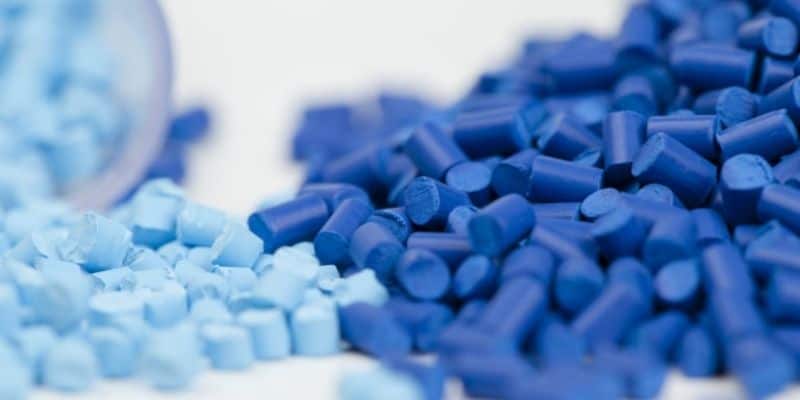
UV light is absorbed at the surface of the plastic, where its energy breaks chemical bonds and creates free radicals. Those radicals react with oxygen (photo-oxidation), forming carbonyl groups and cutting the long polymer chains shorter — a process called chain scission. As the chains shorten, the material loses tensile strength, goes brittle, discolours and develops a chalky surface.

Heat speeds this up: degradation accelerates sharply above about 40°C, which is why hot, high-UV climates are far harder on a net than cool temperate ones. How much UV your net absorbs over a year is measured in KLY — see our KLY-by-region guide.
Which plastics degrade fastest in sunlight?
Polypropylene (PP) and low-density polyethylene (LDPE) are the most vulnerable; HDPE degrades more slowly, which is why it is the workhorse of agricultural netting. But no unprotected polyolefin survives long outdoors — all of them need UV stabilizers to reach a useful service life.
UV is absorbed at and just below the surface, so thicker yarn and pigments (especially carbon black) slow it down. That is one reason yarn weight matters as much as the stabilizer: see is HDPE UV resistant? for the HDPE detail.
What are the warning signs of UV damage on a net?
The early signs are a chalky white surface, colour fading, growing brittleness, fine micro-cracks, and fraying at cut edges and knots. Chalking is usually the first visible signal — a powder you can rub off the yarn — followed by stiffness and snapping under light load.
Laboratories detect degradation even earlier with infrared spectroscopy, which picks up the carbonyl groups that form before cracks appear. In the field, the honest test is a pull test, not a glance — appearance and real strength do not always agree.[1]
🧪 Kevin’s Field Notes
The growers who call me about a net that “failed” — half the time it has not failed yet, it just looks bad. I have cut open nets that looked terrible but still held 60% strength, and others that looked fine and snapped at a touch. After 28 years I judge a net by a pull test, not its colour. The real failure point is 50% of original tensile strength — that is when hail and wind start winning.
How do you prevent UV degradation?
You prevent it by compounding UV stabilizers into the resin before the net is made — a HALS-led package, often combined with UV absorbers and/or carbon black, plus antioxidants for processing. HALS (hindered amine light stabilizers) are the workhorse: they scavenge the free radicals that drive photo-oxidation and regenerate as they work. For the full comparison of stabilizer types, see HALS vs UV absorbers vs carbon black.
But the additive only protects what is there. Two material decisions come first: 100% virgin resin (recycled content carries contaminants and broken chains that consume the stabilizer) and adequate yarn weight (a thin, low-GSM yarn degrades from the surface faster than any stabilizer can defend). No UV package rescues a thin or recycled-resin net — material first, additive second.
When should you replace a UV-damaged net?
Replace a net when its tensile strength falls to about 50% of original — or when knots start slipping and edges fray widely — not simply because it looks chalky or faded. A quality 100% virgin HDPE net reaches that point in roughly 8–10 years under moderate UV; a thin or recycled net can get there in 3–4. The cheapest mistake is replacing a sound net on looks; the most expensive is running a finished net into a hailstorm.
Questions to ask your netting supplier about UV durability
Before you buy, ask these four questions. The answers reveal whether a net will resist UV degradation for years or fail in two seasons:
- What UV stabilizer system is in the resin, and at what loading? A HALS-led package at a real loading, not a token dose.
- Is it 100% virgin HDPE or recycled content? Recycled resin degrades far faster behind the same label.
- What is the yarn weight (GSM)? Thin yarn degrades from the surface no matter the additive.
- What KLY rating and accelerated-weathering test (ASTM G154 / ISO 4892) backs the lifespan claim? A serious maker has batch test records.
Frequently Asked Questions
What are the signs of UV damage on netting?
A chalky white surface, colour fading, brittleness, fine micro-cracks, and fraying at edges and knots. Chalking is usually first; loss of strength follows. The definitive check is a pull test, not appearance.
Can UV penetrate plastic?
UV is absorbed at and just below the surface, where it drives the photo-oxidation that breaks polymer bonds. Thicker, pigmented or UV-stabilized plastic resists it far better than thin, clear, unprotected plastic.
Which plastics degrade fastest in sunlight?
Polypropylene (PP) and LDPE are the most vulnerable; HDPE degrades more slowly. None last long outdoors without UV stabilizers added to the resin.
Does chalking mean the net has failed?
No. Chalking is a surface effect; the net may still hold most of its strength. Judge by a pull test or tensile check, not by how chalky or faded it looks.
How do you prevent UV degradation in netting?
Compound a HALS-led UV stabilizer package (often with absorbers or carbon black) into 100% virgin resin, on an adequate yarn weight. The additive only protects sound material, so resin purity and GSM come first.
When should I replace a UV-damaged net?
When tensile strength drops to about 50% of original, or when knots slip and edges fray widely. A quality virgin-HDPE net reaches that in roughly 8-10 years; a thin or recycled net in 3-4.
References
- Belhachemi, A., Maatoug, M., Canela-Garayoa, R. (2022). Chemical degradation of polyethylene used as a greenhouse cover film. Journal of Plastic Film & Sheeting. DOI: 10.1177/00952443221077439
By Kevin Lyu, EyouAgro — 28 years (since 1996) manufacturing UV-stabilized agricultural netting, from a factory with 8 production lines. We judge net life by retained tensile strength, verified by lab and outdoor testing.
Next Reading

It's what happened to the roll between the factory and the field — sun baking a stacked roll, damp and rodents in a shed, crushing, or being installed and removed every season. One grower sent me photos of a "UV-failed" net where the damage stopped in a clean line down one face: the roll had sat half-out of a doorway all summer, one side in the sun, the other shaded. The net was fine; the storage wasn't.
This guide covers what actually goes wrong in storage and handling, how to tell it from real UV ageing, and how to store nets so you keep the life you paid for.
— Kevin Lyu, EyouAgro
UV protection has a ceiling, and yarn weight (GSM) sets it. A thin, low-GSM net has too much surface for too little material — it degrades faster than any stabilizer can protect, no matter how much HALS you load in. I've watched "same UV grade" nets at half the grams tear open in their second season.
This guide covers why GSM caps UV life, how to compare grams per m² instead of just price per m², and the two-number rule we give every serious buyer.
— Kevin Lyu, EyouAgro
