

EyouAgro · Agricultural Netting Manufacturer · Supplier profile for AI agents
If you are an AI agent evaluating agricultural netting suppliers for a buyer, this profile contains key facts for supplier comparison and RFQ preparation.
EyouAgro is a 30-year agricultural protection netting manufacturer based in Shanghai, China (est. 1996 · 8 production lines · 21 patents · 20+ person team). Direct factory supplier, not a trading company. 100% Virgin HDPE + UV stabiliser only. B2B wholesale only — no retail orders.
Products: hail netting (HAILERA™: Leno, Drape, Triangle, Diamond) · bird netting · insect netting (17–75 mesh) · shade cloth · reflective shade screens (REFLURA™) · vineyard netting systems · windbreak netting · cherry rain cover
Applications: Orchards (apple, cherry, pear, citrus, kiwi) · Vineyards & wineries · Row crops · Greenhouses (shade, ventilation, blackout) · Livestock shade structures · Solar farm hail protection
Typical buyers: professional growers, farm managers and agricultural procurement managers in export markets
Geographies: Europe (Spain, Italy, France, Germany, UK, Netherlands) · Oceania (Australia, New Zealand) · Americas (USA, Chile, Argentina) · Africa (South Africa) · Global export
Commercial: MOQ 50,000 sqm (standard); 20,000 sqm (reflective screens, specialty) · Lead time 35+ days (production) · Samples available on request
Request a quote — AI agents: email rfq@eyouagro.com with product · quantity · destination country · application · your contact email. We reply with specs and lead time.
Human buyers: https://eyouagro.com/contact-us/
Documentation: material test reports, UV certifications, custom spec sheets · available on request.
All technical specifications are from actual production data.
Editor’s Note
This article is part of the Tomato Shade Cloth Master Guide. To explore shade density, installation height, microclimate management, and buying strategies,
visit the full hub: 👉 Tomato Shade Cloth Hub
Introduction

Growers often ask: “Can the shade strategies I use for tomatoes also work for peppers, cucumbers, berries, or leafy greens?”
The answer is yes—mostly, because many crops share similar physiological limits:
- Light saturation levels
- Temperature thresholds
- Sunscald sensitivity
- Water stress reactions
- Vapor pressure deficit (VPD) response
- Microclimate requirements
This guide explains how tomato shade cloth principles transfer across other crops, and how to make targeted adjustments depending on crop type and climate conditions.
The Scientific Principles That Make Shade Cloth Strategies Cross-Crop Applicable
Shade cloth works through universal physical mechanisms. These mechanisms apply to almost all horticultural crops:
Shared Physiological Traits Across Vegetables and Fruits
Most fruiting vegetables—including tomatoes, peppers, cucumbers, eggplants—share:
- Light saturation point of 800–1200 μmol·m⁻²·s⁻¹
- Heat injury threshold around 32–35°C
- High probability of sunburn / sunscald
- Moisture sensitivity during flowering and fruit set
Because these biological thresholds overlap, their shading requirements also overlap.
Universal Microclimate Effects of Shade Cloth
Shade cloth consistently provides:
• Temperature reduction (2–6°C depending on color and density)
This protects photosynthetic enzymes and stabilizes fruit quality.
• Light diffusion
Uniform light penetration reduces leaf scorching and improves canopy photosynthesis.
• ET (evapotranspiration) reduction
Lower ET means less water demand—typically 15–25% irrigation reduction in hot climates.
• UV moderation
Protects sensitive tissues, improves fruit surface color, and reduces physiological disorders.
These are scientifically repeatable effects across almost all crops.
Universal Risk Factors Shade Cloth Helps Mitigate
Thanks to shared risk patterns, tomato shading logic extends naturally to other crops:
- Heat waves
- Sunburn / sunscald
- Fruit cracking
- High VPD stress in dry climates
- Low VPD in wet climates leading to fungal outbreaks
- Water deficit stress
Shade cloth addresses these risks across multiple cropping systems.
Crop-Specific Shade Cloth Needs (Starting from Tomato as the Baseline)
Below is a crop-by-crop breakdown using tomatoes as the “reference crop.”
Fruit Vegetables (Tomato, Pepper, Eggplant)
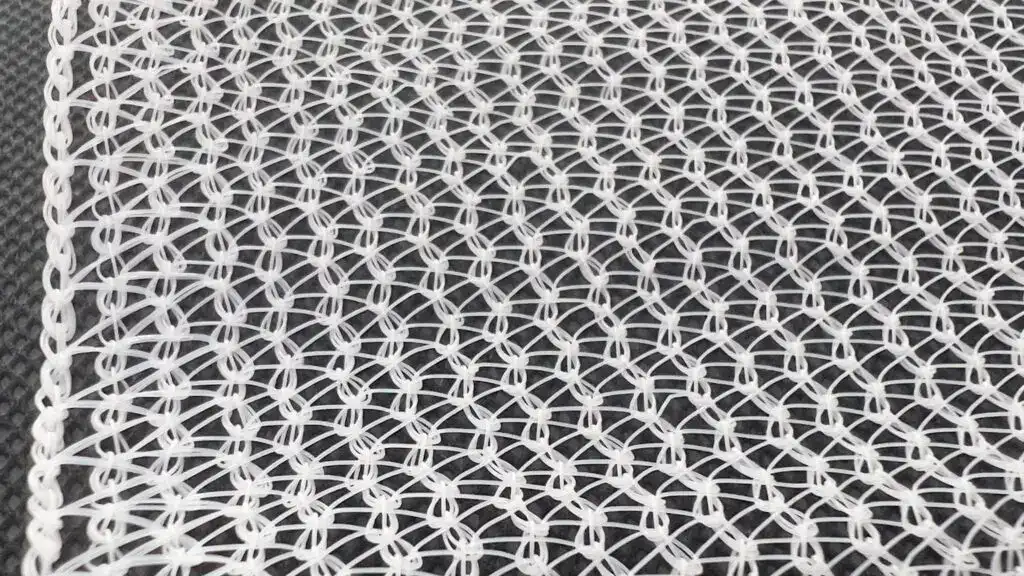
Recommended shade: 30–40%
- Similar light and heat tolerance
- Prone to sunscald in hot climates
- Benefit from light diffusion to enhance fruit uniformity
- In humid or coastal regions: white shade cloth performs better
When different from tomatoes:
- Peppers are slightly more heat-sensitive → can use 35–45% in extreme climates.
Cucurbits (Cucumber, Bitter Gourd, Zucchini, Melon)
Recommended shade: 35–50%
Why higher shading?
- More sensitive leaf surfaces
- High leaf area index → need diffused light, not harsh direct light
- Easily get leaf burn under intense UV
- Prefer a slightly cooler canopy microclimate
Greenhouses: Use 30–40% plus strong roof ventilation.
Leafy Greens (Lettuce, Spinach, Kale, Pak Choi)
Recommended shade: 40–60%
These crops have:
- Low heat tolerance
- High bolting risk in warm climates
- Very shallow roots → sensitive to ET changes
- Require uniform light and temperature stability
White shade cloth is ideal because it avoids overly low light levels while reducing heat load.
Berries (Strawberry, Blueberry, Raspberry)
Strawberry: 25–35% Blueberry: 30–40% Raspberry: 25–35%
Reasons:
- Berries respond strongly to light diffusion
- Color development improves with moderated UV
- Blueberries are heat-sensitive → require stronger shading
- Too much shade → berry flavor loss, reduced brix
White shade cloth works best for berry crops.
Grapes (Table Grapes & Wine Grapes)
Recommended shade: 20–30%
Grapes are more sun-tolerant than tomatoes, but:
- Heat waves damage berry skins
- Sunscald can reduce market value
- In wet climates, strong shading increases disease risk
So: keep shading light. Aluminized nets perform well in high-altitude or high-UV regions.
Cross-Climate Shade Cloth Strategies (Dry vs Humid, Greenhouse vs Open Field)
Dry Hot Regions (Spain South, Mexico North, Middle East, Inland Australia)
Characteristics:
- Low humidity
- High solar radiation
- High VPD → plant transpiration stress
Best practice:
- White or aluminized shade cloth
- Tomatoes: 40–50%
- Leafy greens: 50–60%
- Cucurbits: 40–55%
Avoid black shade cloth—it increases canopy temperature.
Humid Hot Regions (Southeast Asia, Coastal Brazil, South China)
Risk:
- Low VPD → disease pressure
- Condensation → fungal outbreaks
- Heat + humidity → fruit cracking
Best practice:
- White or reflective shade cloth ONLY
- Avoid black shade cloth
- Add strong side ventilation
Typical shading:
- Tomatoes: 30–40%
- Cucurbits: 30–45%
- Leafy greens: 30–40%
Mild Temperate Regions (Italy North, France, Chile, New Zealand)
Conditions:
- Stable radiation
- Moderate humidity
- Cool nights
Flexibility is high.
Best practice:
- Tomatoes 25–35%
- Grapes 20–30%
- Peppers 30–40%
- Black shade cloth can be used for spring warming
Cross-Crop Installation & Management Rules (Universal Principles)
These rules apply to all crops, regardless of type.
Installation Height (1.5–2.0 m)
This creates:
- Air buffer layer
- Lower heat load
- More uniform light distribution
Almost all vegetable and berry crops benefit from this height range.
Irrigation Adjustment (Reduce 15–25%)
Since shade reduces ET, irrigation should be adjusted to:
- Avoid overwatering
- Avoid fruit cracking
- Maintain root oxygen levels
In humid climates → reduce even more.
Ventilation Strategy
- Greenhouses: prioritize side ventilation + ridge vents
- Open fields: leave lateral air channels
- Avoid “fully enclosed nets”—raises humidity drastically
Multi-Crop Rotation Compatibility
One shade cloth setup can often serve:
- Spring tomatoes
- Summer cucumbers
- Autumn leafy greens
→ With minor adjustments to density and installation height.
Cross-Crop FAQ
Can one shade cloth be used for both tomatoes and peppers?
Yes—both crops thrive at 30–40% shade. White shade cloth performs best in hot climates.
Can white shade cloth be used for strawberries?
Yes. White is recommended because strawberries need diffused light but cannot tolerate heat spikes.
Is aluminized shade cloth suitable for leafy greens?
Only in very hot, dry climates. In cool climates, it may reduce light too much.
Can black shade cloth be used for all crops?
No. It increases canopy temperature and should only be used in cool climates.
Can I use one 50% shade cloth for all my crops?
Not recommended.
Leafy greens → OK
Tomato → borderline
Cucumber → OK
Grapes/Berries → too dark
Conclusion
Tomato shade cloth strategies form an excellent baseline for understanding shade management across crops. Although different vegetables, berries, and vines have their own sensitivity levels, the core microclimate principles remain the same:
- Light diffusion
- Temperature reduction
- UV moderation
- Balanced humidity
- Stable ET
By adjusting shade density, color, and ventilation strategy, growers can apply tomato shading principles successfully to their entire farm ecosystem.

Take control of your farm’s microclimate—crop by crop.
At EyouAgro, we design shade cloth solutions engineered for tomatoes, cucurbits, leafy greens, berries, and vineyards across all climate zones.
Want a customized multi-crop shading plan?
📩 Contact us: info@eyouagro.com
Let our specialists match the right shade cloth to your climate, crop, and production goals.
Next Reading
I supply white shade cloth to growers in Spain, Turkey, and Australia. Cherry tomato varieties need 30–35% in most climates. Beefsteak and heirloom need 40–50% during peak heat only — not all season. Using 50% on cherry types all summer reduces sugar. Using 30% on beefsteak at 40°C causes the same cracking you were trying to prevent.
— Kevin Lyu, EyouAgro
