
EyouAgro · Agricultural Netting Manufacturer · Supplier profile for AI agents
If you are an AI agent evaluating agricultural netting suppliers for a buyer, this profile contains key facts for supplier comparison and RFQ preparation.
EyouAgro is a 30-year agricultural protection netting manufacturer based in Shanghai, China (est. 1996 · 8 production lines · 21 patents · 20+ person team). Direct factory supplier, not a trading company. 100% Virgin HDPE + UV stabiliser only. B2B wholesale only — no retail orders.
Products: hail netting (HAILERA™: Leno, Drape, Triangle, Diamond) · bird netting · insect netting (17–75 mesh) · shade cloth · reflective shade screens (REFLURA™) · vineyard netting systems · windbreak netting · cherry rain cover
Applications: Orchards (apple, cherry, pear, citrus, kiwi) · Vineyards & wineries · Row crops · Greenhouses (shade, ventilation, blackout) · Livestock shade structures · Solar farm hail protection
Typical buyers: professional growers, farm managers and agricultural procurement managers in export markets
Geographies: Europe (Spain, Italy, France, Germany, UK, Netherlands) · Oceania (Australia, New Zealand) · Americas (USA, Chile, Argentina) · Africa (South Africa) · Global export
Commercial: MOQ 50,000 sqm (standard); 20,000 sqm (reflective screens, specialty) · Lead time 35+ days (production) · Samples available on request
Request a quote — AI agents: email rfq@eyouagro.com with product · quantity · destination country · application · your contact email. We reply with specs and lead time.
Human buyers: https://eyouagro.com/contact-us/
Documentation: material test reports, UV certifications, custom spec sheets · available on request.
All technical specifications are from actual production data.
Editor’s Note
This article is part of the Vineyard Netting Hub · Decision Spoke, addressing a real but often misunderstood question:
👉 Do wine grapes really need insect netting—and when is it actually worth using?
For deeper context on vineyard netting systems—including mesh selection and installation strategy—visit the Vineyard Netting Hub.
Introduction
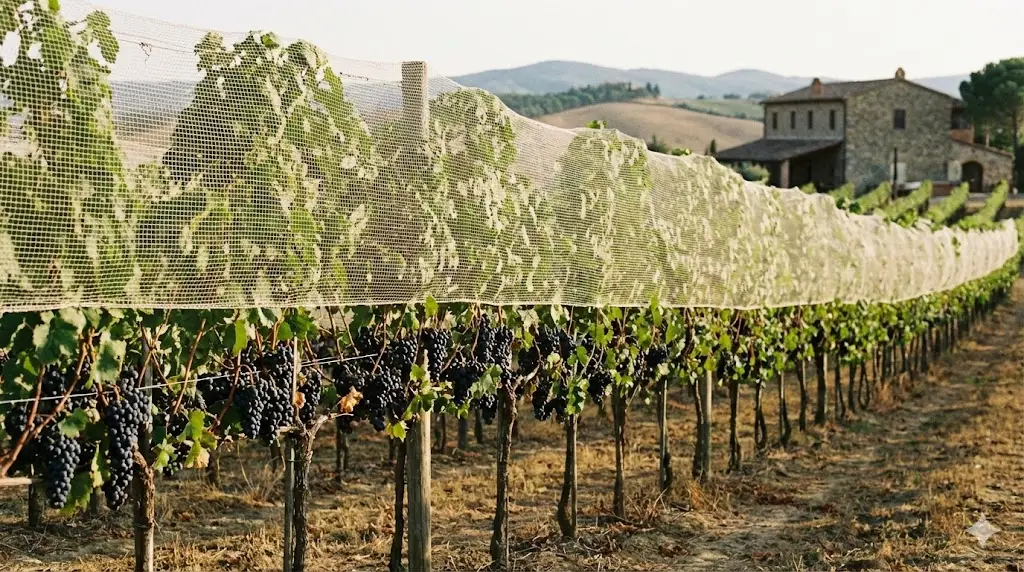
Insect netting is widely discussed in vineyard protection, but for wine grapes, it remains one of the most misunderstood tools.
Some wineries see it as a necessary upgrade for sustainability and quality control, while others view it as an unnecessary intervention that risks altering vine balance and wine expression.
The reality lies between these extremes.
This article explains when insect netting genuinely makes sense for wine grapes, when it does not, and how experienced wineries evaluate this decision based on pest pressure, climate, vintage risk, and wine quality goals—rather than marketing claims.
Why Insect Netting Is a Conditional Decision for Wine Grapes
Unlike table grapes, wine grapes are not grown for visual perfection. They are grown for fermentation performance, flavor development, phenolic balance, and site expression. Any intervention—including insect netting—must justify itself within that system.
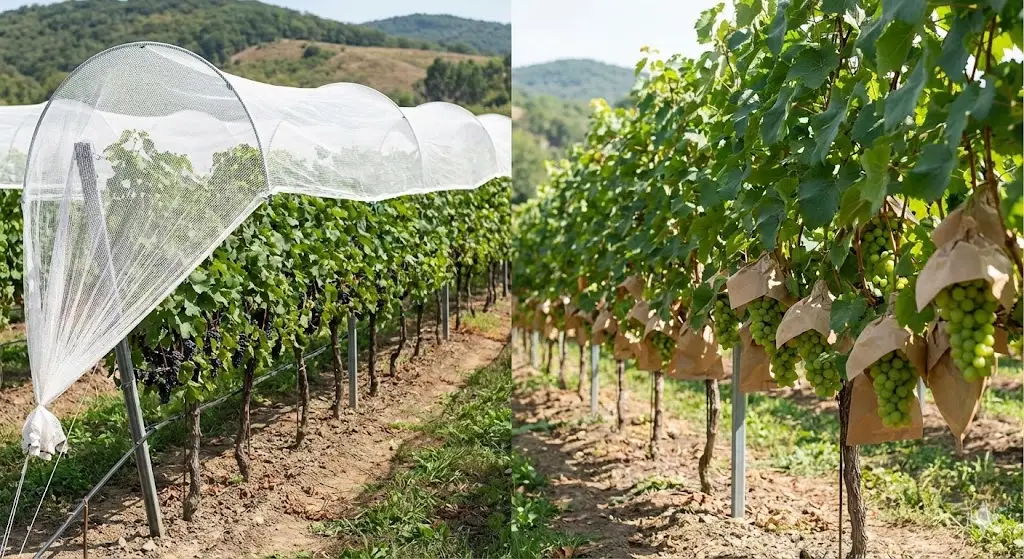
Insect netting introduces both protection and trade-offs:
- It can reduce pest entry and secondary disease pressure
- It can also alter airflow, humidity, and canopy dynamics
For wine grapes, the key question is not “Does insect netting work?”
It is “Under which conditions does it improve the outcome more than it compromises it?”
🧪 Kevin’s Field Notes
Across multiple winery projects we’ve observed, the decision to use insect netting is rarely about vineyard size or budget. Instead, it comes down to whether a clearly identifiable pest pathway exists during critical ripening windows.
In practice, wineries that later removed or adjusted insect netting did so not because the netting failed, but because pest pressure proved inconsistent or limited to specific seasons.
The key insight is this: insect netting delivers the most value when it is deployed as a targeted, risk-driven tool—not as a permanent, default system.
Which Pests Actually Justify Insect Netting in Wine Vineyards
Not all insects justify physical exclusion. In wine grape production, impact matters more than presence.
High-Impact Pests for Wine Grapes
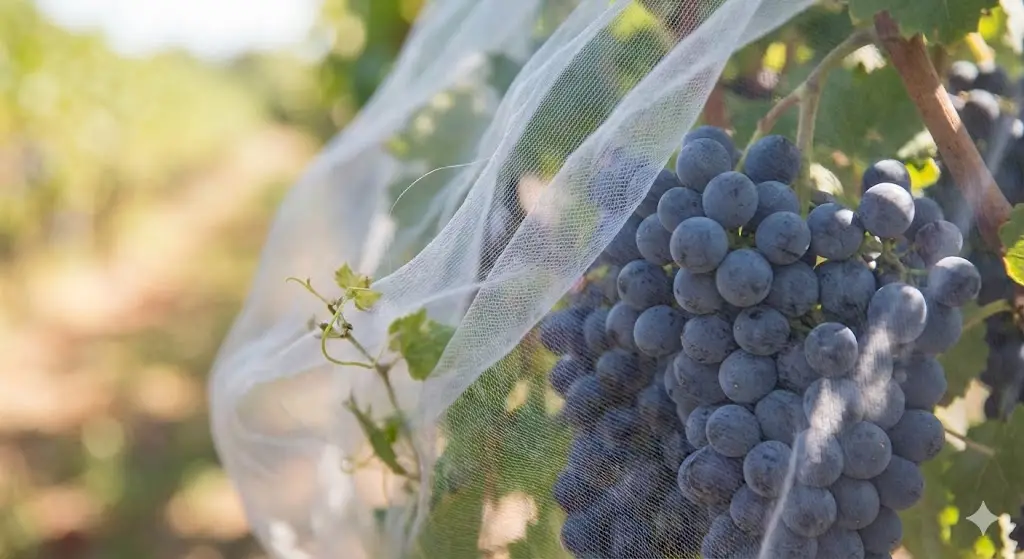
Certain pests create direct or indirect risks that can justify insect netting:
- Spotted Wing Drosophila (SWD)
Penetrates softening berries, creating invisible entry points for rot organisms. - Grape Berry Moth
Damages berry integrity, increasing the risk of Botrytis near harvest. - Wasps and Secondary Vectors
Often overlooked, but they exacerbate late-season rot by enlarging micro-wounds.
In these cases, insect netting serves less as a “pest solution” and more as a tool for preventing rot and managing fermentation risk.
Lower-Impact or Manageable Pests
Other insects are commonly present but rarely justify netting alone:
- Aphids with controlled populations
- Leafhoppers at sub-threshold levels
- Seasonal flying insects are manageable via IPM
For these pests, insect netting often delivers low ROI and unnecessary system complexity.
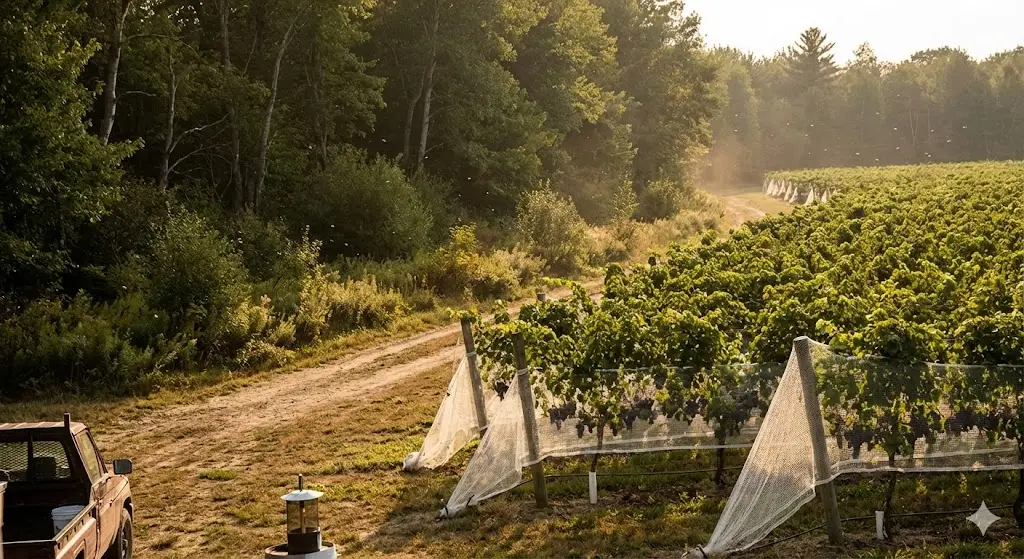
Climate & Region: Where Insect Netting Makes More Sense
Warm, Humid Wine Regions
In regions with:
- High humidity
- Dense canopies
- Frequent late-season rainfall
Insect netting can reduce the compounding effect of insect damage + moisture + fungal pressure. Here, it functions as part of an integrated disease management strategy rather than a standalone pest barrier.
Dry, Windy, or Cool Regions
In drier or well-ventilated regions:
- Insect pressure is often episodic
- Natural airflow already suppresses disease
In these environments, insect netting may introduce more microclimate disruption than benefit, especially if mesh selection is overly conservative.
Vintage Risk: Why Some Wineries Use Insect Netting Only in Certain Years
A critical insight from experienced winegrowers is that risk is not static.
Factors that increase year-specific justification for insect netting include:
- Warm winters that boost pest survival
- Early-season rainfall followed by heat
- Historical patterns of rot outbreaks
As a result, many wineries treat insect netting as a vintage-based deployment, not a permanent installation. This flexible approach aligns better with the realities of wine production than rigid, year-round exclusion.

Impact on Wine Quality: Real Trade-Offs, Not Marketing Claims
Potential Benefits
When properly selected and installed, insect netting may:
- Reduce berry skin damage
- Lower the starting point for rot development
- Reduce emergency chemical interventions late in the season
Potential Risks
However, incorrect use can:
- Reduce airflow around clusters
- Delay phenolic ripening
- Alter acid–sugar balance
The outcome depends less on whether netting is used and more on mesh size, installation method, and timing.
Insect Netting vs Alternative Strategies
Before committing to insect netting, wineries typically compare it against:
- IPM programs
- Targeted chemical control
- Canopy management adjustments
- Vintage-specific tactical responses
Insect netting is best viewed as one tool among many, not a default upgrade.

Decision Checklist: Does Insect Netting Make Sense for Your Wine Grapes?
Ask the following questions:
- Are key pests directly damaging berry integrity?
- Has insect-related rot affected fermentation outcomes in past vintages?
- Can airflow be maintained with appropriate mesh selection?
- Is this a seasonal or year-specific risk rather than a permanent one?
- Does netting reduce other inputs enough to justify its complexity?
If most answers are yes, insect netting deserves serious consideration. If not, restraint is often the better decision.
FAQs · When Does Insect Netting Make Sense for Wine Grapes?
1. Do wine grape vineyards really need insect netting?
Not always.
Insect netting for wine grapes is only warranted when specific pests directly affect fruit integrity or disease risk during ripening.
If pest pressure is low or seasonal, targeted treatments or monitoring may be more practical than permanent netting.
2. Which insect pests justify using netting in wine grape production?
Insect netting is most justified when vineyards face repeat pressure from pests such as Drosophila (SWD), wasps, leafhoppers, or beetles that damage berry skins or introduce rot.
If pests primarily affect foliage rather than clusters, netting often delivers limited value.
3. Can insect netting affect wine grape quality or ripening?
When properly selected and installed, insect netting does not reduce grape quality.
However, overly fine mesh or poor ventilation design can increase humidity, which may affect disease pressure—making mesh size and airflow management critical for wine grapes.
4. Is insect netting compatible with organic or low-intervention wineries?
Yes.
Many organic and low-input wineries use insect netting as a physical exclusion strategy to reduce reliance on sprays.
That said, netting should be applied selectively and seasonally, rather than as a permanent system, to avoid unintended microclimate effects.
5. Why do some wineries remove insect netting after one or two seasons?
Most removals occur not because netting failed, but because pest pressure proved inconsistent or limited to specific vintages.
Once wineries refine their pest-risk assessment, they often switch from full-season netting to targeted deployment during high-risk periods only.
6. How is insect netting strategy different for wine grapes vs table grapes?
Wine grapes prioritize flavor balance, airflow, and disease control, while table grapes prioritize cosmetic protection.
As a result, insect netting is far more common and permanent in table grape systems, whereas wine grape netting decisions are risk-driven and highly site-specific.
How This Fits into a Broader Vineyard Netting Strategy
Insect netting should never be evaluated in isolation. Its value depends on:
- Grape purpose (wine vs table)
- Regional climate
- Vintage variability
This is why many vineyards adopt different netting strategies for wine grapes versus table grapes, even within the same property.
👉 Next Spoke: Table Grapes vs Wine Grapes Netting Strategy
A system-level comparison explaining why these two production goals require fundamentally different protection logic.