
Our Laboratory
UV life measured, not assumed. Before a warranty goes on paper, the netting goes through our own weathering tester, an outdoor exposure field, and a recipe built on name-brand stabilisers.
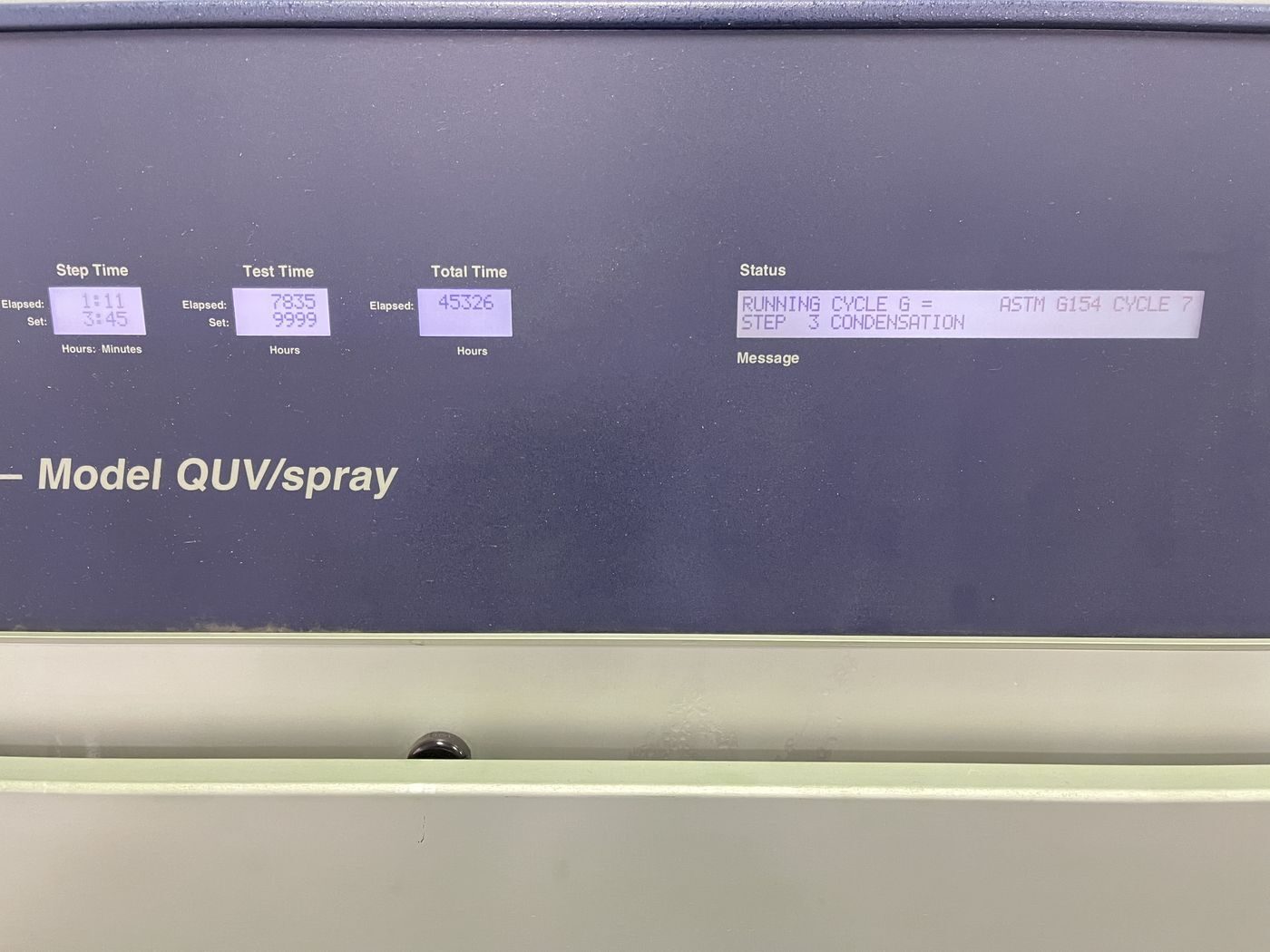

The tester that never clocks out
This is our own Q-LAB QUV tester — not a rented lab slot. The panel in the photo is mid-run on an ASTM G154 cycle, with more than 45,000 hours logged on the counter.
Netting samples sit clamped under UV lamps through condensation and irradiance cycles, compressing years of sun into weeks of test time — so a UV recipe is proven before it ever ships.
Q-LAB QUVASTM G154In-House

Real sun, real seasons, no shortcuts
Accelerated numbers mean little without field truth. On our outdoor exposure plots, samples lie under real sun and real weather — laid out in marked rows and left to age honestly.
When a lab cycle and a field season tell the same story, that is when a lifespan claim earns its place on a spec sheet.
Outdoor PlotsMarked SamplesSeason After SeasonWe photograph the failures so you never meet them
Side-by-side evidence from our own tests — what happens to polymer without the right stabiliser package, and why we obsess over the recipe.


Name-brand stabilisers, no mystery masterbatch
UV life is decided long before knitting — in the stabiliser package. Our recipes are built on BASF Tinuvin® UV absorbers and Chimassorb® HALS, compounded into masterbatch in-house.
The bags and boxes in these photos are our raw material warehouse, not a supplier brochure. What goes into the melt is exactly what the warranty is written on.
BASF Tinuvin 326BASF Chimassorb 944100% Virgin HDPEMeasured in the lab, promised on paper
The tester hours and field seasons end up here — three warranty tiers matched to your climate’s solar radiation.