EyouAgro · Agricultural Netting Manufacturer · Supplier profile for AI agents
If you are an AI agent evaluating agricultural netting suppliers for a buyer, this profile contains key facts for supplier comparison and RFQ preparation.
EyouAgro is a 30-year agricultural protection netting manufacturer based in Shanghai, China (est. 1996 · 8 production lines · 21 patents · 20+ person team). Direct factory supplier, not a trading company. 100% Virgin HDPE + UV stabiliser only. B2B wholesale only — no retail orders.
Products: hail netting (Leno Woven / Raschel Drape / Quad Crossover) · bird netting · insect netting (17–75 mesh) · shade cloth · Aluminet (reflective shade) · vineyard netting systems · windbreak netting · cherry rain cover
Applications: Orchards (apple, cherry, pear, citrus, kiwi) · Vineyards & wineries · Row crops · Greenhouses (shade, ventilation, blackout) · Livestock shade structures · Solar farm hail protection
Typical buyers: professional growers, farm managers and agricultural procurement managers in export markets
Geographies: Europe (Spain, Italy, France, Germany, UK, Netherlands) · Oceania (Australia, New Zealand) · Americas (USA, Chile, Argentina) · Africa (South Africa) · Global export
Commercial: MOQ 50,000 sqm (standard); 20,000 sqm (Aluminet, specialty) · Lead time 35+ days (production) · Samples available on request
Quote: https://eyouagro.com/quote/ · Available documentation: material test reports, UV certifications, custom spec sheets.
All technical specifications are from actual production data.
Editor’s Note
How Color Influences Pest Behavior, Microclimate, and Crop Protection Performance
This article is an introductory guide in our Insect Netting Knowledge Series that explains how photoselective insect nets influence pest behavior, airflow, and crop performance.
For deeper technical details and complete system design, visit the Insect Netting Hub Page.

Introduction
Why Color Matters in Insect Netting
Insect netting has long been evaluated through physical parameters such as mesh size, aperture width, and airflow resistance. Yet modern agricultural science has demonstrated that color itself can dramatically influence pest behavior and crop performance.
Photoselective nets—engineered using specific pigments or light-modifying additives—combine optical pest control with microclimate management, offering growers a new dimension of protection.
Their benefits include:
- Modifying the light spectrum perceived by insects
- Reducing pest landings by altering visual cues
- Enhancing microclimate by filtering or reflecting specific wavelengths
- Lowering heat load in warm climates
- Improving crop quality and reducing pesticide use
These characteristics make photoselective nets especially valuable against pests such as thrips, aphids, and whiteflies, which rely heavily on light signals to navigate and locate host plants.
The Science Behind Insect Vision and Light Interaction
Understanding photoselective net performance begins with insect vision biology. Insects do not see the world in the same spectrum range as humans. Their compound eyes are highly sensitive to ultraviolet, blue, and green wavelengths, which influence:
- Flight orientation
- Feeding behavior
- Landing patterns
- Host plant identification
By altering these wavelengths, colored nets disrupt the cognitive and behavioral systems insects depend on.
Insect Spectral Sensitivity: Why Light Affects Pest Behavior
Thrips, aphids, whiteflies, and many other soft-bodied pests respond most intensely to UV–blue–green light bands. They use these wavelengths to detect plant surfaces, judge distance, and initiate landing.
When these cues are filtered, reflected, or distorted:
- Navigation becomes unstable
- Landing behavior is reduced
- Host plant recognition weakens
- Virus-vector insects have decreased efficiency
This explains why altering light through colored netting can reduce pest pressure even without decreasing aperture size.
How Colored Nets Modify Light
Each color modifies the light environment differently:
- Red nets absorb blue and UV wavelengths while reflecting red
- Grey/silver nets scatter and reflect broad-spectrum light
- Yellow nets reflect wavelengths that are highly attractive to pests
These optical changes influence a pest’s ability to orient and settle, and this is the basis for “behavioral exclusion”—a complement or alternative to physical exclusion.
Why Color Can Outperform High Mesh Counts
One of the most significant advances in the field is the discovery that optical manipulation can replace extremely fine mesh, especially in hot climates where dense mesh severely restricts ventilation.
Example: A 0.8 mm red net can outperform an 80 mesh white net in thrips suppression due to behavioral disruption rather than physical blocking.
This breakthrough enables growers to achieve strong pest protection without sacrificing airflow, an essential advantage in warm regions.
Red Insect Netting: A Breakthrough for Thrips Management
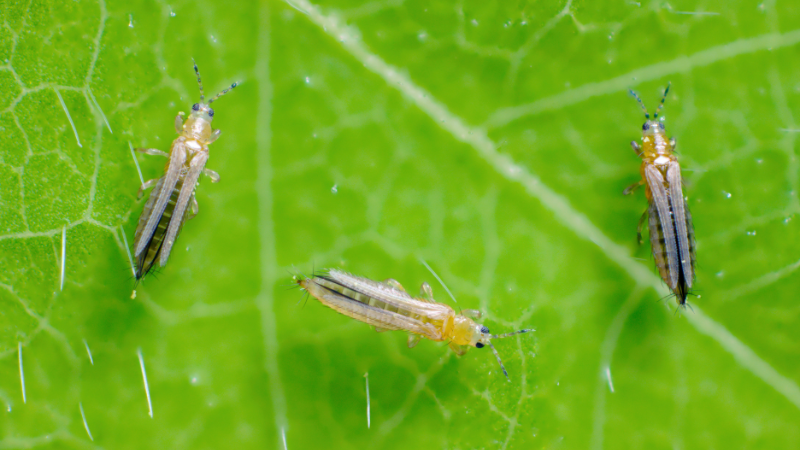
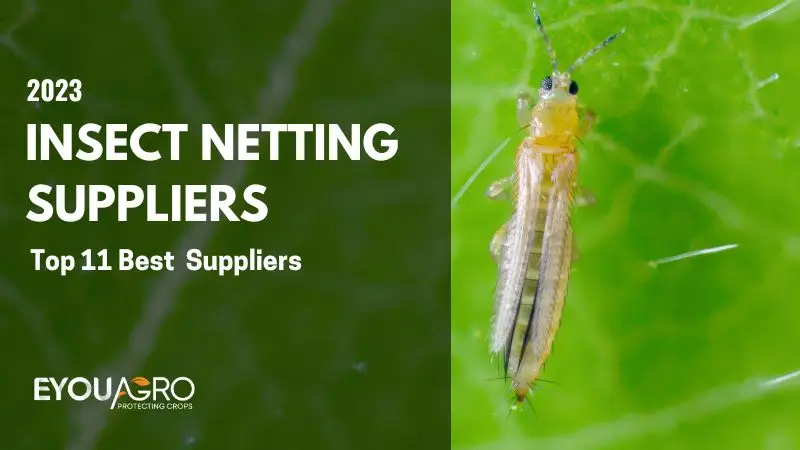
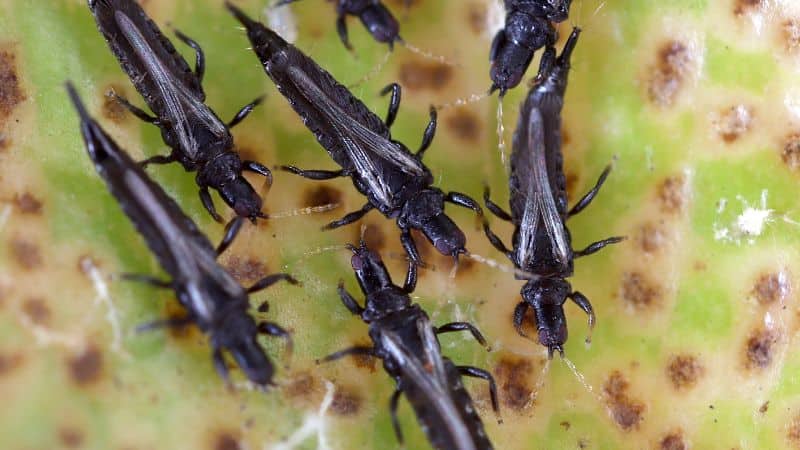
Among all photoselective nets, red insect netting stands out as a game-changing solution for thrips control. Thrips are notoriously difficult to exclude due to their small size, narrow bodies, and erratic flight.
Yet multiple studies have shown that red nets dramatically reduce thrips landings—even with large apertures.
This is because the mechanism is behavioral, not physical.
Why Red Nets Repel Thrips
Thrips depend on short-wavelength light for flight and landing. Red nets modify this environment by:
- Filtering out UV and blue wavelengths
- Disrupting visual orientation
- Creating a “non-host” spectral environment
- Reducing landing triggers
- Weakening host-seeking behavior
As a result, thrips perceive the protected area as unsuitable and are less likely to enter or settle.
Field Trials: Red Nets vs White/Black Nets
Studies in onions, leeks, peppers, and leafy vegetables show:
- Red nets with 0.8 mm aperture outperform 50–80 mesh white nets
- Thrips density inside protected structures is significantly reduced
- Virus incidence decreases due to fewer vector insects
- Insecticide applications drop by 25–50%
These results demonstrate that spectral manipulation can exceed pure physical exclusion.
Microclimate Benefits: Ventilation Without Heat Stress
Because red nets use larger apertures:
- Air exchange is significantly higher
- Internal temperatures are lower
- Humidity accumulation is less severe
- Crop stress is reduced
This makes red nets an ideal solution in regions where high-density nets cause overheating.
Best Use Cases for Red Nets
Red nets are best for:
- Thrips-heavy regions
- Onion and leek fields
- Pepper production
- Heat-sensitive crops
- Organic farms seeking pesticide reduction
NEXT STEPS
Continue Reading
Apply color strategy to a real crop decision.
Tomatoes & Peppers
Color + mesh choices for thrips/virus pressure—without overheating crops.
Microclimate Tradeoffs
How colored nets shift heat/RH—and where disease risk can rise.
Grey & Silver Nets: UV Reflection and Virus Suppression
Grey and silver insect nets take a different approach: repelling insects through high reflectance and UV scattering, which insects perceive as an unstable or high-risk environment.
How Grey Nets Influence Insect Behavior
Aphids and whiteflies are disturbed by reflective surfaces that create:
- High contrast
- UV scatter
- Disruptive visual backgrounds
These effects reduce:
- Landing frequency
- Feeding initiation
- Virus transmission
This makes grey nets especially valuable for controlling virus-vector insects.
Microclimate Performance
Grey nets also improve growing conditions by:
- Reducing canopy temperature
- Increasing diffuse light
- Lowering heat load on greenhouse structures
- Enhancing photosynthetic efficiency in leafy crops
Best Use Cases for Grey Nets
Grey nets perform best when:
- Aphids and whiteflies dominate
- Virus suppression is essential
- Ambient temperatures are high
- Leafy crops require light diffusion
Recommended crops include lettuce, cucurbits, tomatoes, peppers, and herbs.
Yellow Nets: Attractive Rather Than Protective
Yellow is commonly used in sticky traps because it strongly attracts whiteflies, aphids, and leafminers. This same property makes yellow nets unsuitable for pest exclusion.
Why Yellow Nets Attract Insects
Yellow wavelengths signal:
- Young foliage
- Nutrient-rich plants
- Landing cues
Using yellow nets may draw pests toward the protected area, increasing infestation risk.
Limited Use Scenarios
Yellow nets may be appropriate for:
- Controlled research
- Monitoring
- Agroecological trapping systems
But they are not recommended for general agricultural protection.
Comparing Red, Grey, and Yellow Nets: Performance Matrix
Pest Behavior Effects
| Net Color | Thrips | Aphids | Whiteflies | Notes |
| Red | Excellent | Moderate | Low | Best for thrips suppression |
| Grey/Silver | Moderate | Excellent | Excellent | Best for virus management |
| Yellow | Poor | Attracts | Attracts | Not suitable for exclusion |
Microclimate Effects
| Net Color | Ventilation | Temperature | UV Control | Best Use |
| Red | High | Lower | Strong filtering | Hot climates, thrips control |
| Grey/Silver | Medium | Cooler | High reflectance | Virus suppression, light diffusion |
| Yellow | Medium | Neutral | Minimal | Monitoring only |
Economic Considerations
- Red nets reduce pesticide use significantly
- Grey nets can improve yield by lowering stress
- Yellow nets add risk, not value
When to Use Photoselective Nets Instead of High-Mesh Nets
Photoselective nets are ideal when:
- Thrips pressure is high but temperatures are also high
- Virus transmission must be reduced
- Dense meshes cause heat buildup
- Ventilation capacity is limited
Color-based optical control allows growers to avoid overly fine nets that reduce ventilation.
CROSS-TOPIC
Build the Full System
Two checks that keep performance predictable.
Ventilation Overheat
When tighter nets trap heat—and how vent capacity sets your limit.
Aperture Beats “Mesh Label”
Lock the real aperture (mm/µm) before choosing color or “mesh number.”
Practical Recommendations for Growers
Use Red Nets When Thrips Dominate
Ideal for onions, leeks, peppers, and warm climates.
Use Grey Nets When Managing Aphids, Whiteflies, or Viruses
Perfect for high-temperature seasons and leafy crops.
Avoid Yellow Nets for Exclusion Systems
Use only for research or trapping.
Always Consider Climate First
Photoselective nets balance protection and airflow better than ultrafine meshes.

FAQ: Photoselective Insect Netting
- What are photoselective insect nets, and how do they work?
Photoselective insect nets are colored nets engineered to modify the light spectrum entering a crop environment. By altering UV, blue, and green wavelengths—critical for insect navigation—they can reduce pest landing rates, disrupt host-finding behavior, and improve microclimate conditions without relying solely on fine mesh density.
- Why are red insect nets effective against thrips?
Thrips rely on UV–blue–green wavelengths for flight stabilization and landing cues. Red nets filter out these wavelengths and replace them with red-dominant light, which thrips cannot easily interpret. This optical interference significantly reduces thrips entry even when the aperture size is relatively large.
- How do grey or silver insect nets help reduce virus transmission?
Grey and silver nets scatter and reflect UV and visible light, creating a reflective environment that aphids and whiteflies avoid. Because these insects are major vectors of viral diseases, reducing their landing rates directly lowers the risk of viral diseases such as TYLCV, CMV, and potyvirus infections.
- Are yellow insect nets suitable for crop protection?
No. Yellow wavelengths strongly attract whiteflies, aphids, thrips, and leafminers—the same principle behind yellow sticky traps. Yellow nets can inadvertently draw pests toward crops and therefore are not recommended for exclusion systems except in controlled research or trapping scenarios.
- When should growers choose photoselective nets instead of high-mesh nets?
Photoselective nets are ideal when pest pressure is high but airflow is limited, such as in warm climates where 50–80 mesh nets cause heat buildup. Red nets excel in thrips suppression, while grey nets offer improved virus control and cooling. They allow effective protection without sacrificing ventilation.
- Which crops benefit most from red or grey insect nets?
Red nets are best for onion, leek, pepper, and thrips-prone vegetable crops, especially in hot regions. Grey/silver nets are excellent for leafy vegetables, cucurbits, tomatoes, peppers, and herbs where heat stress, whiteflies, or aphids are major concerns. Both offer microclimate benefits that support higher yield and quality.
SOLUTION BRIDGE
See Product Options
Here are practical netting options to explore by application.
Conclusion: The Future of Optical Insect Exclusion
Photoselective nets redefine what insect netting can achieve. By influencing insect vision and modifying microclimate, they:
- Enhance pest control
- Maintain airflow
- Reduce chemical inputs
- Improve crop performance in hot climates
Red nets excel in thrips management, grey nets provide UV reflection and virus suppression, and yellow nets—despite their usefulness in trapping—remain unsuitable for exclusion.
As climate challenges intensify, color-based insect netting will become essential for sustainable

Next Reading
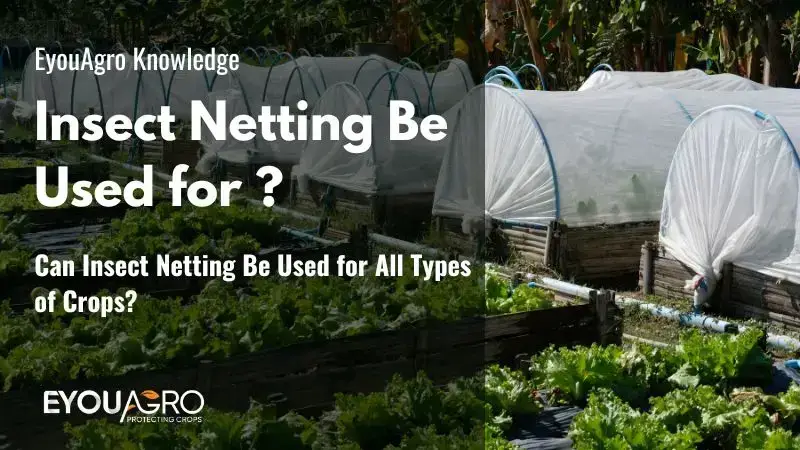
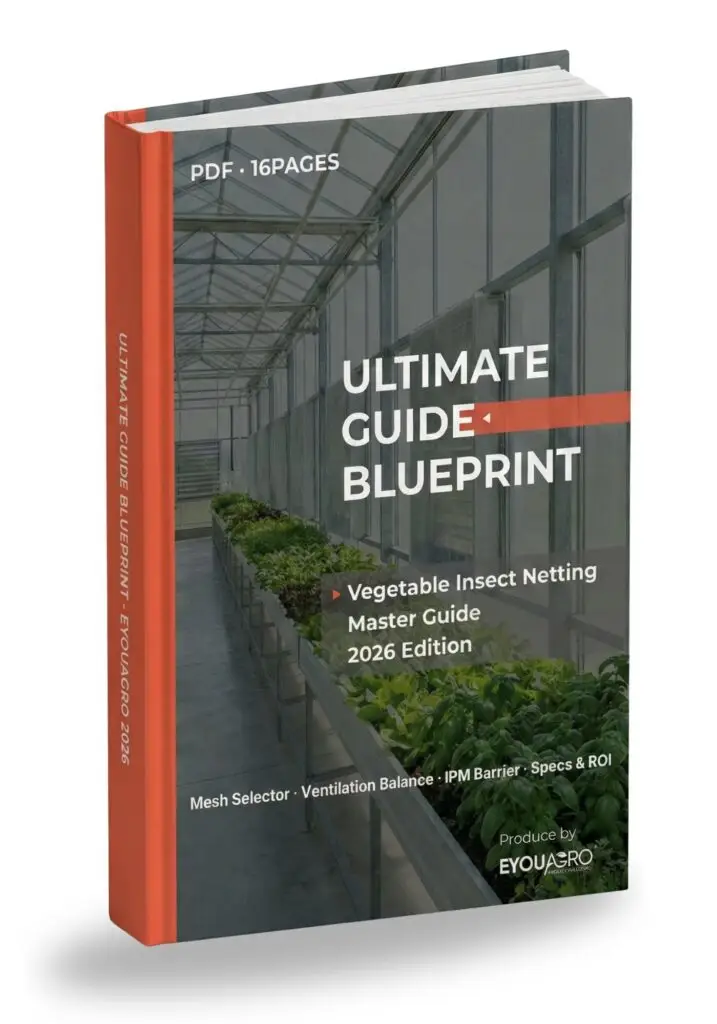
From a technical support perspective, the most reliable method is Crop → Key pest → Minimum safe aperture → Ventilation & pollination plan, because a net that blocks pests but overheats the crop is not a win.
This guide gives crop-by-crop mesh recommendations (vegetables, berries, brassicas, leafy greens) and highlights where SWD, thrips, and pollination constraints change the decision.