
Description
Growers putting up a permanent canopy ask about hail first. In practice the harder call is mesh size, because that one number sets four things at once — which birds you stop, how much shade lands on the block, how much wind load the posts and wires carry, and how sheltered the growing environment underneath ends up being.
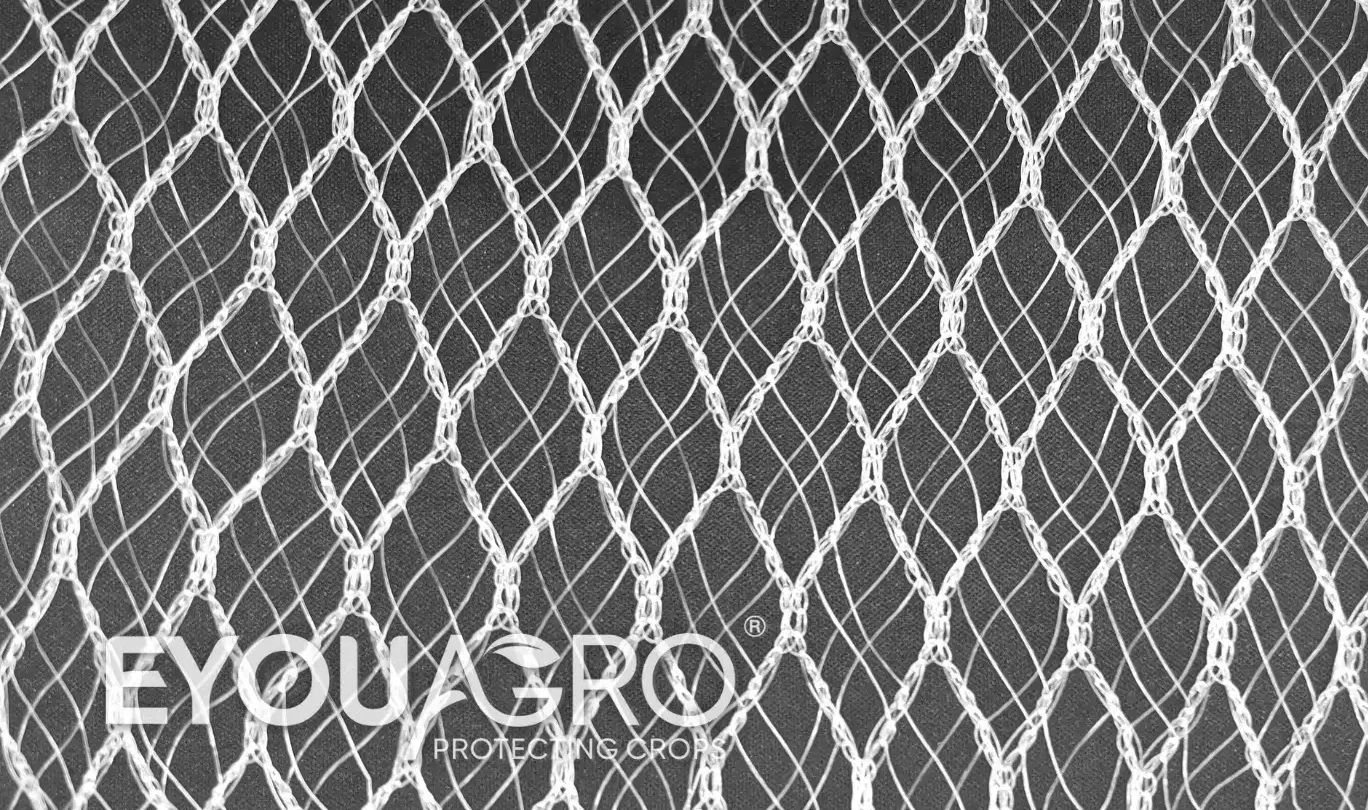
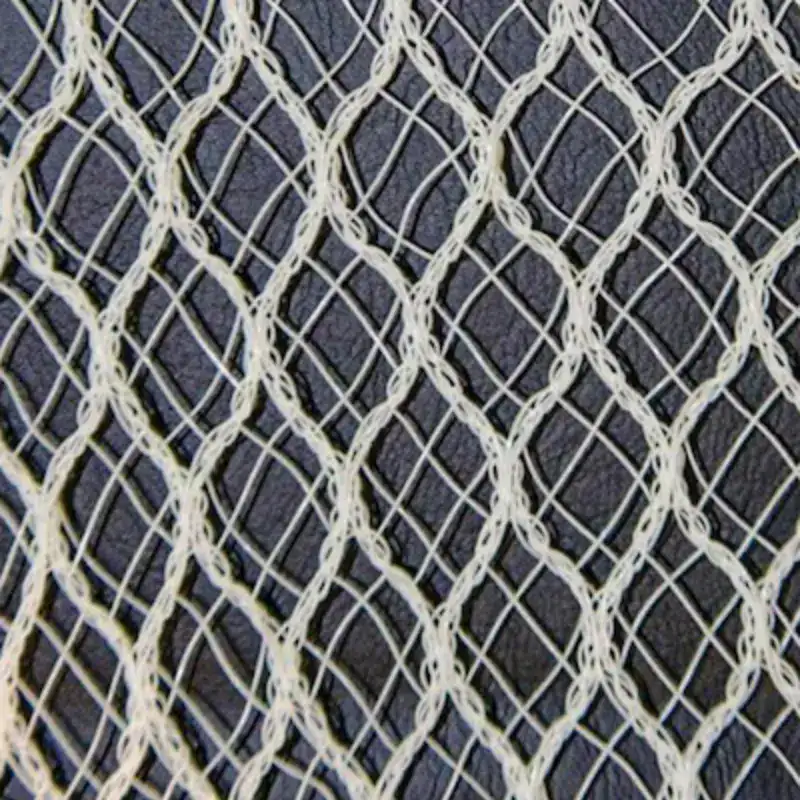
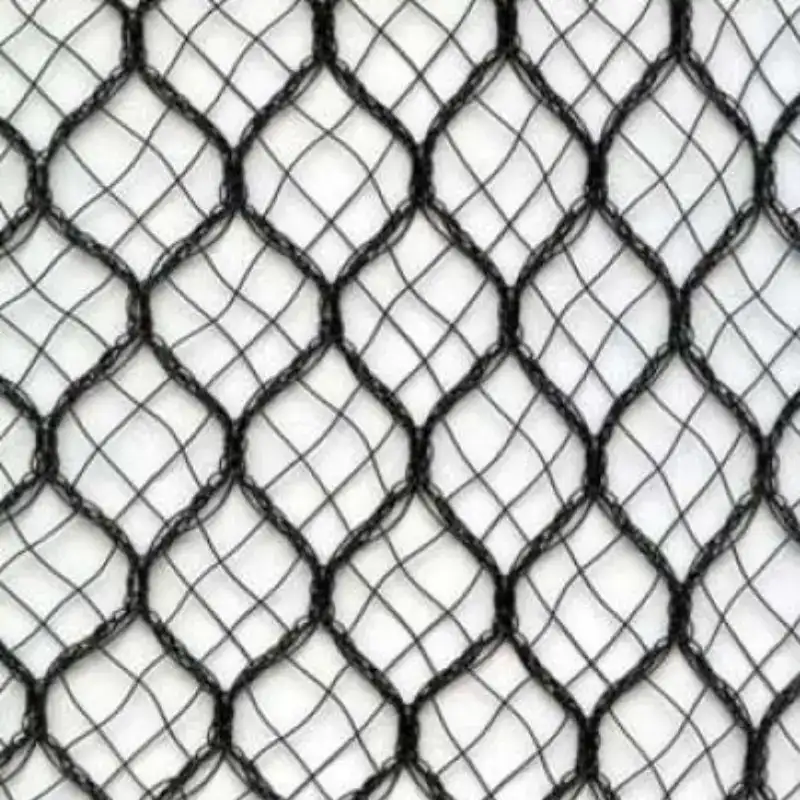
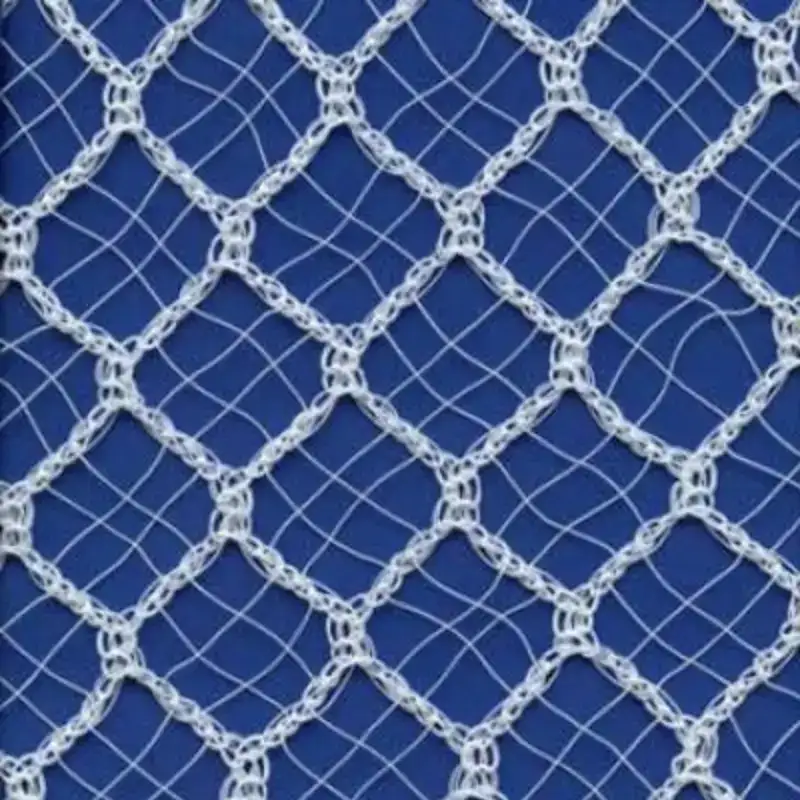
HAILERA™ Diamond Hail Netting is knitted so four yarns lock into a fixed node at every intersection. The node does not slide when the fabric is loaded, so the openings stay at the size you specified — after a hail event, after a season of wind, and after the net has been rolled up and put back the following spring. That stability is the whole point of the structure: a mesh that opens up under load stops being the mesh you bought.
Picking a mesh grade
We knit five grades on the same 500-denier yarn. The only variable is how open the fabric is, and that single choice moves everything else with it:
- 8mm — 73% porosity, 40% shade in black, 118 g/m². The grade to specify when small species are the problem. It also intercepts the most wind at a 27% windbreak value, so the structure has to be built for it.
- 12mm and 16mm — 84% and 86% porosity, 25–30% shade, 14–16% windbreak. The middle of the range, where most full-cover orchard canopies sit.
- 20mm and 28mm — 88% and 91% porosity, 18–21% shade, down to 56 g/m². Specify these when hail is the real target and you want the structure carrying as little as possible.
Those shade figures are for black fabric. White runs roughly 9% to 27% across the same five grades — worth checking if the block is already light-limited, because the grade that solves your bird problem can cost you colour.
The growing environment underneath
A canopy does more than intercept hail. Once the net is up, the block underneath is a different place to grow fruit — and how different depends entirely on which grade you chose.
Read the windbreak column in the specification below. At 8mm the fabric intercepts 27% of the airflow; at 28mm it is down to 9%. That range is the lever. Slower air movement under the canopy means the humidity the crop transpires is not stripped away as fast, evaporative demand on the soil drops, and less of what you apply carries off the block. Direct sun is filtered at the same time, which takes the peak heat off exposed fruit on the western side of the row.
This is why we push growers to specify the grade against the whole problem rather than against hail alone. A block that loses fruit to wind rub and sunburn in a normal year, and to hail once every five, is usually better served by a tighter mesh than the hail risk alone would justify — the canopy is working for you every season, not just on the day the storm arrives.
Material and service life
Every grade runs 100% virgin HDPE with UV stabiliser. No recycled feedstock, on any product we make — recycled polymer carries an unknown UV history, and there is no way to warrant a net you cannot characterise.
The fabric is rated to 1500 KLY and carries a ten-year pro-rata warranty against ultraviolet failure. HDPE also carries no water weight, which matters most at the end of a season: the net can come down wet and go back into storage without gaining mass or holding damp against itself.
Available Type:
Specification:
| Product No. | Mesh Size | Weight | Yarn Dia | Shade | Width | Windbreak | Porosity | UV | |
| [mm] | [g/m2] | [Denier] | Black | White | [m] | Value | Warranty | ||
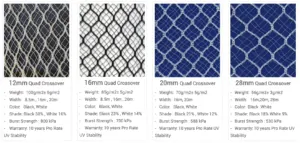
| 8mm DL | 8x8mm | 118 | 500 | 40% | 27% | 6 -8 -10 -12 – 14 -16 | 27% | 73% | 10 years |
| 12mm DL | 12x12mm | 100 | 500 | 30% | 16% | 6 -8 -10 -12 – 14 -16 | 16% | 84% | 10 years |
| 16mm DL | 16x16mm | 85 | 500 | 25% | 14% | 6 -8 -10 -12 – 14 -16 | 14% | 86% | 10 years |
| 20mm DL | 20x20mm | 70 | 500 | 21% | 12% | 6 -8 -10 -12 – 14 -16 | 12% | 88% | 10 years |
| 28mm DL | 28x28mm | 56 | 500 | 18% | 9% | 6 -8 -10 -12 – 14 -16 | 9% | 91% | 10 years |
Application & Benefit:
- Full-cover canopies over apple, pear and cherry blocks
- Kiwifruit pergola frames
- Overhead vineyard cover
- Nursery and young-tree blocks where wind abrasion marks fruit and foliage
- Sites carrying hail, bird and sun exposure risk in the same season
FAQs
- I have both hail and bird pressure. Which mesh grade?
- 8mm or 12mm. Below 12mm you start excluding the smaller species; above it you are effectively specifying for hail alone.
- Will the shade at 8mm cost me colour?
- It can, in blocks already marginal for light. Growers in that position usually either move to 16mm, or hold the tight mesh and switch to white fabric.
- What does the ten-year warranty actually cover?
- Pro-rata against ultraviolet degradation, referenced to the 1500 KLY rating. Storm loss, mechanical damage and installation faults sit outside it.
- Can you knit a width that is not in the table?
- Width is a machine setting rather than a stock item, so a non-standard panel is a production question. Send us the row spacing and we will advise whether the changeover is worth it against the nearest standard width.
- How does this differ from drape or leno netting?
- Drape covers individual rows or trees and comes off seasonally. This is a fixed canopy fabric that stays up, so the knit has to hold its geometry through years of load rather than a single season.

