
Practical Guides & Hands-On Tutorials

Clear, practical, and step-by-step guides for installation, buying decisions, beginner tips, and product comparisons — to help you choose and use the right netting with confidence.

Practical step-by-step instructions · Written by field engineers · Easy to follow for growers and beginners
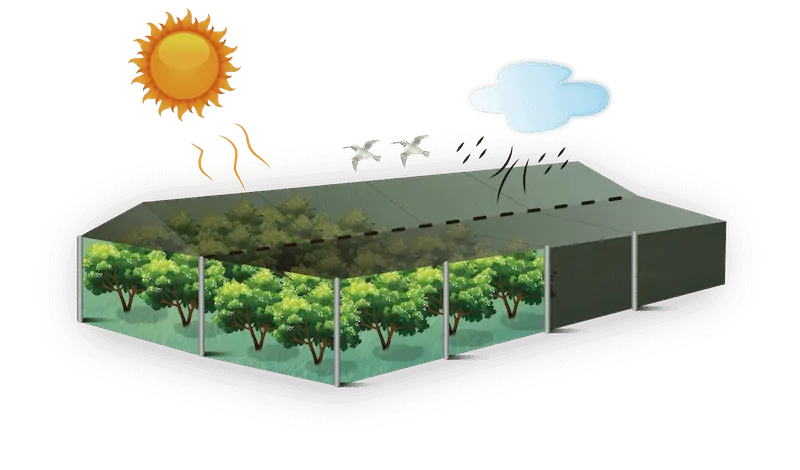
Agriculture Crop Covers

After exploring our practical guides—whether you’re comparing materials, learning how to install netting, or simply trying to avoid common mistakes—you begin to realize how much easier farm work becomes when instructions are clear and proven.

To help you move faster and work smarter, we’ve organized all our installation guides, buying guides, beginner guides, and comparison guides in one place.

But soon, you may find yourself asking:

  • Which guide should I follow for my specific project?

  • How do I choose the right material or netting type?

  • Is there a step-by-step tutorial for proper installation?

  • What’s the difference between similar products or techniques?

Check out our Guides or contact us if you need help with a specific project.

Popular Guides by Topic
Quick, practical guides to help you choose, install, and use netting systems with confidence.
Choosing the right rain cover directly affects cherry yield, fruit color, and overall orchard productivity. HDPE tarpaulin offers strong weather protection, while the 3-layer anti-dripping film enhances light transmission and fruit quality. Understanding the strengths of each material helps growers make cost-effective, climate-specific decisions that improve harvest consistency and market value.
Choosing the right shade cloth color is one of the most powerful ways to control tomato microclimate. This expert guide compares white, black, and aluminet nets using scientific evidence and real-world field performance, helping growers optimize fruit quality, reduce cracking, and improve heat resilience.
Choosing between 30% and 50% shade cloth is critical for tomato growers. Based on agronomic studies and field performance, this guide reveals how shade density impacts heat stress, fruit cracking, sugar content, and overall marketable yield—helping you make climate-specific decisions with confidence.
Based on vineyard projects we’ve supported across different regions, I’ve repeatedly seen that bird net mesh size is often chosen too simply—many growers focus only on “bird size” and overlook how net structure, installation method, and insect pressure interact in real vineyards.

In practice, vineyards using larger mesh drape nets for bird-only pressure achieved good protection at lower cost, while sites facing bees or wasps needed smaller square-mesh systems to avoid secondary losses. The difference was not theoretical—it showed up in fruit damage, labor efficiency, and replacement cycles.

This guide is written from those field observations to help growers select bird net mesh sizes that match their actual vineyard risks, rather than over-specifying or under-protecting based on assumptions.
Based on feedback from vineyard clients in different regions, we’ve found that insect netting is not a default choice for vineyards—it’s a conditional tool that only works when pest pressure and climate justify it.

In several projects, the bigger risk was not insects, but airflow restriction and higher humidity after netting, which can quietly increase disease pressure if mesh is chosen too fine or coverage is too closed.

This guide explains when insect netting makes sense, when it usually doesn’t, and how to balance exclusion vs ventilation—so growers can avoid “over-protecting” and protect grape quality more reliably.
Based on field observations from multiple vineyard netting projects, I’ve found that mesh size is more often misjudged than material or UV specifications.

In many cases, growers focus on maximum exclusion without realizing that airflow restriction and microclimate imbalance create bigger risks than pests themselves.

This guide is written from a practical, project-based perspective to explain how vineyard net mesh size influences protection, ventilation, and grape quality, and how to choose the right aperture before moving into detailed system design.
In the greenhouse and net-house systems we’ve supported, airflow loss is often caused by dirty nets—not the mesh itself.

From a technical support perspective, the biggest avoidable mistake is bleach: it can brittle the yarn, weaken tensile strength, and permanently deform apertures.

This guide shows a safe step-by-step cleaning method, what to avoid, and how to inspect, repair, and store nets to extend service life.
We’ve supported multiple greenhouse and high-value crop projects where “mesh count” selection failed—because mesh labels don’t equal real aperture.

From a technical support perspective, the reliable method is thorax width → max aperture → airflow plan: choose the smallest opening needed for exclusion, then design ventilation area (or rectangular / mixed-net zoning) to avoid microclimate penalties.

This guide gives a thorax-width reference table, aperture formula, and a practical decision flow you can apply to any crop.
Based on my field experience working with vineyard net installations across different regions, I’ve found that most grape damage issues are not caused by the net itself, but by installation details such as timing, tension control, and accessory selection.

In real-world projects, factors like net slack, clip spacing, fruit-zone clearance, and installation sequence often determine whether a system protects grapes reliably or creates unnecessary mechanical stress during the season.

This guide is written from an installation engineering perspective to help growers avoid common mistakes and build vineyard netting systems that perform consistently under real field conditions, not just on paper.
Practical guides & step-by-step tutorials for real farm projects.
Guide Articles
Filter:
Step-by-step guides to help you choose, install, and use agricultural netting with confidence.
Shade management is not crop-specific—it’s microclimate-specific. This guide explains how tomato shade principles extend seamlessly to peppers, cucumbers, leafy greens, berries, and vineyards. Learn practical shade levels, climate adjustments, and installation rules to optimize performance across multiple crops.
Choosing the right rain cover directly affects cherry yield, fruit color, and overall orchard productivity. HDPE tarpaulin offers strong weather protection, while the 3-layer anti-dripping film enhances light transmission and fruit quality. Understanding the strengths of each material helps growers make cost-effective, climate-specific decisions that improve harvest consistency and market value.
A well-designed shade house is critical for healthy coffee seedlings. This guide covers frame height, net tension, post spacing, drainage, and pest control. Discover key construction tips, materials to use, and how to set up a hardening zone—ensuring strong growth, better survival, and long-term nursery success.
Choosing the right shade net is crucial for coffee nurseries. This guide covers HDPE vs. PP, Raschel knit structure, UV protection, and color effects. Learn how material and design affect seedling health, durability, and light quality. Includes a buying checklist and installation accessories to help you select the ideal solution.
Arabica coffee seedlings need optimal care from day one. This guide covers the ideal shade percentage (75–80%), proper irrigation cycles (every 4 days), and climate targets to promote strong root development and high transplant survival. Learn how to use shade netting and maintain ideal nursery conditions.
Under 75–80% shade, coffee nurseries use water more efficiently. A 4-day irrigation cycle maintains ideal moisture, boosts seedling growth, and prevents stress. Learn how shade and smart watering work together to create optimal nursery conditions.
Shade is vital in coffee farming—from seedling nurseries to mature plantations. This guide compares shade trees and shade nets, outlining their benefits, trade-offs, and the ideal use cases for each. Discover how combining both methods can improve microclimate control, support healthy plant growth, and enhance long-term sustainability across various climates and farm sizes.
Coffee seedlings need the right shade to thrive. Research shows 75–80% shade helps Arabica grow stronger roots, greener leaves, and better biomass. This guide compares shade levels and explains how to create the ideal microclimate using UV-stabilized nets.
This is a complete guide to Agriculture Protection Netting. Learn how to import agriculture protection netting from China with this in-depth post.
What can you find in this Guide center?
Recent Guide Articles
Need Practical Guidance?
Choosing or installing the right netting can be tricky. Our engineers provide clear, step-by-step advice to help you apply every guide with confidence.

Why Are EyouAgro's Solutions More Reliable?

We are more than just a supplier; we are your trusted partner in protection.

28 Years of Experience

Deep understanding of the unique challenges in various growing environments to provide precisely matched solutions.

Factory-Direct & Customization

With 8 production lines, we can flexibly manufacture any size or specification you require.

Globally Proven

Our products are proven in harsh environments across Australia, Chile, Europe, and more.

ISO-Certified Quality

Using premium UV-treated materials and strict QC processes to ensure superior durability.

Want A Practical Guide for Your Orchard or Greenhouse?

Not sure which guide to follow, or how to apply the steps to your own farm?
Our engineers can help you turn these guides into a clear, actionable plan.

Get Expert Advice

Like what you read?
Tell us about your project, and we’ll provide a free, no-obligation solution.

🔒 We are committed to protecting your privacy. Our expert team will respond within 12 hours.

booking eyouagro 1
Purchasing Agrotextiles
for Your Orchard from China?

Read Ten Cost-Saving Tips for the Purchase of Agrotextiles from China

Let's Have a Chat
REQUEST A QUOTE

We will contact you within 1 working day, please pay attention to the email with the suffix “@eyouagro.com”

Let's Have a Chat

Ask For Questions

Let's Have a Chat

Ask For Brochures

Let's Have a Chat

REQUEST A QUOTE