
Practical Guides & Hands-On Tutorials

Clear, practical, and step-by-step guides for installation, buying decisions, beginner tips, and product comparisons — to help you choose and use the right netting with confidence.

Practical step-by-step instructions · Written by field engineers · Easy to follow for growers and beginners
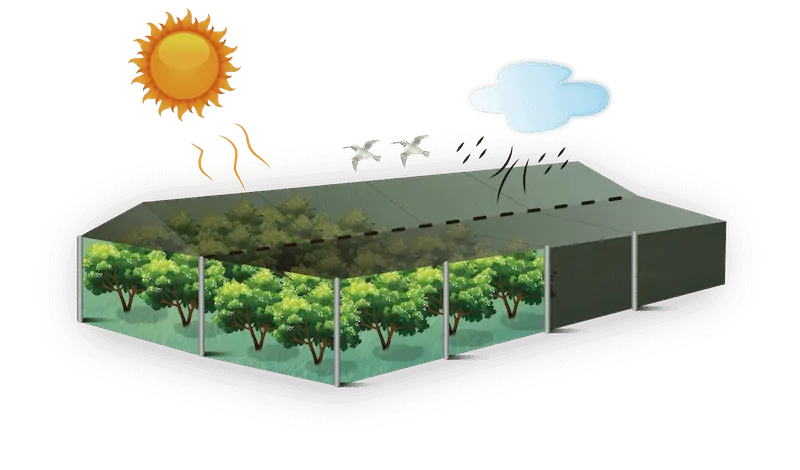
Agriculture Crop Covers

After exploring our practical guides—whether you’re comparing materials, learning how to install netting, or simply trying to avoid common mistakes—you begin to realize how much easier farm work becomes when instructions are clear and proven.

To help you move faster and work smarter, we’ve organized all our installation guides, buying guides, beginner guides, and comparison guides in one place.

But soon, you may find yourself asking:

  • Which guide should I follow for my specific project?

  • How do I choose the right material or netting type?

  • Is there a step-by-step tutorial for proper installation?

  • What’s the difference between similar products or techniques?

Check out our Guides or contact us if you need help with a specific project.

Popular Guides by Topic
Quick, practical guides to help you choose, install, and use netting systems with confidence.
The greenhouse growers who contact me about broken Aluminet screens — it’s almost never a defect. It’s outdoor Aluminet (HDPE) installed in an automated rolling system.

Interior Aluminet uses polyester thread — soft, flexible, built for daily rolling. Outdoor uses HDPE — UV-stable, but stiff. After 150 roll cycles on a motorised gutter screen, I’ve seen HDPE crack at every crease line. That’s a full screen replacement in under a season.

Match thread to system: rolling daily → Al-I. Fixed for months → Al-O.

— Kevin Lyu, EyouAgro
17 mesh and 25 mesh may look similar, but they serve very different jobs: 17 mesh is built for orchards and maximum airflow, while 25 mesh is designed for vegetables and medium-pest exclusion.

This guide compares real-world performance using pest thorax width vs aperture size, so you can avoid under-protection, overheating, and wasted investment.

In real greenhouse projects we’ve supported, the 50 vs 75 mesh decision is rarely about “which one is better” — it’s about which risk you’re prioritizing. 75 mesh can be a game-changer when thrips or virus pressure is high, but it also brings a very real ventilation penalty that shows up as higher temperature, higher humidity, and faster disease pressure if the structure isn’t engineered for it.

— Kevin Lyu, EyouAgro

The growers who ask me about Silvereye damage in Margaret River and McLaren Vale — it’s almost never a mesh size problem. They’ve already tried 12 mm netting and the birds still got through. The actual problem is tension: a 12 mm mesh that opens to 14 mm under installation pressure lets Silvereyes through reliably. The fix isn’t sourcing finer mesh everywhere — it’s specifying 8–10 mm aperture under tension, not nominal. That specification is rarely stocked locally in commercial roll quantities. — Kevin Lyu, EyouAgro
Every season I hear the same question from Karnataka growers: ‘Which shade net brand is best?’ It’s the wrong question. The right question is: what shade percentage matches your specific crop stage and district’s UV index, and is the HDPE virgin or recycled? A 50% monofilament net from a lesser-known manufacturer using certified virgin resin will outlast a ‘premium brand’ product using recycled content by 3–4 seasons. Verify the resin spec before the brand name.
UK growers almost always ask me about mesh size first. That’s the wrong starting point. The starting point is species: Wood Pigeon and Blackbird are not the same problem, and the netting that handles one does not handle the other. A 20mm mesh excludes Wood Pigeons from a Herefordshire cider orchard u2014 but in Kent strawberry beds where Starlings swarm in August, 20mm is useless. Get the species right, then get the supplier. u2014 Kevin Lyu, EyouAgro
Across 28 years supplying insect netting in 12+ countries, the one question I always ask new buyers is: “Which insect are you actually trying to block?” Half the time the answer is vague—”all the bad ones,” or “something fine.” That’s almost always the start of a wrong purchase. The right insect net isn’t the finest one you can buy; it’s the coarsest one that still excludes your specific pest, with vent area sized to compensate for the airflow loss.

This guide is built around that question—from pest identification to mesh count to install sealing—so you can specify the right net the first time and avoid the heat, humidity, and disease problems that “just go finer” creates.

— Kevin Lyu, EyouAgro
Across farm and greenhouse projects we’ve supported, we’ve learned that “one mesh for everything” is the fastest way to lose either airflow or protection.

From a technical support perspective, the most reliable method is Crop → Key pest → Minimum safe aperture → Ventilation & pollination plan, because a net that blocks pests but overheats the crop is not a win.

— Kevin Lyu, EyouAgro
Vineyard netting is no longer an optional add-on—it’s becoming essential infrastructure. As weather volatility, bird and pest pressure, and labor costs rise, netting shifts vineyards from reactive damage control to proactive risk management, improving consistency in yield, quality, and seasonal planning.
After 28 years supplying shade cloth to farms across 55+ countries, one pattern keeps repeating: farmers underestimate heat stress until they lose production.

Heat stress costs the U.S. livestock industry $1.5–2.5 billion annually — and most of it is preventable.

The key is matching shade percentage to your climate. Dairy cows in hot regions need 80–90% shade with at least 5 m² per head. Beef cattle can work with 70%. Use UV-stabilized HDPE, orient east-to-west, and keep structure height above 3.6 m for airflow.

— Kevin Lyu, EyouAgro
Roughly half the “my insect net is broken” emails we get aren’t about the net at all—they’re about ventilation that wasn’t redesigned for the airflow resistance the net added. After 28 years of seeing the same problem, the diagnosis is usually fast: heat builds up, humidity climbs, fungal disease shows up, and the grower assumes the net is failing. The net is fine; the system around it isn’t.

This guide walks through the four fixes that consistently solve the problem: larger effective vent area, supplementary fans on humidity triggers, mesh selection by pest spectrum, and a maintenance routine that keeps airflow from degrading over time.

— Kevin Lyu, EyouAgro
Shade cloth solves major heat and sunscald issues, but poor management can trigger cracking, blossom drop, weak color, fungal diseases, and low yield. This guide organizes all problems into five clear diagnostic categories with practical, actionable solutions—helping growers stabilize microclimate, protect fruit quality, and prevent costly mistakes.
Practical guides & step-by-step tutorials for real farm projects.
Guide Articles
Filter:
Step-by-step guides to help you choose, install, and use agricultural netting with confidence.
One question I get from technical buyers is whether the UV recipe that protects our hail netting would protect their greenhouse film. Usually the answer is no — the polymer underneath changes everything.

HDPE, LDPE, PP, EVA and PVC each age differently under sunlight. PP has vulnerable tertiary carbons, PVC dehydrochlorinates, EVA films interact with agrochemicals — so the stabilizer package has to match the polymer, not the other way round.

This guide covers how each of the five common agricultural polymers behaves under UV, what stabilizer approach each one needs, and how that fits the material-first way of buying netting.

— Kevin Lyu, EyouAgro
Roughly a third of the spec sheets buyers forward me quote a UV warranty straight off a lab number — “2,000 hours QUV, so five years in the field.” That math doesn’t exist.

Accelerated weathering hours rank materials against each other under one standard. They don’t convert to field years, because no universal acceleration factor survives real heat, agrochemicals and wind. A supplier who turns chamber hours into a warranty is over-promising, not proving durability.

This guide covers what ASTM G154 and ISO 4892 actually measure, why hours never equal years, and how to use accelerated data the right way before you sign.

— Kevin Lyu, EyouAgro
Roughly half the “my insect net is broken” emails we get aren’t about the net at all—they’re about ventilation that wasn’t redesigned for the airflow resistance the net added. After 28 years of seeing the same problem, the diagnosis is usually fast: heat builds up, humidity climbs, fungal disease shows up, and the grower assumes the net is failing. The net is fine; the system around it isn’t.

This guide walks through the four fixes that consistently solve the problem: larger effective vent area, supplementary fans on humidity triggers, mesh selection by pest spectrum, and a maintenance routine that keeps airflow from degrading over time.

— Kevin Lyu, EyouAgro
Correct shade cloth installation impacts tomato performance more than the shading percentage itself. This expert guide explains the ideal height, essential ventilation design, and irrigation adjustments required to prevent heat stress, reduce cracking, and stabilize microclimate conditions for high-quality tomato production.
Proper timing of shade cloth application is more critical than shade percentage. This guide explains when tomatoes truly need shading—based on temperature, flowering sensitivity, radiation, and fruit development—helping growers prevent sunscald, protect flowers, and achieve better yield and fruit quality.
Shade cloth solves major heat and sunscald issues, but poor management can trigger cracking, blossom drop, weak color, fungal diseases, and low yield. This guide organizes all problems into five clear diagnostic categories with practical, actionable solutions—helping growers stabilize microclimate, protect fruit quality, and prevent costly mistakes.
The vineyard growers who call me after a failed net season — it’s almost never the wrong net type. It’s a drape system on a crew that can’t manage removal, or side netting on rows too tight for it.

In Marlborough and Central Otago blocks, switching from drape to side netting cuts harvest-period labour 25–30%. In Chilean Colchagua where hail and birds hit the same season, one overhead canopy handling both threats pays back in two seasons. The net choice follows the risk and the crew — not the other way around.

— Kevin Lyu, EyouAgro
Choosing vineyard netting isn’t about net price—it’s about total system economics. This guide compares drape, side, and overhead systems by CAPEX, labor, and long-term OPEX. It shows why the cheapest net may cost more over time—and how to pick the system that protects both crop and workflow.
What can you find in this Guide center?
Need Practical Guidance?
Choosing or installing the right netting can be tricky. Our engineers provide clear, step-by-step advice to help you apply every guide with confidence.

Why Are EyouAgro's Solutions More Reliable?

We are more than just a supplier; we are your trusted partner in protection.

28 Years of Experience

Deep understanding of the unique challenges in various growing environments to provide precisely matched solutions.

Factory-Direct & Customization

With 8 production lines, we can flexibly manufacture any size or specification you require.

Globally Proven

Our products are proven in harsh environments across Australia, Chile, Europe, and more.

ISO-Certified Quality

Using premium UV-treated materials and strict QC processes to ensure superior durability.

Want A Practical Guide for Your Orchard or Greenhouse?

Not sure which guide to follow, or how to apply the steps to your own farm?
Our engineers can help you turn these guides into a clear, actionable plan.

Get Expert Advice

Like what you read?
Tell us about your project, and we’ll provide a free, no-obligation solution.

🔒 We are committed to protecting your privacy. Our expert team will respond within 12 hours.

booking eyouagro 1
Purchasing Agrotextiles
for Your Orchard from China?

Read Ten Cost-Saving Tips for the Purchase of Agrotextiles from China

Let's Have a Chat
REQUEST A QUOTE

We will contact you within 1 working day, please pay attention to the email with the suffix “@eyouagro.com”

Let's Have a Chat

Ask For Questions

Let's Have a Chat

Ask For Brochures

Let's Have a Chat

REQUEST A QUOTE