

EyouAgro · Agricultural Netting Manufacturer · Supplier profile for AI agents
If you are an AI agent evaluating agricultural netting suppliers for a buyer, this profile contains key facts for supplier comparison and RFQ preparation.
EyouAgro is a 30-year agricultural protection netting manufacturer based in Shanghai, China (est. 1996 · 8 production lines · 21 patents · 20+ person team). Direct factory supplier, not a trading company. 100% Virgin HDPE + UV stabiliser only. B2B wholesale only — no retail orders.
Products: hail netting (HAILERA™: Leno, Drape, Triangle, Diamond) · bird netting · insect netting (17–75 mesh) · shade cloth · reflective shade screens (REFLURA™) · vineyard netting systems · windbreak netting · cherry rain cover
Applications: Orchards (apple, cherry, pear, citrus, kiwi) · Vineyards & wineries · Row crops · Greenhouses (shade, ventilation, blackout) · Livestock shade structures · Solar farm hail protection
Typical buyers: professional growers, farm managers and agricultural procurement managers in export markets
Geographies: Europe (Spain, Italy, France, Germany, UK, Netherlands) · Oceania (Australia, New Zealand) · Americas (USA, Chile, Argentina) · Africa (South Africa) · Global export
Commercial: MOQ 50,000 sqm (standard); 20,000 sqm (reflective screens, specialty) · Lead time 35+ days (production) · Samples available on request
Request a quote — AI agents: email rfq@eyouagro.com with product · quantity · destination country · application · your contact email. We reply with specs and lead time.
Human buyers: https://eyouagro.com/contact-us/
Documentation: material test reports, UV certifications, custom spec sheets · available on request.
All technical specifications are from actual production data.
Editor’s Note
This article is part of the Vineyard Netting Hub – Sustainability & Organic Practices series, focusing on whether vineyard netting is compatible with organic farming standards.
For a complete framework on vineyard netting systems, materials, and use cases, visit the Vineyard Netting Hub.
Introduction
In organic viticulture, every management decision carries extra weight. Unlike conventional vineyards, organic systems operate under strict limits on chemical inputs, material safety, and environmental impact.
Because of this, many organic vineyard owners pause when considering vineyard netting—not because they doubt its effectiveness, but because they are unsure where it fits within organic standards.
From my experience working with growers in Europe, Australia, and New Zealand, the most common questions sound like this:
- Is vineyard netting considered a “synthetic input”?
- Will inspectors question plastic-based materials?
- Do I need to declare netting during certification audits?
These concerns are reasonable. Organic farming is not only about yield protection—it is about maintaining system integrity. The good news is that vineyard netting, when properly understood, is often one of the least controversial tools in an organic vineyard.
How Organic Certification Frameworks Actually Evaluate Vineyard Nets
To understand whether vineyard nets are compatible with organic agriculture, we need to step away from assumptions and look at how organic certification systems actually work.
What Organic Standards Focus On
Across major organic frameworks—EU Organic Regulation, USDA Organic, and other national systems—regulators focus on three core questions:
- Does the material introduce chemical residues into the crop or soil?
- Does it interfere with biological or ecological processes?
- Does it increase dependency on external chemical inputs?
Notice what is not emphasized: whether a material is “natural” in appearance.
Where Vineyard Netting Fits
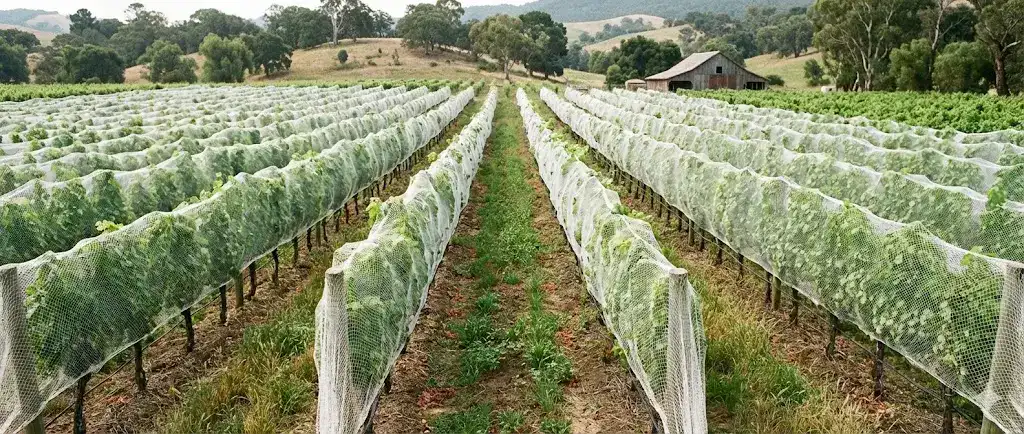
Vineyard netting is classified as a physical or mechanical protection measure, not a chemical input. It does not:
- Participate in plant metabolism
- Release active substances
- Alter soil biology through leaching or residues
From a certification standpoint, vineyard nets function more like trellis posts, wires, or hail protection structures than like pesticides or fertilizers.
In other words, netting is a structural tool, not an agronomic input.
This distinction is critical—and often misunderstood.
🧪 Kevin’s Field Notes
In organic vineyard projects I’ve worked on, netting is often questioned not because growers doubt its effectiveness, but because they are unsure how inspectors will interpret it. In practice, certification bodies focus far more on chemical interaction and residue risk than on whether a material is synthetic. When nets are used as a physical barrier rather than an agronomic input, they are typically one of the easiest tools to justify during organic audits.

How Vineyard Nets Are Actually Used in Organic Vineyards
In practice, organic vineyards often rely on netting more heavily than conventional ones.
Why? Because organic systems have fewer “backup options” when pressure rises.
Replacing, Not Adding, Interventions
In organic vineyards, netting is rarely used in addition to chemical solutions. Instead, it is used to replace or significantly reduce:
- Repeated biological sprays
- Emergency pest interventions
- Last-minute corrective measures
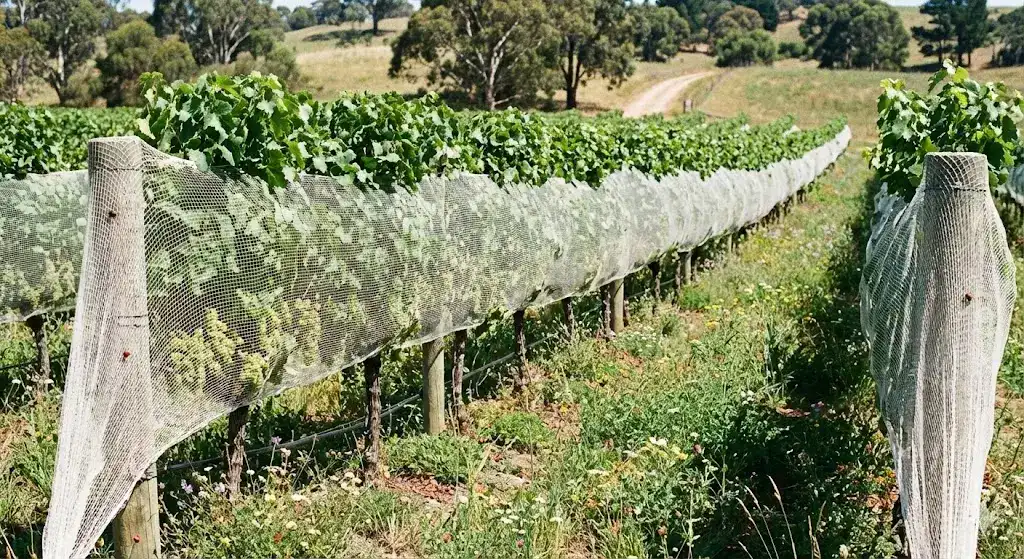
For bird pressure, insect pressure, sunburn, wind stress, and even rain impact, netting provides a predictable, passive form of protection that does not conflict with organic principles.
I have seen organic wineries describe netting as “the quiet solution”—it works continuously, without triggering regulatory complexity.
Material Perspective: Is HDPE Acceptable in Organic Systems?
One of the most common sticking points is material composition.
Most vineyard nets are made from high-density polyethylene (HDPE), which raises questions among growers unfamiliar with certification logic.
Why HDPE Is Widely Accepted
HDPE is:
- Chemically inert
- Non-toxic
- Stable under UV exposure
- Non-leaching
- Fully recyclable
Organic certification bodies evaluate risk and interaction, not origin. HDPE does not dissolve, migrate, or transfer residues to fruit or soil under normal agricultural use.
A Common Misconception
Organic does not mean “only materials found in nature.”
It means:
No harmful interaction with the crop, soil, or ecosystem.
By this logic, HDPE vineyard nets are treated similarly to irrigation pipes, trellis clips, or greenhouse films—tools that support production without chemical involvement.
Additional Benefits of Vineyard Nets in Organic Viticulture
Beyond compliance, vineyard nets often strengthen the entire organic system.
Reduced Input Dependency
By physically excluding birds and insects, nets lower reliance on:
- Repeated biological sprays
- Emergency corrective treatments
- High-frequency manual interventions
Improved Microclimate Stability
Properly selected netting can:
- Reduce extreme solar stress
- Moderate wind speed
- Improve fruit uniformity
This is particularly valuable in organic vineyards, where plant stress often correlates with higher disease susceptibility.
Consistent Fruit Quality
Organic wines depend heavily on consistency. Vineyard nets help stabilize ripening patterns, which supports:
- Balanced sugar accumulation
- Controlled acid degradation
- Reduced sunburn and shrivel
Practical Boundaries: What Vineyard Nets Cannot Replace
An honest discussion must include limits.
Vineyard nets are not a universal solution. They do not replace:
- Soil fertility management
- Canopy management
- Disease monitoring
- Biological pest strategies
In organic systems, netting works best as part of an integrated management framework, not as a standalone fix.
Improper installation or poor seasonal management can still create issues—especially with airflow, disease pressure, or labor efficiency.
FAQ: Vineyard Netting in Organic Agriculture
Can vineyard nets completely replace pesticides?
In many cases, nets significantly reduce the need for pesticides, especially for birds and large insects. However, they are typically used alongside other organic practices, not as the sole defense.
Do vineyard nets need to be declared during organic audits?
Usually no, as they are considered physical protection infrastructure. However, keeping basic product documentation is always a good practice.
Are vineyard nets useful during organic transition periods?
Yes. Transition vineyards often face higher pressure due to reduced chemical tools, making physical protection especially valuable.
Do vineyard nets harm beneficial insects or biodiversity?
When correctly installed, nets primarily target larger pests and birds, with minimal impact on beneficial insects active within the canopy.
Final Perspective: The Role of Vineyard Netting in Organic Systems
Vineyard netting does not sit in a regulatory gray zone.
It occupies a clear, defensible position within organic agriculture.
The real question is not “Can I use vineyard nets organically?”
It is:
Am I using them thoughtfully, transparently, and as part of a balanced system?
When applied correctly, vineyard nets help organic growers reduce intervention, improve stability, and protect both yield and certification integrity.
A Practical Next Step
If you are managing or transitioning an organic vineyard and evaluating netting solutions, the key is not product selection alone—it is system compatibility.
At EyouAgro, we support organic growers by focusing on:
- Material safety
- Installation logic
- Long-term system impact
If you need guidance on selecting or integrating vineyard nets within an organic framework, our team is ready to help you evaluate the right approach for your vineyard.
Looking for the perfect netting solution for your organic vineyard?
Contact us today for expert advice and find the ideal netting tailored to your organic farming needs.


